What is property cleanout? A Massachusetts guide
- Joe Lusso
- Mar 13
- 8 min read


Many property managers and homeowners mistakenly believe property cleanout means simply hauling away junk. In reality, it’s a comprehensive preparation process that transforms vacant or cluttered properties into market-ready spaces. Professional cleanouts address everything from furniture removal to environmental compliance, significantly impacting rental appeal and sale timelines. Massachusetts adds unique legal requirements around tenant property, textile recycling, and disposal protocols that make understanding cleanout services essential for anyone managing residential or commercial real estate in the state.
Table of Contents
Key takeaways
Point | Details |
Comprehensive service scope | Property cleanout includes furniture, appliances, debris removal, plus sorting and eco-friendly disposal beyond basic junk hauling. |
Market readiness advantage | Professional cleanouts prepare properties 30% faster for market, increasing value by 5-10% through improved first impressions. |
Legal compliance requirements | Massachusetts landlords must provide written notice and wait 30 days before disposing of abandoned tenant property. |
Environmental obligations | Textiles and mattresses require recycling under Massachusetts law since 2022, not landfill disposal. |
Transparent pricing models | Services charge by truckload volume with clear pricing for standard items, plus fees for specialty disposal needs. |
Understanding property cleanout: scope and benefits
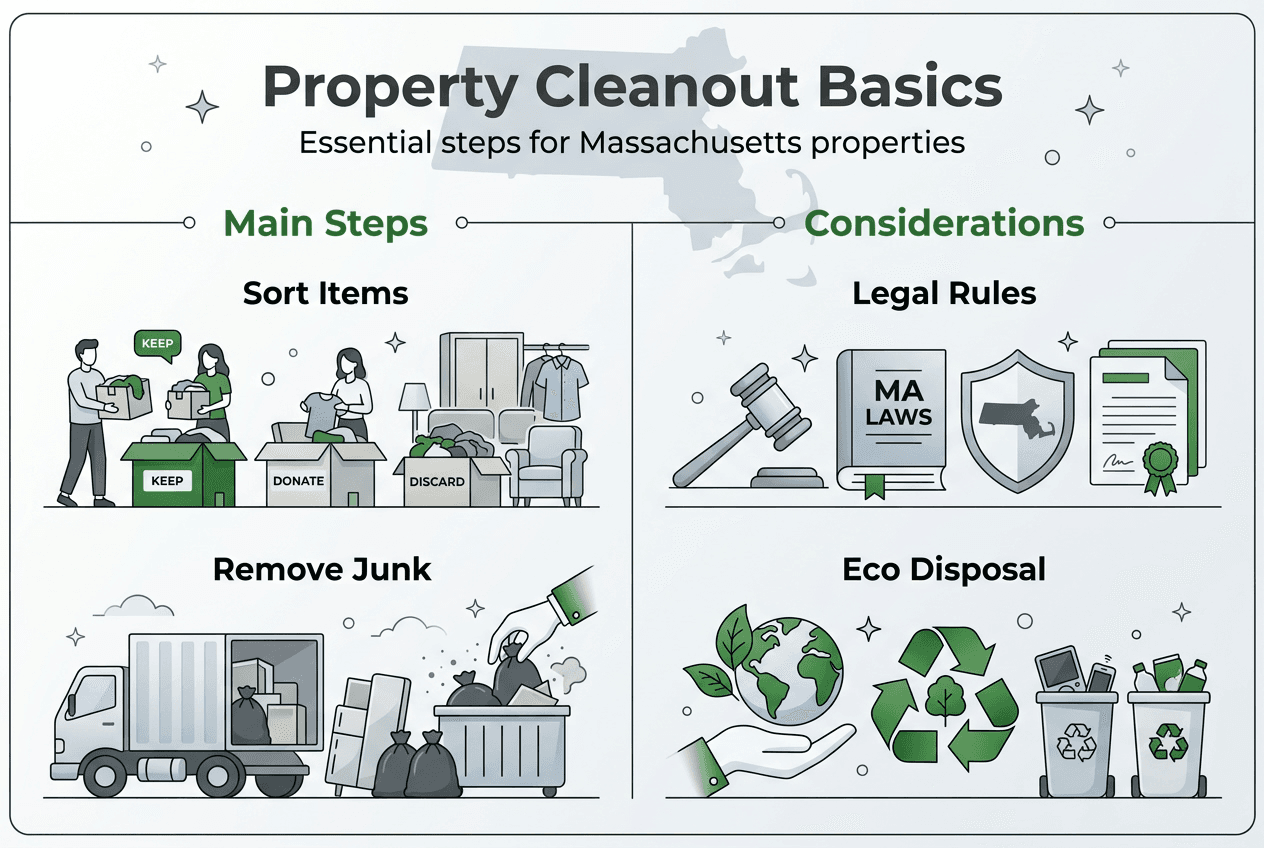
Property cleanout encompasses far more than tossing items into a truck. Professional services handle sorting, lifting, hauling, and responsible disposal of furniture, appliances, construction debris, yard waste, and general clutter. This systematic approach addresses both residential needs like estate cleanouts and commercial requirements such as warehouse clearances. The process includes evaluating items for donation potential, identifying recyclable materials, and ensuring hazardous waste receives proper handling.
The time savings alone justify professional cleanout services for busy property managers. Studies show properties with professional cleanout prepare 30% faster for market compared to self-managed efforts. This efficiency matters when vacancy costs mount or foreclosure timelines press. A cluttered property sends negative signals to prospective tenants or buyers, while a clean, empty space allows them to envision possibilities. Research indicates cleanouts improve first impressions enough to increase property value or rental appeal by 5 to 10 percent.
Eco-friendly disposal forms a cornerstone of quality cleanout services. Reputable providers prioritize donation channels for usable furniture and household goods, diverting items from landfills while supporting community organizations. Recycling programs handle metals, electronics, and construction materials according to Massachusetts environmental standards. This responsible approach aligns with growing tenant and buyer preferences for sustainability.
Key cleanout service components include:
Complete furniture and appliance removal regardless of size or weight
Debris clearance from basements, attics, garages, and outdoor spaces
Sorting items into disposal, donation, and recycling categories
Coordination with appropriate facilities for specialized waste streams
Final sweep cleaning to leave properties presentation ready
Professional cleanout teams bring equipment, vehicles, and labor that would otherwise require multiple trips and rental costs. Their experience identifying valuable versus disposable items prevents costly mistakes. For junk removal property management scenarios, this expertise translates to faster tenant turnover and reduced carrying costs.
“The difference between a property that sits for months and one that rents immediately often comes down to presentation. A thorough cleanout creates that crucial positive first impression that drives decisions.”
Legal and environmental considerations for Massachusetts property cleanouts
Massachusetts law imposes specific requirements on landlords handling tenant property left behind after move out or eviction. Landlords must provide written notice by certified mail describing abandoned items and informing tenants of their right to retrieve belongings. This notice triggers a mandatory 30-day waiting period before any disposal action. Failing to follow these steps exposes landlords to liability for improper disposal of tenant property.

Beyond the initial notice, Massachusetts requires landlords to store abandoned property for a minimum of six months. During storage, landlords must maintain an itemized inventory documenting each piece of property. These protections exist because items left behind may hold significant monetary or sentimental value. The law balances landlord rights to regain possession with tenant rights to personal property, even after lease termination.
Massachusetts abandoned property compliance checklist:
Send certified mail notice listing all abandoned items within reasonable timeframe
Wait minimum 30 days from notice date before taking disposal action
Create detailed written inventory of all items with descriptions
Store belongings safely for at least six months from abandonment date
Document all communications and storage arrangements for legal protection
Consider offering items free on social media before paying disposal fees
Environmental regulations add another compliance layer for Massachusetts property cleanouts. Since 2022, textiles including mattresses must be recycled rather than sent to landfills. This ban covers clothing, bedding, curtains, and upholstered furniture containing fabric. Violating textile disposal rules can result in fines and legal complications. Property managers must verify their cleanout providers understand and follow these requirements.
Municipal bulk trash programs offer cost-effective disposal options, but rules vary by community. Some Massachusetts cities allow landlords to pass bulk trash fees through lease agreements, provided terms appear clearly in rental contracts. Transparent move-out charge policies prevent disputes and maintain positive tenant relationships. For junk removal for landlords guide 2026 compliance, documenting all fees and disposal methods protects against future claims.
Environmental disposal requirements in Massachusetts:
Mattresses and box springs require recycling facility processing
Textiles cannot enter standard waste streams
Electronics need specialized e-waste handling
Appliances with refrigerants require certified technician removal
Hazardous materials demand proper collection and disposal protocols
Pro Tip: Keep detailed records of all disposal activities including receipts, photos of items, and communication logs. This documentation proves invaluable if disputes arise over abandoned property handling or environmental compliance.
Choosing and pricing property cleanout services in Massachusetts
Cleanout service providers in Massachusetts offer specialized solutions for diverse property situations. Residential cleanouts address estate sales, downsizing moves, and tenant turnover scenarios. Commercial services handle office closures, warehouse clearances, and retail space transitions. Construction debris removal supports renovation and demolition projects. Each service type requires different equipment, expertise, and disposal knowledge.
Pricing structures typically follow truckload volume models. Pricing depends on truckload volume with extra fees for special items, ensuring transparent billing without surprise charges. Quarter truckload services suit small cleanouts like single room clearances. Half and three-quarter loads handle apartment or small house cleanouts. Full truckload capacity addresses large homes or commercial spaces. This tiered approach allows property managers to match service level to actual need.
Typical Massachusetts cleanout pricing tiers:
| Service Level | Volume Capacity | Typical Use Cases | Price Range Factors | | — | — | — | | Quarter truck | 1-2 cubic yards | Single room, small office | Base rate plus disposal | | Half truck | 3-4 cubic yards | Apartment, garage | Volume and item type | | Three-quarter truck | 5-6 cubic yards | Small house, storage unit | Standard plus specialty fees | | Full truck | 7-8 cubic yards | Large house, warehouse | Comprehensive removal |
Specialty items command additional fees due to disposal complexity. Mattresses require recycling facility processing fees. Appliances with refrigerants need certified technician handling. Electronics enter e-waste streams with associated costs. Pianos, hot tubs, and safes demand extra labor and equipment. Reputable providers disclose these fees upfront, allowing accurate budget planning.
Speed and efficiency matter especially for time-sensitive situations. Eviction cleanouts often face court-imposed deadlines. Foreclosure properties need rapid preparation for auction or sale. Estate settlements may require quick turnaround to meet probate timelines. Same-day or next-day service availability provides crucial flexibility for manage junk removal efficiently scenarios where delays cost money.
Transparent pricing without hidden fees separates professional services from unreliable operators. Quality providers offer free estimates based on item descriptions or photos. They explain what’s included in base rates versus additional charges. Clear communication about disposal methods, donation handling, and recycling practices demonstrates professionalism and environmental responsibility.
Pro Tip: Accurately estimate item volume by measuring spaces and counting large pieces before requesting quotes. Ask providers about their disposal methods and environmental practices to ensure alignment with Massachusetts regulations and your sustainability values.
Practical tips for property managers and homeowners to optimize cleanouts
Successful property cleanouts begin with thorough preparation and documentation. Create detailed inventories listing all items requiring removal, noting dimensions of large furniture and appliances. Photograph spaces before cleanout begins, establishing baseline conditions. This documentation serves multiple purposes including legal compliance for abandoned property, insurance claims if damage occurs, and dispute resolution with tenants or service providers.
Cost reduction opportunities exist before professional services arrive. Offering items free on social media before disposal can reduce costs and waste significantly. Local buy-nothing groups, neighborhood forums, and marketplace platforms connect usable items with people who need them. Even damaged furniture may interest crafters or upcyclers. This approach cuts disposal volume while benefiting community members.
Pre-cleanout cost-saving strategies:
List usable furniture and appliances on Facebook Marketplace or Craigslist
Post to neighborhood buy-nothing groups for free item pickup
Contact local charities about donation pickup for qualifying items
Separate recyclables like metals and electronics for specialized pickup
Remove personal documents and valuables before service teams arrive
Understanding lease terms regarding cleanout charges prevents tenant disputes and legal complications. Massachusetts law allows landlords to charge reasonable fees for item removal and cleaning, but charges must appear clearly in rental agreements. Vague language or surprise fees after move out invite challenges. Specify conditions triggering cleanout charges, fee calculation methods, and tenant responsibilities for property removal.
Mattress and textile recycling requires planning since standard trash services won’t accept these items. Research municipal recycling programs or private facilities accepting textiles. Some cleanout services include textile recycling in base rates, while others charge separately. Verify disposal methods to ensure Massachusetts compliance and avoid potential fines.
Emotional considerations matter particularly for estate cleanouts following a death or major life transition. Professional services experienced in sensitive situations provide compassionate handling while maintaining efficiency. They understand family members may need time to sort personal items before bulk removal begins. For junk removal services for homeowners facing difficult circumstances, this empathy makes challenging processes more manageable.
Pro Tip: Work with cleanout services experienced in Massachusetts regulations and sensitive to estate cleanouts’ emotional aspects. Ask about their process for handling unexpected discoveries like valuables or documents, and verify their insurance coverage protects against accidental damage during removal.
Explore expert junk removal services in Massachusetts
Navigating property cleanouts becomes straightforward with experienced local partners who understand Massachusetts requirements. Whether you’re managing tenant turnover, preparing an estate sale, or clearing commercial space, professional services eliminate the stress and physical burden of large-scale removal projects.
Junk Dispatch provides comprehensive cleanout solutions across Massachusetts, combining transparent pricing with eco-friendly disposal practices. Our teams handle everything from single-item removal to complete property clearances, always prioritizing donation and recycling opportunities. We understand the legal requirements around tenant property and textile disposal, ensuring your cleanout proceeds compliantly. Explore services in Reading, Essex County, and Dedham for efficient, reliable cleanout support that respects both your timeline and budget.
Frequently asked questions
What is included in a typical property cleanout service?
Service providers handle sorting, removal, and disposal or donation of furniture, appliances, junk, and debris. Teams lift and haul items regardless of size, coordinate appropriate disposal channels, and perform final sweeps. Comprehensive services address basements, attics, garages, and outdoor spaces, leaving properties market ready.
Can landlords in Massachusetts charge tenants for item removal or cleanout fees?
Landlords can charge for item removal fees but must act fairly and include fees transparently in rental agreements. Charges must be reasonable and clearly stated in lease terms. Surprise fees after move out or excessive charges invite legal challenges, so document all costs and maintain clear communication with tenants.
What legal steps must Massachusetts landlords follow when handling abandoned tenant property?
Landlords must provide written notice by certified mail, wait 30 days, create inventory, and store belongings for a minimum of six months. The notice must describe items and inform tenants of retrieval rights. Failing to follow these procedures exposes landlords to liability for improper disposal of tenant property.
How do Massachusetts textile recycling requirements affect property cleanouts?
Since 2022, Massachusetts bans textiles including mattresses, clothing, and upholstered furniture from landfills. Property cleanouts must route these items to recycling facilities or donation centers. Verify your cleanout provider understands and complies with textile disposal regulations to avoid fines and ensure environmental responsibility.
Recommended
Comments