Streamline appliance disposal in Massachusetts
- Joe Lusso
- 5 hours ago
- 10 min read

TL;DR:
Massachusetts offers legal, eco-friendly appliance disposal options through utility programs and certified recyclers.
Proper preparation, including door removal and eligibility checks, ensures a smooth, compliant disposal process.
Bundling appliances and following a structured workflow maximizes rebates, reduces costs, and minimizes environmental impact.
Old appliances pile up fast. A retired refrigerator in the garage, a broken washer in the basement, a dehumidifier nobody remembers buying — before long, you’re navigating around them every day. Most Massachusetts homeowners know they need to deal with these items, but figuring out the right way to do it feels complicated. Improper disposal can trigger state fines, create safety hazards, and send harmful materials straight to a landfill. This guide walks you through a clear, legal, and eco-friendly appliance disposal workflow using programs and services available right here in Massachusetts.
Table of Contents
Key Takeaways
Point | Details |
Prep is essential | Check legal requirements and gather paperwork before moving appliances. |
Choose the right workflow | Use utility programs for rebates and junk services for complex or bulk disposals. |
Eco-friendly matters | Massachusetts leads in recycling, with up to 100% of appliance materials reused or donated. |
Avoid common mistakes | Remove all doors and follow state/provider guidance to prevent fines or failed pickups. |
Professional help pays off | Local experts simplify the process and ensure legal, safe, and environmentally sound appliance disposal. |
What you need before starting appliance disposal
Let’s start by preparing everything needed for a smooth, legal, and safe disposal. Jumping straight into moving heavy appliances without any prep is one of the fastest ways to injure yourself, miss a rebate, or have your pickup refused. A little planning up front saves a lot of frustration later.
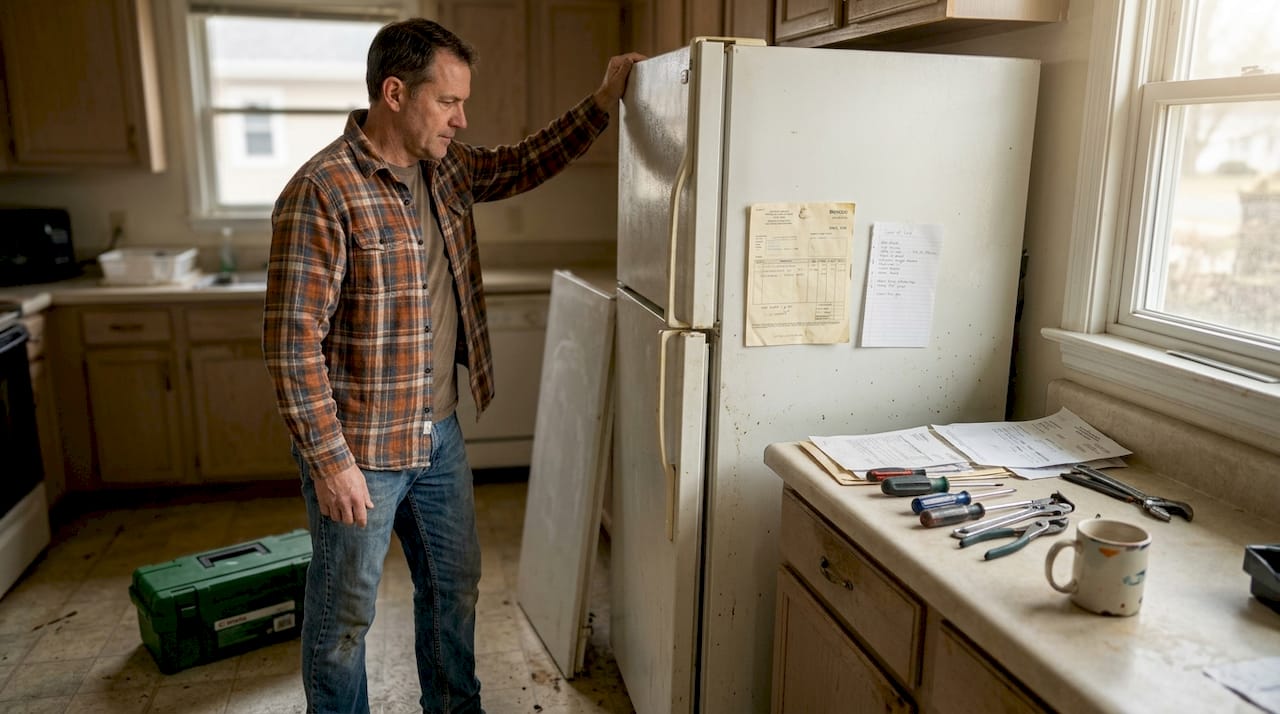
Legal requirements come first. In Massachusetts, doors must be removed from refrigerators and freezers before any pickup or disposal. This is not optional. The law exists to protect children and animals from getting trapped inside. Skipping this step means your pickup provider will refuse the appliance, and you could face legal liability.
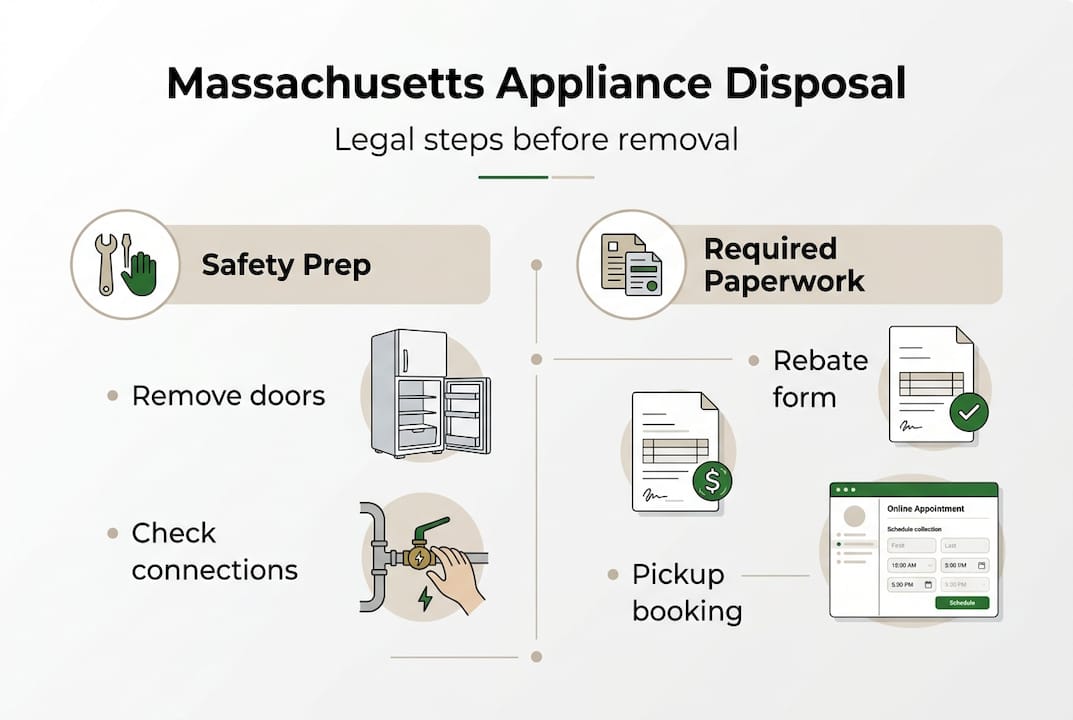
Safety around your appliances extends beyond the doors. Review your dryer safety laws before disconnecting any gas or electric appliances. Never yank a gas line without shutting it off at the source. Keep a fire extinguisher nearby when working with older appliances that may have worn wiring.
Here’s a quick reference table to organize your prep:
Item | Why it matters | Where to get it |
Rebate paperwork | Required for utility programs like Mass Save | Your utility account online |
Donation receipt template | Needed for tax write-offs on donated items | Nonprofit or charity you choose |
Model and serial numbers | Required for program eligibility checks | Back or bottom panel of appliance |
Moving equipment (dolly, straps) | Prevents back injuries and wall damage | Hardware store or rental |
Work gloves | Protects hands from sharp edges and chemicals | Any hardware store |
Check your eligibility for Massachusetts utility programs. Mass Save, which is backed by National Grid and other state utilities, offers a free appliance recycling pickup with rebates for qualifying items. You’ll want to check if your utility participates and whether your appliance meets the program’s size and condition requirements before scheduling anything.
Before you call anyone, use this prep checklist:
Remove refrigerator and freezer doors before any provider arrives
Locate your utility account number for Mass Save program eligibility
Write down model, brand, and cubic footage of each appliance
Clear a straight path from the appliance to the nearest exterior door
Gather any warranty or purchase documentation you may need for donations
Confirm your address is within the provider’s service area
Pro Tip: Review the appliance removal checklist before booking any service. It takes ten minutes and prevents the most common scheduling delays and refused pickups.
Important: Even if your appliance is not functioning, it may still qualify for a recycling program. Always confirm with the provider rather than assuming ineligibility based on condition alone.
Step-by-step workflow for disposing of appliances
Once you’ve gathered your paperwork and prepped the appliance, it’s time to choose your disposal path and take action. There are four main routes available to Massachusetts residents: utility-sponsored recycling programs, town DPW (Department of Public Works) drop-off sites, professional junk removal services, and donation or scrap options. Each has advantages depending on your appliance type, condition, and timeline.
Here is the full disposal workflow laid out step by step:
Identify your appliance type and condition. Working refrigerators and freezers in the 10 to 30 cubic foot range are prime candidates for Mass Save. Broken or non-qualifying appliances may be better suited for junk removal or scrap.
Compare your disposal options. Use the comparison table below to match your situation with the right service.
Check for rebate eligibility. Mass Save offers free pickup and up to $75 per recycled fridge or freezer, with strict eligibility rules and a limit of two units per account per year.
Unplug and clean the appliance. Empty all contents, wipe down interior surfaces, and allow it to air out. Remove shelving if required by the pickup provider.
Remove all doors from refrigerators and freezers. This is legally required in Massachusetts and non-negotiable for any pickup service.
Book your pickup or drop-off. Call your utility provider, schedule online, or contact a junk removal company. Confirm that you’re within the service zone.
Prepare the access path. Move furniture, clear doorways, and measure tight hallways or stairwells if needed. Let the provider know in advance about any access challenges.
Track your rebate or receipt. After pickup, you’ll receive a confirmation. For Mass Save, the rebate check typically arrives within a few weeks.
Explore the types of junk removal services available in Massachusetts to understand what each provider actually handles and how pricing works.
Disposal method | Cost | Rebate available | Eco-friendly | Best for |
Mass Save program | Free | Up to $75 | Yes, 100% recycled | Working fridges/freezers |
Town DPW drop-off | Low or free | No | Varies | Non-working small appliances |
Professional junk removal | Paid service | No | 60-75% recycled | Mixed loads, large items |
Donation | Free | Tax deduction | Yes | Working appliances in good shape |
Scrap metal pickup | Free to paid | Scrap payout | Partial | Washers, dryers, metal-heavy items |
If you’re managing a property turnover or dealing with multiple appliances at once, look at examples of junk removal in MA to understand how bundled pickups work and what costs to expect.
Statistic spotlight: Mass Save’s appliance recycling program guarantees free pickup and up to $75 per qualifying appliance, with a two-unit maximum per account per calendar year.
Pro Tip: Bundle a qualifying dehumidifier with your fridge or freezer pickup. Mass Save offers a $30 bonus rebate when you include a dehumidifier in the same appointment. That’s up to $105 back in a single visit.
How Massachusetts leads in eco-friendly appliance disposal
Beyond just clearing up space, let’s see why choosing eco-focused options is better for your home and your state. Massachusetts has built one of the stronger appliance recycling infrastructures in the country, and residents are well-positioned to take advantage of it.
Here’s what makes appliance recycling so valuable environmentally:
Refrigerants and compressor oils are hazardous chemicals that must be extracted and handled by certified technicians. Certified programs like Mass Save ensure this happens correctly.
Metals including steel, aluminum, and copper make up the bulk of most large appliances and are fully recyclable. Keeping these out of landfills saves significant energy compared to mining new materials.
Plastic components from appliance housings, shelves, and liners can be processed and re-used in manufacturing.
Foam insulation in older refrigerators may contain CFCs (chlorofluorocarbons), which are ozone-depleting substances. Certified recyclers know how to handle this safely.
The numbers back this up. Eco benchmarks show that Mass Save guarantees 100% recycling of qualifying appliances, and typical professional junk removal services in Massachusetts recycle or divert 60 to 75 percent of collected materials from landfills.
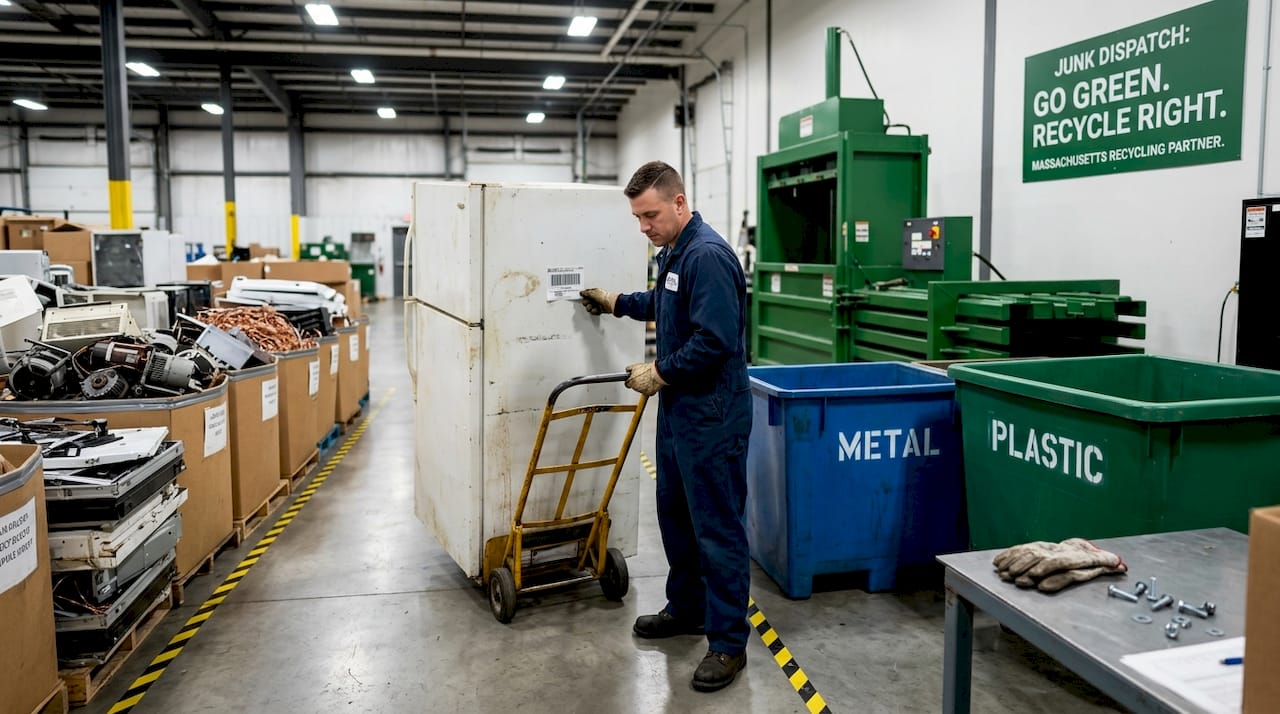
That 100 percent figure for Mass Save means every component, from the steel shell to the refrigerant gas, is processed through certified recycling channels. Not a single part ends up in a dump. For a standard 20 cubic foot refrigerator, that translates to roughly 150 pounds of steel, several pounds of aluminum, and several ounces of refrigerant all being properly recovered and repurposed.
Learn how to recycle household items in Massachusetts beyond just appliances, because a full home cleanout involves far more recyclable material than most people realize.
Remember: Tossing an appliance at the curb without proper pickup is illegal in Massachusetts. It is considered illegal dumping and can result in fines from your municipality. Always use a certified program or licensed removal service.
Beyond legal compliance, there is a genuine community benefit to choosing green disposal. Hazardous materials from improperly disposed appliances can leach into groundwater. Massachusetts communities near landfills feel this impact most directly. When you recycle properly, you’re not just helping yourself. You’re protecting your neighbors.
Get a deeper look at eco-friendly disposal best practices to understand how professional services in Massachusetts approach material diversion and why it matters for local communities.
Common mistakes and troubleshooting your appliance disposal workflow
Even with the best workflow, a few common missteps can cause headaches. Here’s how to steer clear of the most costly errors.
Mistake 1: Forgetting to remove appliance doors. Mass Save requires all doors be removed from fridges and freezers before any pickup. If your driver arrives and the doors are still on, the appointment is canceled. You lose the time slot and may need to wait days or weeks to reschedule.
Mistake 2: Not checking program eligibility before scheduling. Mass Save has specific requirements around appliance size (10 to 30 cubic feet for refrigerators), working condition, and utility provider. If you book without confirming eligibility, you may show up to the appointment only to have the appliance rejected.
Mistake 3: Moving the appliance before booking the service. Many homeowners drag a heavy refrigerator out of the kitchen, only to injure themselves or block a hallway. Then they find out the pickup provider needs it accessible from a specific location. Wasted effort and potential injury.
Mistake 4: Missing the rebate window. Some rebates through utility programs are tied to fiscal year budgets. Programs can close early if funds run out. If you plan to participate, schedule early in the year rather than waiting until fall.
Mistake 5: Assuming all junk removal services recycle. Not every provider prioritizes recycling. If eco-friendly disposal matters to you, ask directly before booking whether the company has a recycling policy and what percentage of collected materials they divert from landfills.
Here’s how to troubleshoot common problems:
Pickup refused: Check whether doors were removed, confirm eligibility, and reschedule. Most issues are fixable with a quick phone call.
Rebate not received after 6 weeks: Contact the utility program directly with your confirmation number. Rebate processing times vary.
Appliance too large for doorway: Hire a junk removal crew with experience in tight spaces, or check the massachusetts disposal guide for solutions.
Not sure how to dispose of a TV or electronics alongside appliances: Review guidance on the safe removal of electronics to keep e-waste out of the landfill.
Pro Tip: Schedule your pickup before you move anything. Once you have a confirmed date, that’s when you prep and position the appliance. This prevents unnecessary heavy lifting, avoids injury, and ensures you meet any provider requirements for access and placement.
Key reminder: Keep a digital or paper copy of every rebate form, pickup confirmation, and receipt. If a rebate check doesn’t arrive or there is a dispute about pickup, documentation is your only protection.
Why a streamlined workflow beats piecemeal appliance removal
With the main workflow covered, it’s worth reflecting on why being organized is the real advantage in this process. At Junk Dispatch, we’ve seen what happens on both ends of the spectrum. Homeowners who take a structured approach consistently report smoother experiences, fewer surprises, and better outcomes overall.
The alternative is what we call “piecemeal disposal,” where someone calls one service for the refrigerator, asks a neighbor to help move the washer, leaves the dryer on the curb hoping the trash crew takes it, and forgets about the rebate entirely. This might feel like progress, but it creates a patchwork of missed opportunities. The rebate goes unclaimed. The curb appliance triggers a fine. The neighbor’s back gets thrown out.
There’s also a cost argument that doesn’t get enough attention. Planned, workflow-based disposal actually saves money. When you bundle multiple appliances into one professional pickup, you reduce per-item costs. When you check eligibility before booking, you don’t pay for services you didn’t need. When you schedule in advance rather than scrambling in a panic during a move, you get better time slots and better prices.
For property managers handling multiple units, this matters even more. A consistent disposal strategy across all units reduces the time spent coordinating, eliminates repeat mistakes from unit to unit, and builds a working relationship with reliable providers. It’s the difference between reactive cleanup and proactive property management. Understanding the role of junk removal during moves can help property managers build this kind of system and avoid the scramble that usually happens at tenant turnover.
The environmental argument for a unified workflow is equally strong. When every appliance goes through a certified channel, you maximize the recycling rate. When you piece things together, some items inevitably end up in the wrong place. A planned approach isn’t just more convenient. It’s more responsible.
Take the next step: Expert help for hassle-free appliance removal
Managing an appliance disposal workflow on your own is very doable with the right information. But there are times when you want an experienced team to handle the heavy lifting, navigate the legal requirements, and ensure every item is disposed of responsibly.
Junk Dispatch serves Massachusetts homeowners and property managers with fast, insured, eco-conscious appliance removal. Our crews know the local rules, handle door removal, and coordinate with recycling programs so you don’t have to. Whether you’re clearing one fridge or a full property worth of appliances, we make it simple with same-day availability, transparent pricing, and guaranteed satisfaction. Homeowners in Reading, MA can count on us for quick, professional pickups, and we serve clients throughout Essex County and the broader Massachusetts region. Book online for a free estimate today and get one step closer to a clutter-free property.
Frequently asked questions
Who can use the Mass Save appliance pickup and rebate program?
Eligible Massachusetts residents with working refrigerators or freezers between 10 and 30 cubic feet, serviced by participating utilities, can use Mass Save for free pickup and a $75 rebate, with a limit of two units per account per year.
Why do appliance doors need to be removed before disposal?
Massachusetts law requires refrigerator and freezer doors to be removed before pickup or disposal to prevent children or animals from getting trapped inside, which is a serious safety hazard.
What percent of appliances is typically recycled in Massachusetts?
About 95 to 100 percent of refrigerator or freezer components are recycled through certified programs like Mass Save, while professional junk removal services typically recycle or divert 60 to 75 percent of materials.
Are there extra incentives for disposing of more than one appliance?
Yes. Mass Save offers a $30 bonus rebate when you include a qualifying dehumidifier alongside a fridge or freezer pickup in the same appointment, which can bring your total rebate to $105.
Recommended
Comments