Sustainable Disposal in Massachusetts: A Practical Guide
- Joe Lusso
- 6 hours ago
- 9 min read

TL;DR:
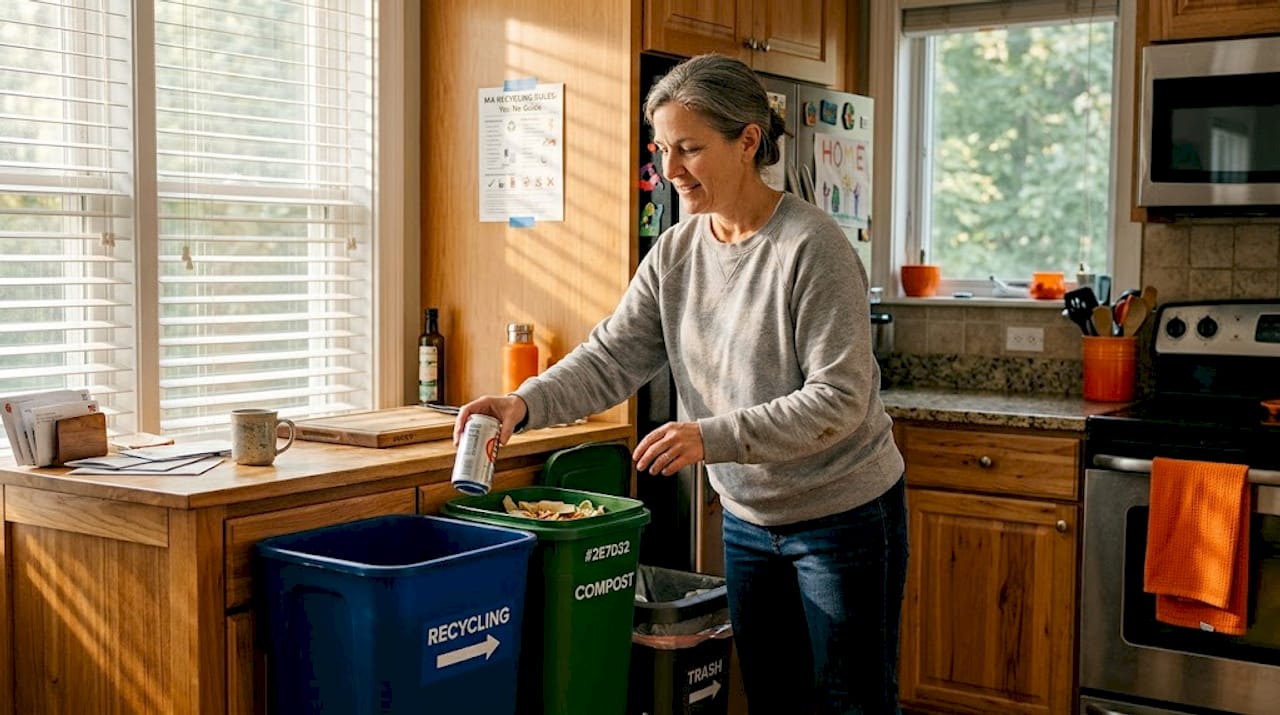
Massachusetts enforces strict waste bans on items like mattresses electronics and organics to reduce landfill use. Proper sorting and working with eco-conscious removal services help residents stay compliant and support the recycling economy. Future regulations, including expanded composting requirements, will increase sustainable disposal responsibilities.
Most Massachusetts homeowners don’t realize that tossing a mattress, old television, or bag of yard trimmings into their regular trash can violate state law. Massachusetts enforces some of the strictest waste disposal rules in the country, and the penalties for ignoring them range from fines to rejected trash pickups. The good news is that understanding these rules isn’t complicated once you know where to look. This guide walks you through what sustainable disposal actually means in Massachusetts, which items are banned from landfills, what steps you should take right now, and how upcoming regulations will affect you as a homeowner or property manager.
Table of Contents
Key Takeaways
Point | Details |
Waste bans are strict | Massachusetts heavily restricts landfilling of common household items, so sorting and proper disposal are essential. |
Sort before you toss | Separating recyclables, donations, and compostables helps you comply with state laws and cut down on landfill waste. |
Professional help simplifies compliance | Using a MassDEP-compliant junk removal service ensures your waste is handled legally and sustainably. |
Incentives support eco-actions | Financial programs and new laws encourage sustainable choices, making it easier to do the right thing. |
Change is ongoing | Stay informed on new bans and disposal innovations so your property stays compliant and eco-friendly. |
What sustainable disposal really means in Massachusetts
Sustainable disposal isn’t just a buzzword. In Massachusetts, it has a very specific, legally enforced meaning tied directly to how the state manages its waste stream.
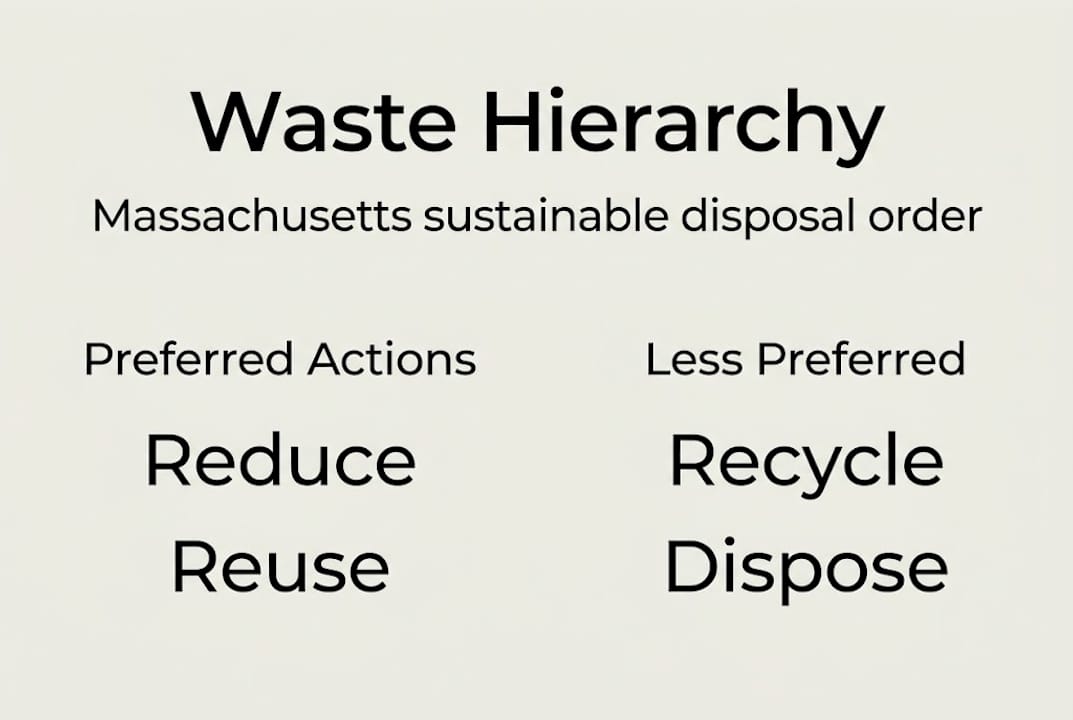
Sustainable disposal practices in Massachusetts follow a strict waste hierarchy: source reduction comes first, then reuse, then recycling, then composting, and only after all those options are exhausted should disposal be considered. This hierarchy is backed by MassDEP’s 23 waste disposal bans, which prohibit landfilling or incineration of recyclable materials including metals, cardboard, paper, glass, plastics, textiles, mattresses, electronics, organics, and construction debris. If you’re tossing any of these into your regular trash, you’re not just being wasteful. You’re potentially breaking the law.
Why does Massachusetts go this far? The answer is simple: the state is running out of disposal capacity. Most of Massachusetts’s solid waste gets shipped out of state for landfilling, costing millions of dollars and generating significant carbon emissions just from transportation. Keeping recyclable and compostable materials out of that stream saves money, reduces emissions, and supports an entire local economy built around reuse and recovery.
The benefits go beyond the environment. Sustainable disposal protects homeowners from fines, helps property managers avoid compliance headaches, and directly supports Massachusetts’s recycling and composting industries. These industries create real jobs and keep money circulating in the local economy. Adopting sustainable home practices at the household level is one of the most direct ways residents can contribute to this system.
Traditional vs. sustainable disposal approaches in Massachusetts
Approach | Method | Compliance | Environmental Impact |
Traditional disposal | Everything in one trash bin | Often violates waste bans | High landfill use, high emissions |
Sustainable disposal | Sort, recycle, donate, compost | Fully compliant | Low landfill use, supports recovery |
Professional junk removal | Sorted by eco-conscious crew | Compliant with MassDEP rules | Maximum diversion from landfill |
Items currently banned from regular trash in Massachusetts:
Metals (ferrous and non-ferrous)
Cardboard and paper
Glass and plastics
Textiles and clothing
Mattresses and box springs
Electronics (TVs, computers, appliances)
Organic waste (food scraps, yard trimmings)
Lead acid and rechargeable batteries
Construction and demolition debris
Whole tires
For a deeper breakdown of how to navigate each of these categories, the eco-friendly disposal guide from Junk Dispatch covers the specifics you’ll want to know before scheduling any removal.
Key steps for homeowners and property managers
Understanding the rules is one thing. Putting them into practice is where most people get stuck. Here’s a straightforward process that works whether you’re clearing out a single room or managing a multi-unit property.
Effective waste sorting methods include dividing materials into four categories: recyclables, donations, compostables, and non-recyclables. Professional junk removal services that follow this approach typically recycle or donate 60 to 80 percent of collected items, and municipal options like curbside bulk pickups, drop-offs, and dumpster bag services round out the compliance picture for most homeowners.
Here’s a step-by-step process you can follow on your next cleanout:
Sort before you haul. Separate everything into the four categories listed above before anything leaves your property. Don’t wait until items are piled at the curb to figure out where they belong. Sorting upfront saves time and prevents compliance mistakes.
Separate banned items immediately. Pull out mattresses, electronics, appliances, and textiles as a dedicated group. These items have specific drop-off locations or must be handled by licensed haulers. Mixing them with general trash invites fines.
Choose the right disposal method for each category. Recyclables go to your municipal program or transfer station. Donations in good condition go to local thrift stores, Habitat for Humanity ReStores, or community groups. Food scraps and yard trimmings go to composting programs. For everything else, a professional junk removal service with documented diversion practices is your safest option.
Track and verify compliance. Ask your junk removal provider for documentation showing where your items went. A reputable company will tell you what percentage of your load was recycled or donated versus disposed of. This matters most for property managers who may face audits.
Working with an eco-friendly junk removal provider also takes the guesswork out of municipal rules. Junk disposal must-knows vary by town, and a knowledgeable local crew already knows which transfer stations accept which materials and which programs are currently active in your area.
For residents who want to see how this looks in practice, Massachusetts junk removal examples show real projects where proper sorting and eco-conscious removal made the process faster and more affordable than expected.
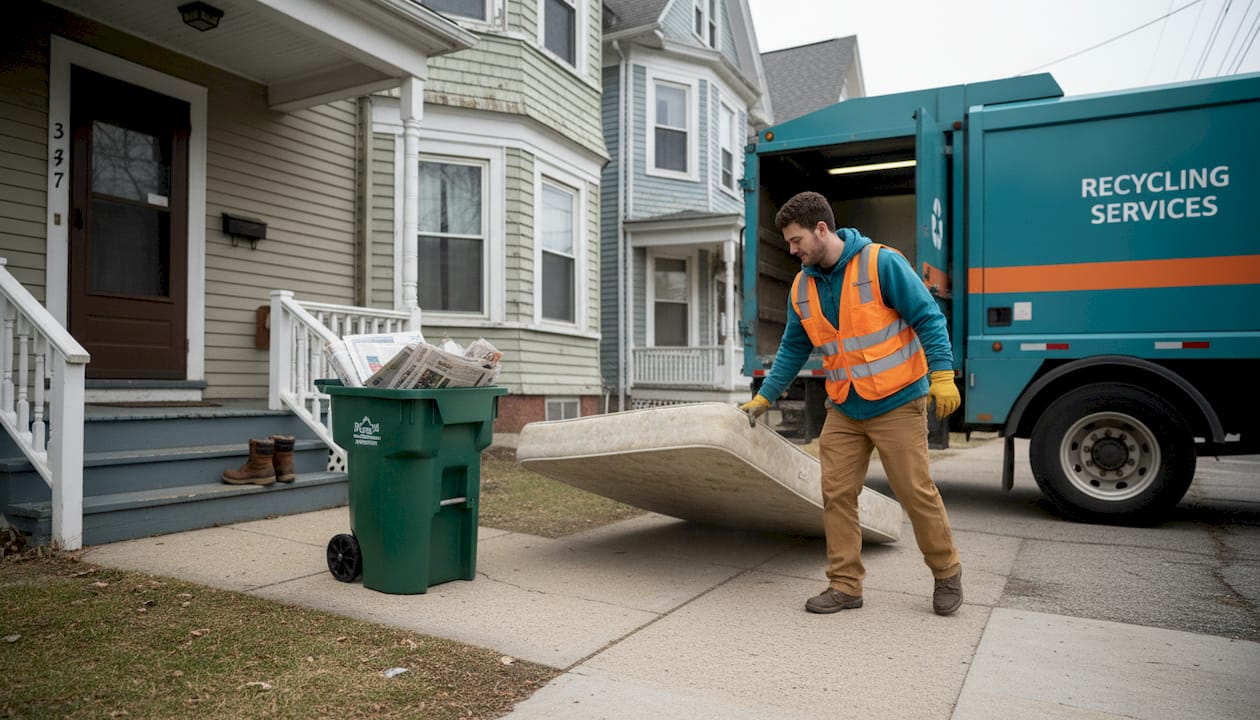
Pro Tip: When hiring a junk removal company, ask specifically about their diversion rate. This is the percentage of collected materials that never reach a landfill. Look for companies with diversion rates of 60 percent or higher and ask if they’re recognized by MassDEP or work with certified recycling facilities. The answer tells you a lot about how seriously they take the state’s waste bans.
Many homeowners are also surprised to discover that smart sustainable improvements at the property level, like installing better storage systems or switching to reusable materials, can reduce the volume of junk you generate in the first place. Less waste generated means fewer compliance concerns and fewer removal costs down the road.
Navigating Massachusetts disposal bans and incentives
Massachusetts doesn’t just tell you what not to do. The state also offers real financial and programmatic incentives to help residents and businesses make the switch to sustainable disposal. Understanding both sides of this equation gives you a much clearer picture of how the system works.
The Massachusetts 2030 Solid Waste Master Plan sets a target of reducing disposal to 4 million tons per year by 2030, which represents a 30 percent reduction from current levels. The long-term goal is a 90 percent reduction by 2050, driven by circular economy strategies that keep materials in use as long as possible. These aren’t aspirational numbers. They’re tied to specific enforcement actions including the expansion of waste bans.
The bans are working. Mattress recycling doubled to 396,358 units in 2023 following the 2022 ban. Textiles recovery reached 45,826 tons in 2023. The commercial organics ban alone created 1,676 jobs and generated $390 million in economic activity. These are the outcomes the state’s compliance framework is designed to produce.
Key Massachusetts waste bans: materials, enforcement, and outlets
Material | Ban Year | Enforcement Notes | Proper Outlet |
Mattresses | 2022 | Haulers may refuse noncompliant loads | Municipal recycling programs, licensed haulers |
Textiles | 2022 | Inspections at transfer stations | Donation centers, textile recyclers |
Electronics | 2000 | Manufacturer take-back programs required | Retailer drop-offs, e-waste events |
Organics (commercial) | 2014 | Applies to generators over 1 ton/week | Composting facilities, anaerobic digesters |
Construction debris | 2006 | Contractor certification required | C&D recycling facilities |
Metals | 1990s | Broadly enforced | Scrap yards, recyclers |
“Massachusetts’s waste bans have created a parallel economy built on recovery. Every ton of material diverted from landfill represents not just environmental savings, but jobs, tax revenue, and reduced dependence on out-of-state disposal facilities. This is what a circular economy looks like at the state level.”
Active incentives and grant programs for Massachusetts residents and businesses:
MassDEP Sustainable Materials Recovery Program grants for municipalities
Reduce/Reuse/Repair grants for businesses and nonprofits
Organics diversion grants for commercial food waste generators
Recycling Dividends Program payments to municipalities based on performance
MassCEC clean energy grants that intersect with composting and organics processing
To stay ahead of the 2026 junk disposal trends shaping the market in Massachusetts, homeowners and property managers should familiarize themselves with both the ban list and the available grant programs. If you’re unsure how to handle a specific material like an old sectional or appliance, checking mattress and furniture recycling options first can save you time and money.
The future of sustainable disposal in Massachusetts
The rules aren’t standing still. Massachusetts is actively expanding its waste ban framework, and several significant changes are expected between now and 2030. Knowing what’s coming helps you plan ahead rather than scramble to catch up.
A potential zero-threshold organics ban by 2028 would require all generators, including residential households, to divert food scraps and organic waste from landfills. Currently, the commercial organics ban only applies to businesses generating more than one ton of organic waste per week. Expanding that to all residential properties would be a significant shift, requiring far more composting infrastructure and curbside collection capacity across the state.
There’s also a real tension in this policy space. Organics processing capacity currently sits at around 510,000 tons per year, while the state’s goal is 780,000 tons. Bans boost recycling infrastructure and support job creation, but some smaller municipalities and rural haulers have pushed back on enforcement feasibility, particularly when composting facilities are far from their service areas. This isn’t a reason to ignore the rules. It’s a reason to start building habits now before the mandates arrive.
Trends shaping sustainable disposal in Massachusetts through 2030:
Expansion of curbside composting programs to more municipalities
Growth in textile recycling drop-off networks across the state
Increased use of technology for waste auditing and compliance tracking
Emergence of local mattress and furniture recycling facilities
Greater consumer education campaigns linked to enforcement actions
Rising market demand for recovered materials driving private sector investment
The role of individual residents in this transition is larger than most people realize. State-level goals depend on widespread, consistent participation at the household and property level. Eco-friendly junk removal solutions that align with these trends make it much easier for homeowners to stay compliant without having to track every regulatory update themselves.
Pro Tip: Set a calendar reminder to check MassDEP’s waste ban page at least once a year. Massachusetts updates its ban list and enforcement thresholds periodically. Subscribing to your municipality’s recycling newsletter is another easy way to catch local changes before they affect your next cleanout. The eco-friendly disposal benefits go well beyond compliance, including cost savings and better community outcomes, so staying current pays off in multiple ways.
A fresh perspective: Why small steps matter more than perfection
Here’s something most sustainability guides won’t tell you: perfection is the enemy of progress when it comes to waste disposal. We’ve seen it happen with homeowners who feel so overwhelmed by the list of rules that they do nothing at all, hoping to figure it all out at once someday. That approach doesn’t work and the data proves it.
Every single mattress diverted from a landfill matters. Every bag of textiles dropped at a donation center counts. Massachusetts’s junk removal sustainability benefits compound across thousands of households making incremental improvements, not a handful of perfect ones. The state’s 1,676 jobs from organics bans didn’t appear because every business achieved flawless compliance on day one. They appeared because enough businesses took enough steps consistently over time.
The real goal isn’t to memorize every ban. It’s to build a habit of sorting before you toss, asking questions when you’re unsure, and working with service providers who take compliance seriously. Massachusetts’s aggressive 2030 and 2050 targets depend on residents like you participating practically, not perfectly.
Making sustainable disposal effortless with professional help
Staying compliant with Massachusetts waste bans doesn’t have to feel like a second job. Junk Dispatch makes it straightforward for busy homeowners and property managers across the state.
Our insured crews sort, recycle, and donate materials in line with MassDEP’s waste bans, so you don’t have to track down drop-off locations or sort through a list of banned items on your own. Whether you need a single-item pickup or a full property cleanout, we handle the compliance side for you. Serving communities from Reading junk removal to Essex County sustainable junk removal and beyond, we offer same-day scheduling, free estimates, and transparent pricing. Get a quote today and make sustainable disposal the easiest part of your project.
Frequently asked questions
What items are banned from Massachusetts landfills?
Banned items include metals, cardboard, paper, glass, plastics, textiles, mattresses, electronics, organics, and construction debris, all enforced through MassDEP’s 23 waste disposal bans.
How do I properly dispose of a mattress in Massachusetts?
Recycle mattresses through municipal programs or hire a junk removal service that diverts them from landfills, as required by the 2022 ban that helped double mattress recycling to nearly 400,000 units in 2023.
What happens if I throw banned items in the trash?
Improper disposal can result in fines, waste audits, or rejected pickup by haulers, making it worth sorting upfront to avoid penalties and reduce landfill contributions.
Are there any financial incentives for sustainable disposal?
Massachusetts offers grants including the Reduce/Reuse/Repair program and Recycling Dividends payments, with additional support available through MassDEP-recognized providers who help connect residents to these resources.
Will sustainable disposal laws change soon?
Yes, a potential zero-threshold organics ban by 2028 and expanded residential composting requirements by 2030 are expected to significantly broaden compliance obligations for Massachusetts homeowners.
Recommended
Comments