What demolition services really offer Massachusetts projects
- Joe Lusso
- 4 days ago
- 9 min read

TL;DR:
Professional demolition in Massachusetts involves comprehensive planning, permits, hazardous material assessments, and proper utility disconnections before physical teardown begins.
While traditional demolition is faster and less expensive, eco-friendly deconstruction salvages more materials, albeit at higher costs and longer timelines.
Demolition isn’t just about swinging a wrecking ball and hauling rubble to a landfill. For Massachusetts homeowners and property managers, it’s a carefully planned process that involves permits, utility shutoffs, hazardous material inspections, environmental compliance, and strategic debris removal. Skipping any one of those steps can mean fines, project shutdowns, or serious liability. This guide breaks down exactly what professional demolition services cover, how they differ from eco-friendly deconstruction, and how to choose the right approach for your specific project.
Table of Contents
Key Takeaways
Point | Details |
Compliance is critical | Permits, hazardous material checks, and utility shutoffs are mandatory for all demolition projects in Massachusetts. |
Eco-friendly options exist | Deconstruction can recover up to 90% of materials, though it usually costs more and takes longer than regular demolition. |
Choose contractors wisely | Reliable demolition services manage permits, recycling, and scheduling for safer, greener, hassle-free results. |
Disposal impacts cost | The way your contractor disposes of materials affects both your expenses and the environment. |
What demolition services really cover in Massachusetts
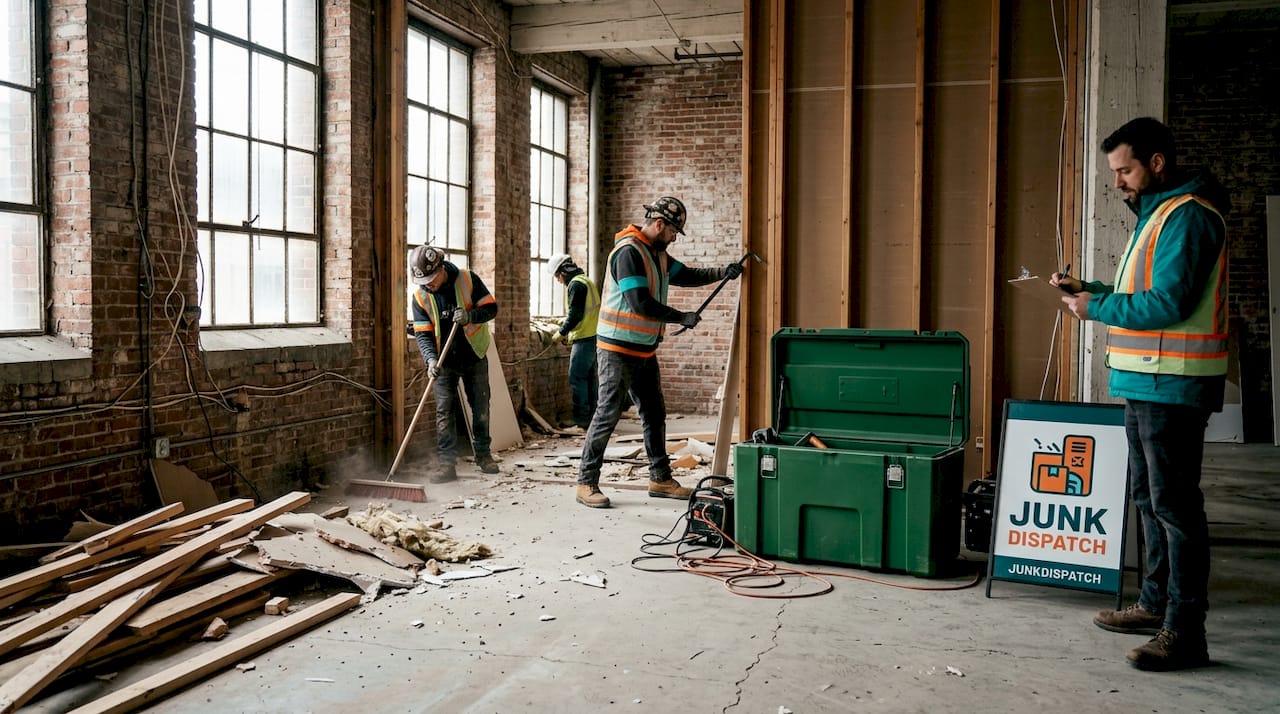
Most people assume demolition means renting a dumpster and knocking down walls. In reality, a professional demolition service in Massachusetts handles a sequence of technical and legal steps before a single wall comes down. Here’s what that actually looks like in practice.
Before any physical work begins, a licensed contractor must secure the right permits from your local building department. Massachusetts law doesn’t allow demolition to start without documented approval. Beyond the permit, utility companies need to disconnect gas, electricity, and water lines, and those disconnections must be inspected and signed off before crews arrive on site.
Then there’s hazardous material assessment. Older Massachusetts homes often contain asbestos insulation, lead paint, or both. The EPA RRP program requires certified contractors to survey for lead paint in pre-1978 buildings and follow strict containment and disposal protocols. Ignoring this isn’t just a code violation; it’s a health risk for your family, neighbors, and the crew.
Here’s a clear picture of what a full demolition service typically covers:
Building permit application and approval
Utility disconnections (gas, electric, water, sewer)
Hazardous material surveys (lead, asbestos, mold)
Site preparation and shoring of adjacent structures
Physical teardown of targeted structures
Debris removal and sorting for recycling or disposal
Site grading and cleanup
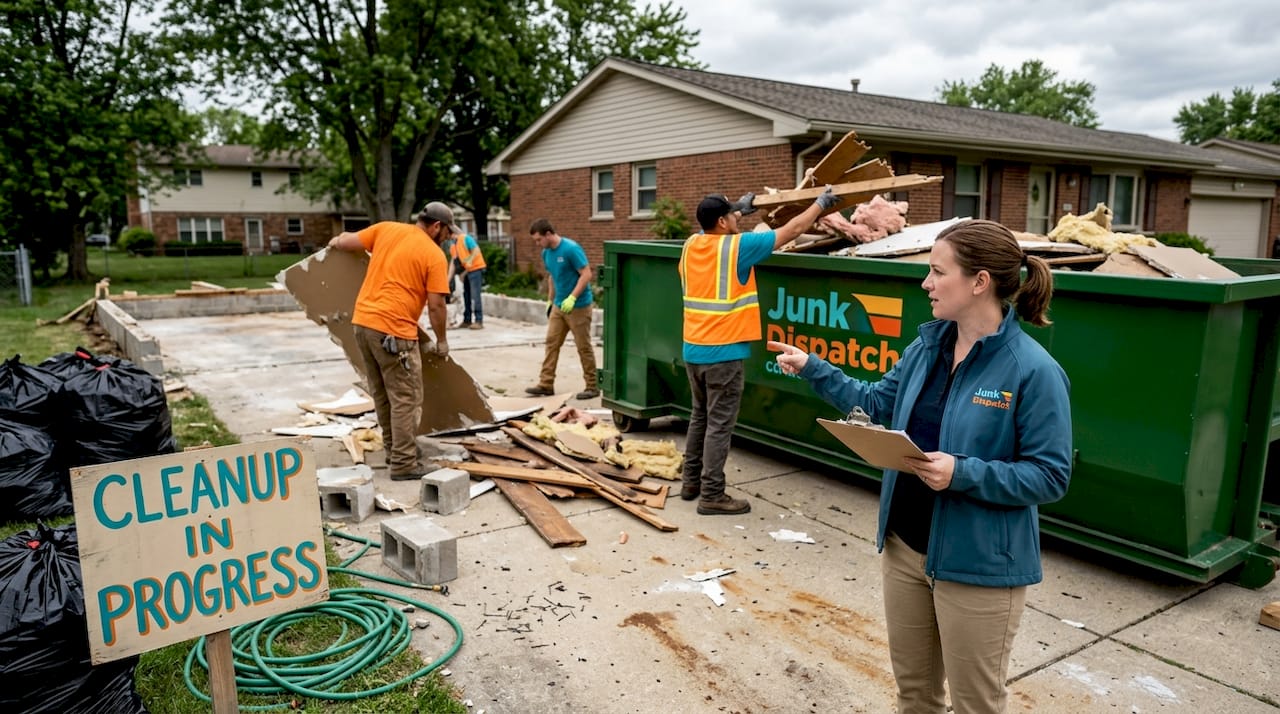
A solid property cleanout guide will tell you that cleanup after demolition is just as important as the teardown itself. Debris left on site creates liability and can trigger additional violations.
Pro Tip: Always ask your demolition contractor to provide copies of permits and hazardous material survey results before work starts. Reputable crews have no reason to withhold this documentation.
Same-day demolition service is available for smaller, straightforward projects like deck removal, shed teardowns, or interior wall demolition. However, same-day scheduling is only possible when permits are already secured and utilities are already disconnected. For larger projects, that prep work takes time, often one to two weeks before any physical work begins.
Demolition vs. deconstruction: Cost, eco-impact, and timelines
Once you understand what demolition covers, the next question becomes: should you choose traditional demolition or eco-friendly deconstruction? These two approaches have very different costs, timelines, and environmental outcomes, and understanding those differences helps you make the right call for your project and budget.
Traditional demolition is fast. Crews use heavy equipment to take down structures quickly, and debris gets hauled away, with varying amounts sorted for recycling. It’s cost-effective, especially for projects where timing matters or where structures are in poor condition and have low material recovery potential.
Deconstruction is a more methodical approach. Workers carefully disassemble buildings piece by piece, salvaging usable materials like lumber, bricks, doors, windows, and fixtures. Those materials can then be resold, donated, or repurposed. Deconstruction recovers 70 to 90% of materials in salvageable structures, compared to traditional demolition’s much lower recycling rates. The same research shows that in Massachusetts, deconstruction costs 17 to 25% more than traditional demolition for residential buildings.
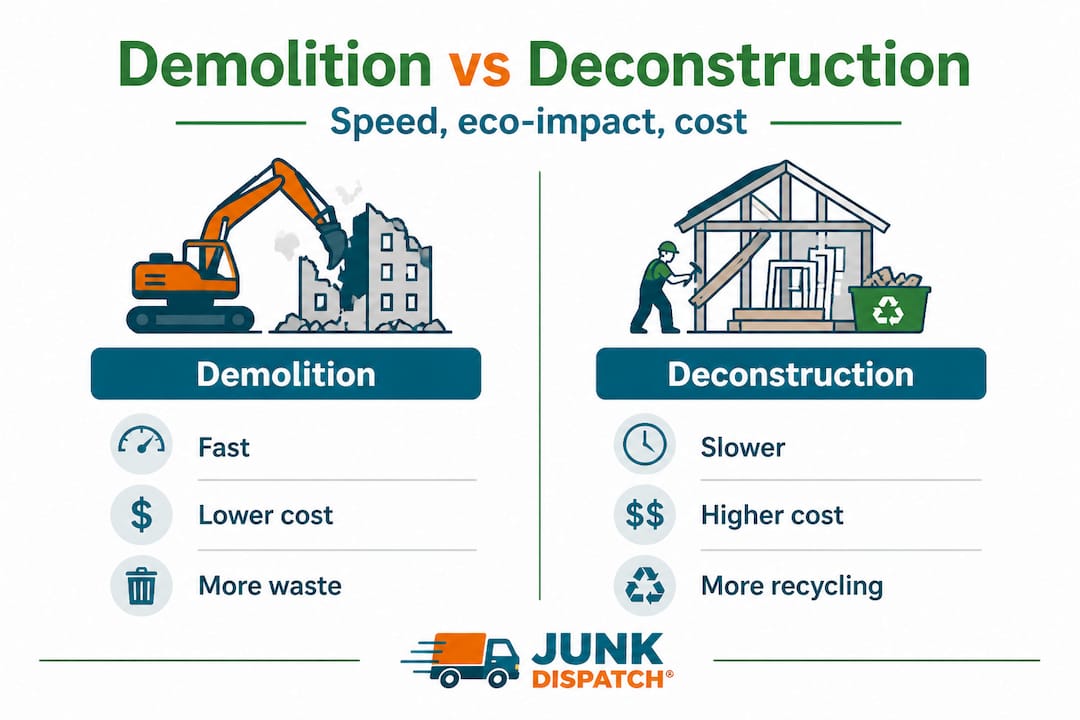
That cost premium is real, and it matters. Here’s a side-by-side comparison to help you think through it:
Factor | Traditional demolition | Deconstruction |
Speed | Fast (days) | Slower (days to weeks) |
Cost | Lower upfront cost | 17 to 25% higher cost |
Material recovery | Varies, often 20 to 40% | 70 to 90% recovery rate |
Environmental impact | Higher landfill use | Much lower landfill use |
Labor intensity | Lower | Higher |
Resale value of materials | Minimal | Moderate to high |
Deconstruction timelines can extend 2 to 5 times longer than traditional demolition for comparable projects. That can be a dealbreaker when you’re working against a development schedule or lease turnover deadline. However, when salvaged materials can be resold or reused, that revenue can offset a meaningful portion of the premium.
For Massachusetts property managers navigating these trade-offs, reviewing a demolition debris guide helps clarify what materials are commonly recoverable and what disposal costs you can expect to save. You’ll also find it useful to look at junk removal examples from similar residential and commercial projects in the state to benchmark realistic costs.
Key factors to weigh when choosing between demolition and deconstruction:
Condition of the structure (poor condition limits salvageable materials)
Age of the building (older buildings often have higher quality lumber)
Local resale markets for recovered materials
Project timeline and scheduling constraints
Landfill fees in your municipality (higher fees favor deconstruction)
Key regulations and compliance steps for Massachusetts projects
Making sure your demolition project is fully compliant isn’t optional. Massachusetts has specific legal requirements that apply to every project, whether you’re tearing down a backyard shed or clearing an entire commercial building. Here’s the step-by-step process that licensed contractors follow, and that you need to understand as a property owner.
Apply for a demolition permit. Contact your local building department. Most Massachusetts municipalities require a permit for any structure over a certain square footage. Processing time varies, but budget one to two weeks for residential projects.
Schedule utility disconnections. Contact each utility provider individually. Gas, electric, water, and sewer lines must all be formally disconnected and documented. Inspectors sign off on completed disconnections before demolition begins.
Commission a hazardous material survey. For any structure built before 1978, the EPA RRP rules require a certified inspector to test for lead paint. Asbestos surveys are also required and must be conducted by a licensed industrial hygienist.
Select a licensed, insured demolition contractor. Massachusetts requires contractors to carry liability insurance and be properly licensed. Verify credentials before signing any agreement.
Develop a waste management plan. Your contractor should outline where debris will go, what will be recycled, and how hazardous materials will be disposed of in accordance with state environmental regulations.
Final site inspection. After demolition, the building department typically requires a site inspection to confirm the work is complete and the lot is safe.
Important: Failing to complete any of these steps in order can result in stop-work orders, municipal fines, or legal liability if hazardous materials are mishandled. In Massachusetts, lead paint violations alone can result in penalties that far exceed the cost of doing it correctly the first time.
For more details on what happens to materials after the teardown, reviewing debris disposal methods gives you a practical picture of how licensed contractors separate, sort, and dispose of various materials legally in Massachusetts. A thorough debris removal guide can also help property managers plan for post-demolition cleanout logistics.
The compliance steps above aren’t bureaucratic busywork. Each one exists because demolition, done poorly, creates real dangers: structural collapses on adjacent properties, lead dust contaminating soil and air, and illegal dumping that ends up costing municipalities thousands to remediate. Working with an experienced crew means this complexity is handled for you.
Disposal, recycling, and eco-friendly demolition best practices
Getting through compliance is one thing. Meeting your environmental goals during disposal is another. Massachusetts has strong environmental standards, and property owners who want to minimize their footprint need to make deliberate choices about how materials are sorted and where they end up.
The good news is that smart disposal actually saves money in many cases. Recycling concrete, metal, and clean wood reduces hauling volume, which directly lowers your disposal costs. Salvaged materials like copper piping, dimensional lumber, and architectural hardware have active resale markets in Massachusetts, especially with the strong regional appetite for historic renovation materials.
Here’s a look at common demolition materials and their typical recycling or recovery options:
Material | Recyclable? | Common recovery path |
Concrete | Yes | Crushed for road base or fill |
Steel and metal | Yes | Scrap metal dealers |
Clean wood framing | Yes | Mulch or biomass fuel |
Brick | Yes | Salvage dealers or reuse |
Drywall (unpainted) | Yes | Gypsum recycling |
Hazardous materials | No (must be disposed separately) | Licensed hazmat facilities |
Mixed debris | Partial | Sorted at transfer stations |
Deconstruction recovers 70 to 90% of materials in suitable structures, making it the gold standard for eco-conscious projects. For Massachusetts property managers handling multiple properties, consistent eco-friendly practices also support stronger community relationships and lower long-term disposal costs.
When evaluating contractors, prioritize these eco-friendly practices:
Documented recycling rates for previous projects
Established relationships with local recycling facilities and salvage dealers
Same-day debris removal options that include on-site material sorting
Eco-certifications or participation in state sustainability programs
Transparent reporting on where materials go after pickup
For property managers handling ongoing or large-scale projects, a junk disposal guide for Massachusetts property managers offers practical frameworks for building recycling and disposal into your project planning from the start. Understanding why removing construction debris promptly matters also helps you avoid liability and keep sites safe between phases.
Pro Tip: Before hiring, ask your contractor for a written breakdown of how demolition debris will be sorted and where each material category will go. Contractors who can answer that question specifically and confidently are the ones worth hiring.
Massachusetts demolition: What most property owners miss
Here’s an uncomfortable truth that we see play out regularly in Massachusetts projects: most property owners focus almost entirely on upfront cost and speed when choosing a demolition service. Those are reasonable priorities, but they tend to crowd out the considerations that actually determine whether a project goes smoothly or turns into a headache.
The biggest hidden risk? Skipping or rushing the hazardous material survey. In Massachusetts, where a significant portion of the housing stock was built before 1978, lead paint is genuinely common. Property owners who choose cheaper, unlicensed crews to save a few hundred dollars often find themselves dealing with contaminated soil, health claims, or regulatory investigations that cost far more than a proper survey ever would have.
The second most common mistake is misreading the value of selective deconstruction. Selective deconstruction using hydraulic tools reduces emissions and vibrations, which is great for eco-goals and neighboring properties. But it extends timelines 2 to 5 times. That’s viable when the resale value of recovered materials offsets a 20 to 60% cost premium. It is not viable when you’re on a tight development timeline and your salvaged materials are degraded or low value. Choosing deconstruction for the wrong project is just as costly a mistake as skipping it when it makes sense.
The smarter approach is to evaluate projects individually. What’s the condition of the structure? What materials are recoverable and what will they fetch? What are the real timeline constraints? A good contractor helps you answer these questions honestly rather than defaulting to one approach for every job. For property managers overseeing mixed commercial portfolios, understanding commercial junk removal insights helps frame these decisions across different property types.
The bottom line is that demolition decisions are risk management decisions. Price is one variable. Compliance, environmental liability, timeline risk, and material recovery value are the other variables that actually determine your total project cost.
Get expert, eco-friendly demolition help in Massachusetts
Demolition projects done right require experienced crews, proper permitting, and a clear plan for responsible disposal. Whether you’re managing a residential teardown in Reading or coordinating a large commercial cleanout, getting the details right from the start protects your investment and your peace of mind.
Junk Dispatch provides insured demolition and debris removal services across Massachusetts, with flexible scheduling, same-day options when prep work is complete, and a genuine commitment to eco-friendly disposal practices. Our crews handle everything from permit coordination to on-site material sorting and recycling. If you’re in Reading and need demolition services, or if you’re working across Essex County and need full-service junk removal, we’re ready to help. For project-specific needs, our specialized demolition solutions cover the full range of residential and commercial requirements across the state. Book a free estimate online and let us handle the hard part.
Frequently asked questions
How much more does eco-friendly deconstruction cost in Massachusetts?
Deconstruction costs 17 to 25% more than traditional demolition for residential buildings in Massachusetts, but it recovers up to 90% of materials in suitable structures, which can offset the premium through resale or reduced disposal fees.
Are demolition permits required for all properties in Massachusetts?
Yes, permits and hazardous material surveys are mandatory for all demolition projects in Massachusetts, including utility disconnections that must be inspected and signed off before any physical work begins.
Can same-day demolition service also be eco-friendly?
Yes, same-day service and eco-friendly practices can coexist when permit and compliance steps are completed in advance, and when contractors have established sorting and recycling systems ready to deploy on arrival.
What should I ask a demolition contractor beyond price?
Ask specifically about hazardous material handling procedures, documented recycling rates, licensing and insurance status, how they manage permit applications, and what happens to each category of debris after it leaves your site.
Recommended
Comments