Top trends shaping junk removal in 2026 for Massachusetts
- Joe Lusso
- 2 days ago
- 8 min read

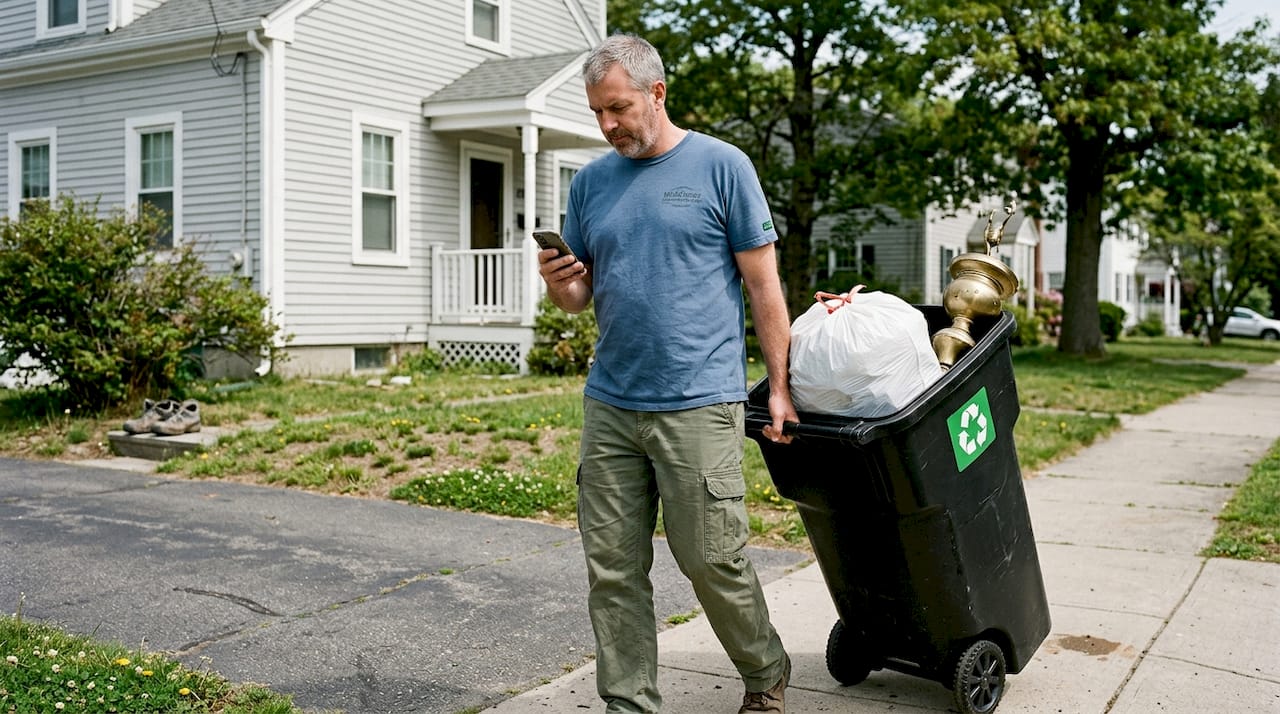
The junk removal industry is moving faster than most people realize. With the market projected to hit $9.1B by 2033, Massachusetts homeowners and property managers are navigating a landscape that looks nothing like it did five years ago. Post-pandemic clutter, stricter state waste regulations, and a wave of tech-driven services have all collided at once. Whether you are clearing out a garage in Worcester or managing a commercial cleanout in Essex County, understanding what is changing in 2026 will save you time, money, and potential fines.
Table of Contents
Key Takeaways
Point | Details |
Eco-regulations are strict | Massachusetts law now prohibits 23 categories of waste from landfills in 2026. |
Tech drives efficiency | Apps and AI sorting tools are making junk removal faster, greener, and less costly. |
Volume-based pricing prevails | Most services in 2026 use truck load pricing and require upfront photos for quotes. |
Prep improves outcomes | Staging, photos, and understanding bans ensure smooth, compliant pickup for homes and businesses. |
Why is junk removal changing so fast in 2026?
With the pace set, let’s break down why these changes are happening and what they mean on the ground.
Massachusetts is not just following national trends. It is setting them. The state enforces 23 waste ban categories covering organics, electronics, mattresses, metals, and textiles. That means what you toss out is now a compliance issue, not just a convenience one. Businesses and homeowners alike are being held to a higher standard.
Demand is surging on both sides of the market. Residential decluttering spiked after the pandemic and has not slowed down. Commercial construction, office reconfigurations, and warehouse expansions are generating more debris than ever. The U.S. waste collection market is projected to exceed $90B by 2030, and Massachusetts is a significant contributor to that growth.
Eco-friendly junk removal is no longer optional here. The state targets 60 to 80% landfill diversion rates, which means recycling, donation, and repurposing are now built into every legitimate removal job. Companies that cannot meet these standards are losing contracts and clients fast.
Here is what is driving the shift:
Regulatory pressure: 23 active waste bans with real enforcement consequences
Consumer expectations: Clients want instant quotes, same-day service, and eco-proof disposal
Tech adoption: AI-powered sorting, route optimization, and app-based booking are now standard
Commercial growth: More construction and office turnover means more debris, more often
Tech means less guesswork, faster pickups, and greener results. The companies embracing it are pulling ahead fast.
Key 2026 junk removal trends in Massachusetts
Now that we see the drivers, let’s pinpoint exactly what to expect from junk removal services in Massachusetts in 2026.
Trend 1: Digital-first booking and communication. Scheduling a pickup used to mean a phone call and a vague time window. Now, tech integration via apps handles everything from quote requests to payment confirmation. You get real-time updates and zero back-and-forth.
Trend 2: Recycling, donation, and repurposing first. Landfill is the last resort now. Reputable services sort loads on-site or at facilities to maximize diversion. Furniture goes to donation centers. Electronics go to certified recyclers. This is not just good ethics. It is the law.
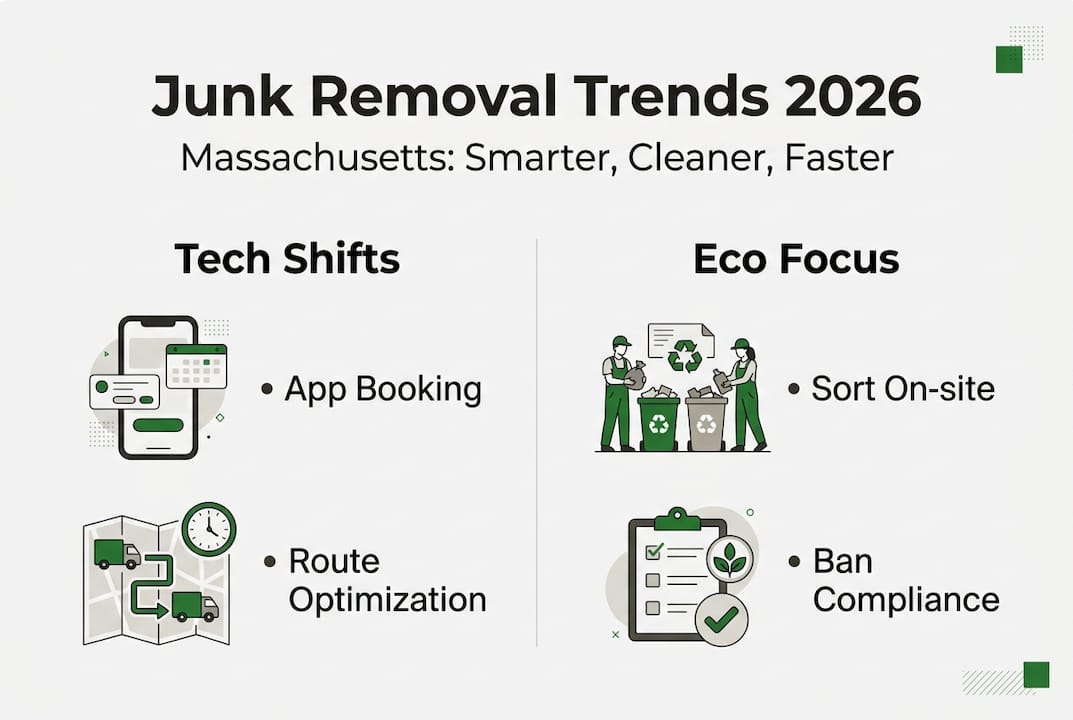
Trend 3: Compliance with Massachusetts waste bans. Ignoring the bans is not an option. Fines are real, and loads containing prohibited items can be refused entirely. Check out these 2026 junk removal tips to stay ahead of what is and is not allowed.
Trend 4: Volume-based pricing replacing flat rates. Volume-based pricing is now the industry standard. You pay for the truck space your junk actually takes up, not a fixed fee regardless of load size. This rewards preparation and smaller, organized loads.
Pro Tip: App-based scheduling cuts your wait time significantly and gives you instant quotes. Upload photos of your items before booking to get the most accurate estimate possible.
Factor | DIY removal | Professional service |
Convenience | Low | High |
Cost | Variable, often hidden | Transparent, volume-based |
Compliance | Risk of violations | Fully managed |
Eco-friendliness | Inconsistent | Certified diversion |
Tech integration | None | App booking, AI sorting |
How tech and regulation are reshaping the junk removal experience
Tech and rules are rewriting how services operate. Let’s see exactly how the client experience is evolving.
The old model was simple but slow. You called, someone showed up, they hauled everything away, and you hoped for the best. The new model is built around transparency and speed. Digital scheduling, instant photo-based quotes, and automated payment have removed almost all friction from the process. The junk removal impact on homeowners is measurable: less time waiting, fewer surprises on the bill.
Route optimization is one of the biggest behind-the-scenes changes. Apps have cut average route mileage by 25%, which means faster arrivals, lower fuel costs, and reduced emissions. That is a win for your schedule and for the environment. For efficient junk removal, route tech is now non-negotiable.
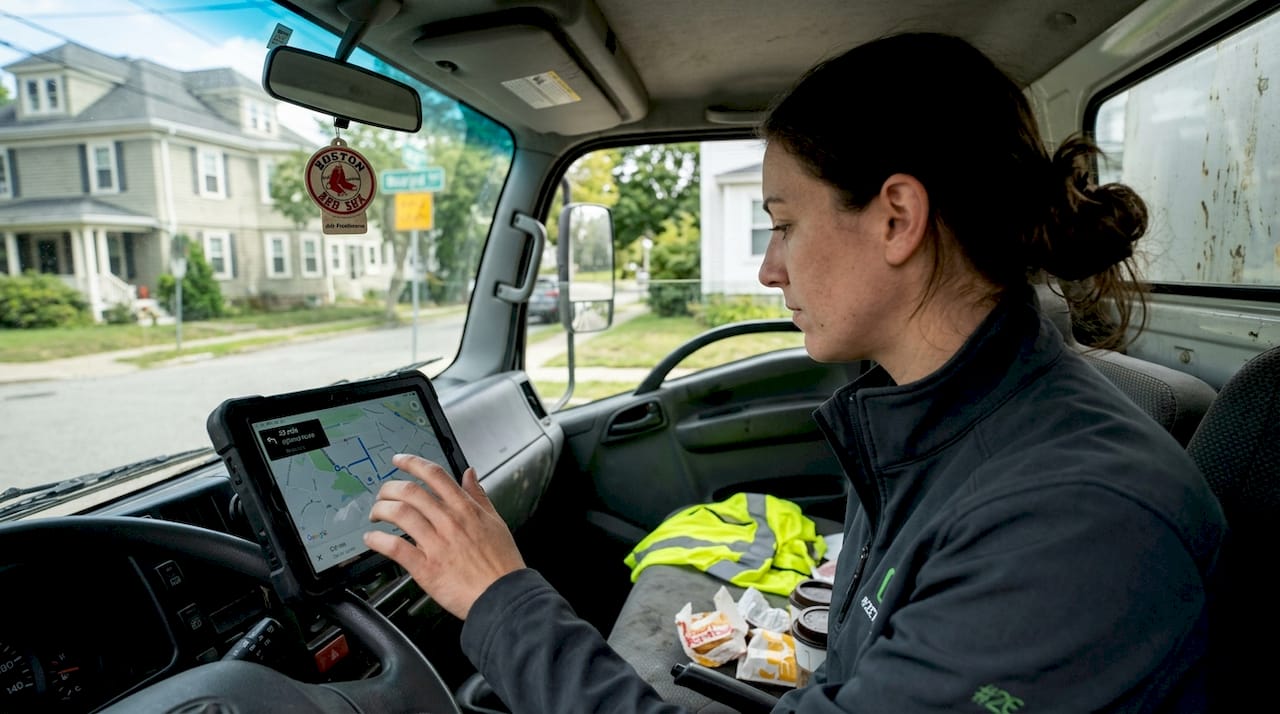
On the commercial side, platforms like Grunber now handle automated compliance documentation and volume management for B2B clients. Property managers can track pickups, generate reports, and stay audit-ready without lifting a finger.
Pro Tip: When requesting a quote, upload clear photos of your junk through the provider’s app. This single step can cut quote turnaround from hours to minutes and reduces the chance of surprise fees on pickup day.
Feature | Old model | New model (2026) |
Booking method | Phone call | App or online portal |
Pricing transparency | Estimate on arrival | Instant photo-based quote |
Compliance tracking | Manual, inconsistent | Automated documentation |
Pickup speed | Days to schedule | Same-day available |
Eco-reporting | None | Digital diversion records |
Junk removal cost breakdowns and prep tips for homeowners
With the service dynamics in focus, it is vital to know what you will pay and how to get ready for a stress-free removal day.
Costs in 2026 vary by item type, volume, and access. Here are current estimates for common residential removals:
Mattress removal: $75 to $150
Appliance removal: $100 to $300
Estate cleanout: $400 to $1,200 depending on size and contents
Single furniture item: $50 to $150
Full truck load: $300 to $600 for a standard residential haul
Prepping properly before the crew arrives makes a real difference. It speeds up the job, reduces your cost, and avoids any last-minute complications. Use this checklist before scheduling junk removal:
Assess your junk. Walk through every space and identify everything that needs to go.
Separate prohibited items. Pull out electronics, batteries, paint, and anything on the Massachusetts banned list.
Take clear photos. Send them with your quote request for faster, more accurate pricing.
Clear pathways. Make sure the crew can reach items without navigating obstacles.
Review local regulations. Especially if you are a contractor, check the contractor junk removal workflow for compliance steps.
Staging items near the curb or at a central point in your home can also shave time off the job, which sometimes translates directly to lower labor costs.
Commercial junk removal: Compliance and operational trends for 2026
As businesses face growing compliance demands, here is how commercial junk removal is adapting.
Property managers in Massachusetts are dealing with a new reality. Waste documentation is not optional anymore. You need to track what was removed, where it went, and whether it met state diversion requirements. Here is what compliance looks like in practice for 2026:
Sort waste streams before pickup (organics, recyclables, general waste)
Keep banned items completely separate from regular loads
Request and retain disposal documentation from your removal provider
Monitor cost trends: commercial office cleanouts run $300 to $800, warehouse cleanouts $500 to $1,500 or more
Common compliance problem areas for commercial clients include:
E-waste: Computers, monitors, and printers cannot go in regular loads
Organics: Food waste and compostables must be diverted
Mattresses and textiles: Covered under the state ban, require separate handling
Contaminated loads: Mixing banned items risks load rejection and fines
Review the Massachusetts waste ban FAQ and work with a provider who understands EPA and MassDEP compliance requirements. For a full breakdown of your options, the business junk disposal guide covers everything from office cleanouts to warehouse hauls.
Businesses that prioritize eco-friendly removal are not just avoiding fines. They are building ESG credibility that matters to tenants, investors, and partners.
2026 junk removal edge cases: Hazards, fees, and Massachusetts nuances
Even with all the best planning, tricky items and fees can surprise you. Here is what to know to stay ahead.
Some items look like regular junk but carry serious consequences if handled incorrectly. Moldy or infested mattresses, for example, cannot be donated and require special disposal. Paint, batteries, and household chemicals are classified as hazardous and need certified handling. E-waste like old TVs and laptops must go through licensed recyclers, not general haul trucks.
Contaminated loads risk failed pickups and fines under Massachusetts enforcement. If a crew arrives and finds banned items mixed into a regular load, they can refuse the entire job. You are then left with the junk and a potential compliance violation on record.
Additional fees to watch for:
Stair or narrow access charges: Tight spaces mean more labor, which costs more
Oversized item fees: Pianos, hot tubs, and large appliances often carry surcharges
Hazmat handling fees: Anything requiring special disposal adds to the base cost
Same-day premium: Urgent pickups may carry a scheduling surcharge
For a full breakdown of what is covered under junk removal safety protocols in Massachusetts, review the state guidelines before your pickup day. Knowing the edge cases in advance keeps your project on track and your wallet protected.
Streamline your 2026 junk removal in Massachusetts
With a handle on the trends and best practices, here is how you can make your 2026 junk removal easier and regulation-ready.
Working with a local, tech-enabled, eco-friendly company is the clearest path to stress-free compliance this year. You get transparent pricing, same-day availability, and a crew that already knows the Massachusetts waste bans inside and out. No guesswork, no surprise fines, no rejected loads.
Junk Dispatch serves homeowners and commercial property managers across Massachusetts, including Reading junk removal services and Essex County junk removal. We handle everything from single-item pickups to full estate and warehouse cleanouts, with insured crews, online booking, and free estimates. Book on your schedule and let us handle the compliance details so you do not have to.
Frequently asked questions
What items are banned from landfill disposal in Massachusetts in 2026?
Massachusetts enforces 23 waste ban categories that include electronics, organics, metals, textiles, and mattresses. Disposing of these items in regular landfill loads is a violation subject to fines.
How can technology make junk removal more efficient?
Booking apps and AI sorting automate route optimization and ensure recyclables are handled correctly, cutting costs and reducing emissions at the same time. The result is faster pickups and fewer billing surprises for you.
What is the average cost to remove junk from my home in 2026?
Prices range from $75 to $150 for a mattress up to $400 to $1,200 for a full estate cleanout, depending on volume, item type, and site accessibility. Appliance removal typically falls between $100 and $300.
Do I need to prepare anything before a junk removal crew arrives?
Stage items curbside when possible, upload photos for your quote, clear all pathways, and separate any hazardous or banned materials before the crew shows up. These steps speed up the job and reduce the chance of additional fees.
What happens if I try to dispose of hazardous or banned items?
Loads containing banned or hazardous items may be refused on the spot and could result in compliance fines or additional handling fees. Always separate prohibited materials before your scheduled pickup.
Recommended
Comments