Why recycle bulky items? Benefits for Massachusetts homes
- Joe Lusso
- Mar 27
- 8 min read

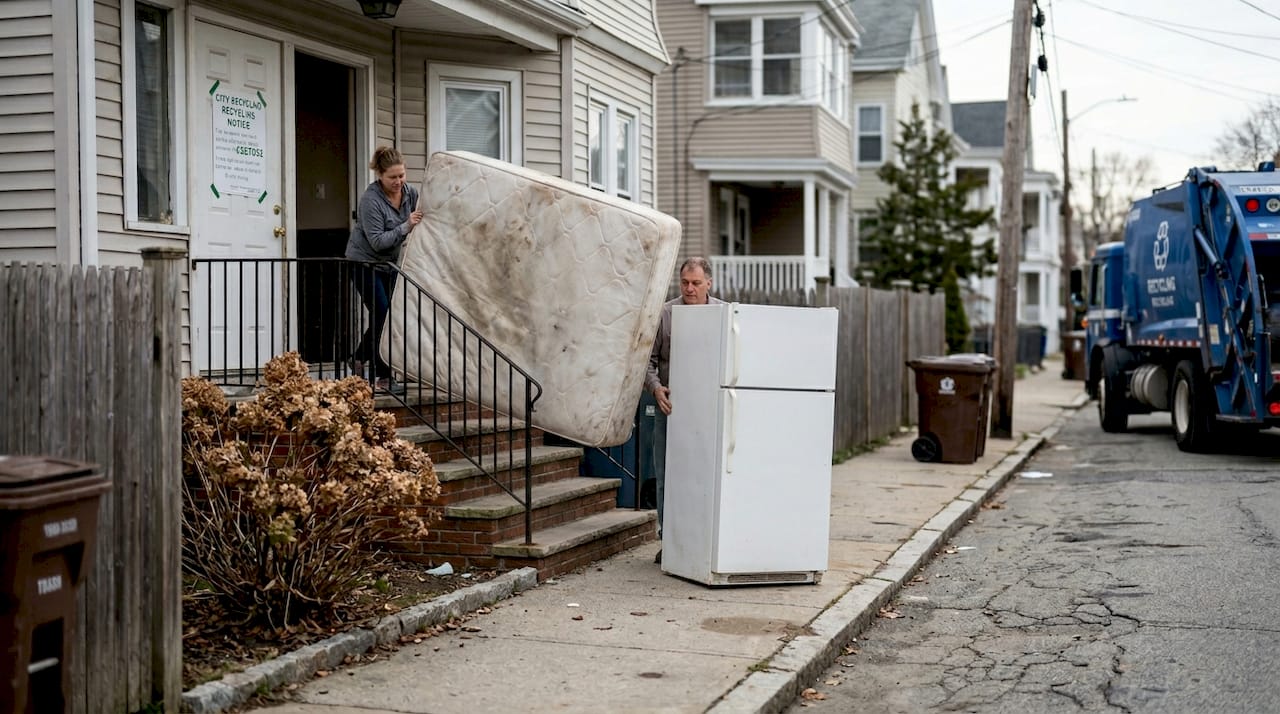
Most Massachusetts residents are shocked to learn that tossing a mattress or old refrigerator in the trash is actually illegal. State regulations ban these items from landfills, and ignoring the rules can mean failed pickups, rejected loads, and real fines. Whether you’re a homeowner clearing out a spare room or a property manager handling a tenant turnover, understanding how to properly recycle bulky items protects your wallet, keeps you compliant, and does genuine good for your community. This guide walks you through exactly what counts as a bulky item, why Massachusetts bans them from landfills, and how to get rid of them the right way.
Table of Contents
Key Takeaways
Point | Details |
Bulky items are regulated | In Massachusetts, mattresses and large appliances are banned from the trash and require proper disposal or recycling. |
Recycling offers big benefits | Proper recycling cuts landfill use, recovers resources, prevents pollution, and boosts your local economy. |
Multiple recycling options | Homeowners and property managers can use municipal programs, transfer stations, or certified recyclers for legal disposal. |
Avoid common mistakes | Contaminated or unaccepted bulky items need special handling to avoid fines and failed pickups. |
Expert help is available | Professional junk removal services make compliant, eco-friendly recycling effortless. |
What counts as a bulky item in Massachusetts?
The term “bulky item” covers more than just oversized furniture. In Massachusetts, it refers to large household goods that cannot fit in a standard trash bin and, critically, many of these items are subject to strict waste bans.
Massachusetts has waste bans on mattresses (since 2022), textiles, and white goods (appliances since 1991). White goods is the industry term for large appliances like refrigerators, stoves, washing machines, dryers, and air conditioners. These items contain metals and refrigerants that make landfill disposal both wasteful and hazardous.
Here’s a quick breakdown of common bulky items and their status:
Item | Waste ban? | Notes |
Mattresses | Yes (2022) | Must be recycled or certified if contaminated |
Box springs | Yes (2022) | Same rules as mattresses |
Textiles | Yes (2022) | Clothing, linens, curtains |
Refrigerators/freezers | Yes (1991) | Refrigerant removal required |
Stoves/ovens | Yes (1991) | Accepted at most transfer stations |
Washing machines/dryers | Yes (1991) | Metal recovery required |
Sofas/couches | Varies by town | Check with your local DPW |
Futons/sofa beds | Often excluded | Not always accepted for recycling |
Contaminated mattresses | Special process | Requires state certification |
Items like futons and sofa beds often fall into a gray area. Many recycling programs do not accept them because of their mixed materials. You can explore examples of junk removal services in Massachusetts to find options that handle these tricky items. If you’re specifically dealing with a mattress, a dedicated guide on where to donate a mattress in Massachusetts can point you toward reuse options before recycling.
Understanding these definitions is the first step toward staying compliant and avoiding the frustration of a rejected curbside pickup.
Waste bans: Why Massachusetts prohibits bulky items from landfill
Once you know what counts as a bulky item, it’s critical to understand why Massachusetts prohibits these items from the trash.
The state’s waste ban timeline started early. Large appliances have been banned from Massachusetts landfills since 1991, with mattresses and textiles added in 2022. These bans are still fully in effect in 2026 with no signs of reversal. The goals are straightforward: reduce landfill pressure, recover valuable materials, and prevent hazardous substances from leaching into soil and groundwater.
Appliances often contain refrigerants, oils, and in older units, polychlorinated biphenyls (PCBs), which are toxic industrial chemicals. Mattresses take up enormous landfill space and contain foam, steel, and fabric that can all be recovered. Sending these items to a landfill is essentially throwing away usable resources.
Compliance challenges like contamination are recognized, but bans enjoy uniform support by Massachusetts agencies. That means enforcement is real. Haulers can reject loads that contain banned items, and property managers who repeatedly allow banned items in dumpsters can face fines.
Here’s a quick checklist to determine if your item is likely banned:
Is it a mattress, box spring, or textile? Banned since 2022.
Is it a large appliance (refrigerator, stove, washer, dryer, AC)? Banned since 1991.
Is it a sofa or large furniture piece? Check with your local DPW.
Is it contaminated (wet, moldy, pest-infested)? Special certification required.
Pro Tip: Before scheduling any pickup, visit your town’s Department of Public Works (DPW) website or call them directly. Rules vary by municipality, and some towns charge fees for bulky item collection.
Property managers face extra scrutiny here. Multi-unit buildings generate more bulky waste, and a single non-compliant dumpster load can trigger a rejected haul. Pairing your building’s waste plan with a yard waste removal guide and broader MA junk removal solutions can help you build a system that keeps every tenant’s discards compliant.
Environmental and community benefits of recycling bulky items
Beyond simply following the rules, recycling bulky items delivers major benefits for your home, neighborhood, and the planet.
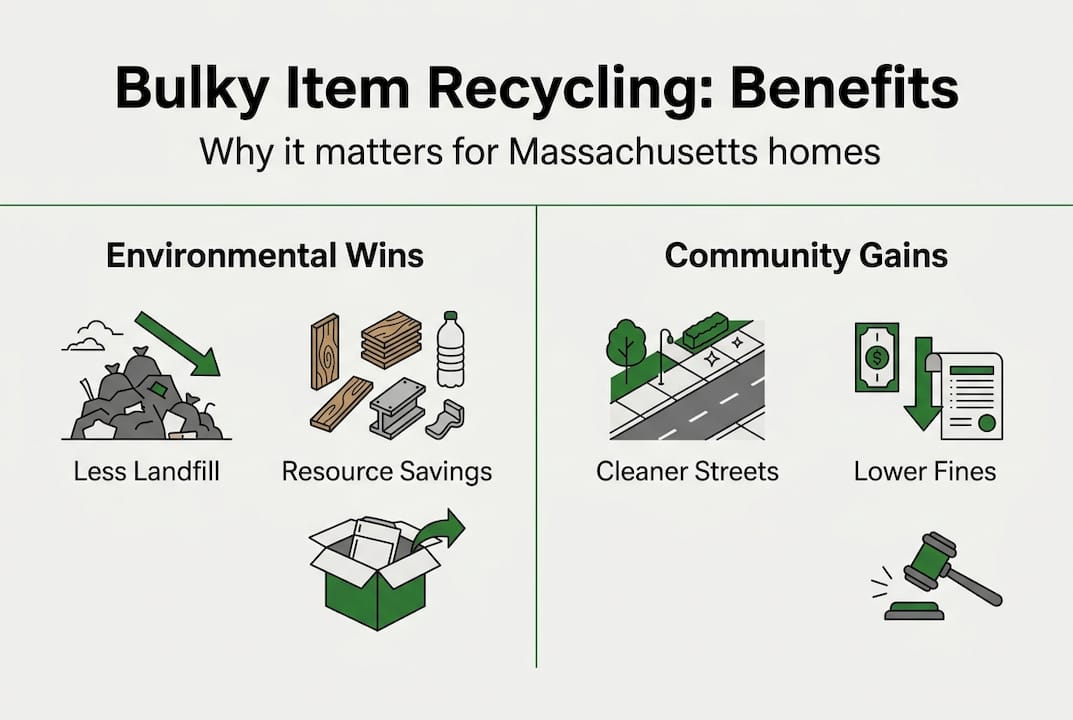
Recycling bulky items conserves resources, reduces landfill use, prevents hazardous releases like refrigerants and PCBs, and supports the local economy. These aren’t abstract benefits. They show up in cleaner neighborhoods, lower illegal dumping rates, and more local jobs in the recycling sector.
The numbers are striking. 75% of a mattress is recyclable, and appliances yield valuable metals including steel, copper, and aluminum. That’s material that can be melted down and reused rather than buried underground for decades.
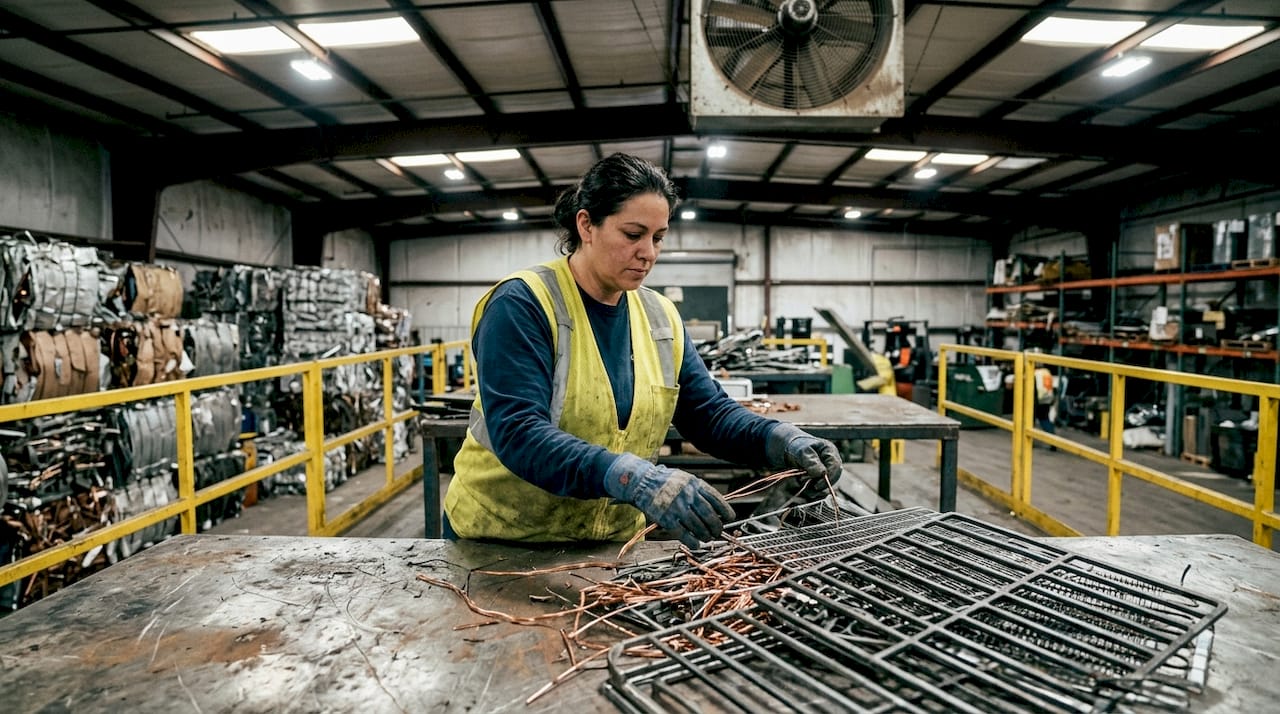
Here’s a side-by-side look at what happens when you recycle versus when you dump illegally:
Factor | Proper recycling | Illegal dumping |
Environmental impact | Resources recovered, pollution prevented | Soil/water contamination risk |
Legal risk | None | Fines, enforcement actions |
Community effect | Supports local jobs, cleaner streets | Blight, reduced property values |
Cost to you | Often low or free via municipal programs | Potential fines plus cleanup costs |
Landfill impact | Minimal | Significant space wasted |
The top community and environmental benefits of recycling bulky items include:
Resource recovery: Steel, copper, aluminum, and foam are all reclaimed and reused.
Pollution prevention: Refrigerants and toxic chemicals stay out of soil and groundwater.
Landfill space saved: Bulky items take up disproportionate space; recycling extends landfill life.
Local job creation: Recycling facilities and certified haulers employ Massachusetts residents.
Neighborhood improvement: Proper disposal reduces illegal dumping and keeps streets cleaner.
For items that are still in good shape, reuse is even better than recycling. Donating linens and textiles through programs like eco-friendly linen donation keeps usable goods in circulation longer. You can also read about the benefits of yard waste removal to see how a broader eco-conscious approach to property cleanup pays off. For a full picture of what to prioritize this year, check out these 2026 junk removal tips for Massachusetts homes.
How Massachusetts homeowners and property managers can recycle bulky items
Knowing the benefits, here’s how to easily recycle bulky items without headaches or risking fines.
MA homeowners and managers have options: curbside pickup, transfer stations, certified recyclers, drop-off centers, or state contract solutions. The right choice depends on your location, the item type, and how quickly you need it gone.
Here’s a step-by-step approach:
Identify the item and its ban status. Use the table in the first section as your starting point.
Check your municipality’s DPW website. Look for scheduled bulky item pickup days, fees, and accepted items.
Schedule curbside pickup if available. Many towns offer this a few times per year, sometimes for a small fee.
Use a transfer station or CHaRM center. CHaRM stands for Household Hazardous Waste, Reuse, and Recycling. These centers accept a wide range of bulky items.
Hire a certified private recycler. Programs listed through RecyclingWorksMA connect you with vetted haulers who divert materials from landfill.
For large quantities, explore state contracts. Property managers handling multiple units can access bulk disposal solutions through state-approved vendors.
Certified service programs like Green Team divert up to 80% of collected bulky items from landfill. That’s a meaningful number when you’re clearing out an entire apartment building or doing a full home cleanout.
Pro Tip: For appliances containing refrigerants (refrigerators, AC units, dehumidifiers), confirm that your hauler is EPA-certified to handle refrigerant recovery. Skipping this step can create liability for you as the property owner.
For yard-related bulky waste, these yard waste removal tips for Massachusetts homeowners are worth a read. If your project involves renovation debris, these construction debris disposal tips will help you stay on the right side of local rules.
Common mistakes, edge cases, and how to stay compliant
Even with the right intentions, a few common errors trip up MA residents. Here’s how to avoid them and keep your disposal process legal and smooth.
The biggest mistake people make is assuming that if an item looks recyclable, any hauler will take it. That’s not always true. Contaminated mattresses, meaning those that are wet, moldy, pest-infested, or punctured, require a special Contaminated Mattress Certification before any facility will accept them. You cannot simply bag it and put it at the curb.
Here are the most common compliance mistakes and what to do instead:
Putting a mattress in the trash: It will be rejected. Schedule a certified pickup or use a transfer station instead.
Assuming futons and sofa beds follow the same rules as sofas: They often don’t. Check with your specific recycler before scheduling.
Skipping refrigerant removal on appliances: This is an EPA requirement, not just a local one. Always confirm your hauler handles this.
Ignoring contamination status: A bedbug-infested mattress needs certification. Skipping this step can result in the item being refused and left behind.
Letting tenants self-dispose: Property managers who allow tenants to leave banned items at the curb without proper scheduling can be held responsible for non-compliance.
Waiting until the last minute: Municipal bulky pickup schedules fill up fast. Plan at least two to three weeks ahead.
For a broader look at keeping your property cleanup eco-friendly and compliant, these eco-friendly waste removal steps offer a solid framework to follow.
Easy, compliant bulky-item recycling with local experts
Navigating Massachusetts waste bans, contamination rules, and municipal schedules takes real effort. For busy homeowners and property managers, the easiest path to full compliance is partnering with a local junk removal team that already knows the rules.
At Junk Dispatch, we handle bulky item removal across Massachusetts with insured crews, eco-conscious disposal practices, and transparent pricing. We know which items require special handling, which facilities accept what, and how to keep your project on the right side of state regulations. Whether you need a single mattress hauled away or a full apartment cleanout, our team makes the process simple. Reach out to our Reading junk removal experts or explore our Essex County junk removal services to get a free estimate and same-day scheduling options.
Frequently asked questions
What happens if I put a mattress or appliance in the trash in Massachusetts?
You risk a failed pickup, enforcement action, and fines because these items are banned from Massachusetts waste streams. Haulers are required to reject loads containing banned items.
Where can I recycle a bulky item if my city doesn’t offer pickup?
You can use a local transfer station, CHaRM center, or a certified private recycler listed through the state’s RecyclingWorksMA program.
Are there bulky items that cannot be recycled at all?
Contaminated and specific furniture items like futons and sofa beds are often excluded from standard recycling programs and require special disposal steps or certification.
How much of a mattress or appliance can usually be recycled?
About 75% of a mattress is recyclable, and most metal components from appliances including steel, copper, and aluminum are commonly recovered in Massachusetts.
What do I do if my mattress is wet, moldy, or has bedbugs?
You’ll need a Contaminated Mattress Certification using the state’s official form before any recycling facility will accept it for disposal.
Recommended
Comments