Cut landlord turnover 50%: Junk removal guide 2026
- Joe Lusso
- Mar 5
- 12 min read


Professional junk removal can slash tenant turnover time by up to 50%, directly increasing your rental income by minimizing costly vacancy days. For Massachusetts landlords managing property transitions, efficient junk removal is not just convenient but essential for legal compliance, operational speed, and tenant satisfaction. This guide covers the legal requirements, eco-friendly practices, and proven strategies to streamline your rental turnovers in 2026.
Table of Contents
Key takeaways
Point | Details |
Speed increases income | Professional junk removal cuts turnover time by 50%, boosting rental revenue through faster re-occupancy. |
Legal compliance required | Massachusetts solid waste laws mandate proper disposal by landlords to avoid fines and penalties. |
Eco-friendly diversion | Green junk removal services divert up to 70% of waste from landfills through recycling and donation programs. |
Professional advantage | Licensed services reduce property damage risk and compliance violations compared to DIY approaches. |
Early scheduling pays | Booking junk removal immediately after tenant move-out prevents costly delays in property readiness. |
Introduction to junk removal in landlord property management
Junk removal for landlords encompasses the systematic clearing of unwanted items, abandoned belongings, and debris left behind during tenant turnovers. This process includes furniture, appliances, construction materials, yard waste, and general household clutter that must be removed before a rental unit can be prepared for new occupants.
During tenant turnovers, junk removal serves as the critical first step that enables all subsequent property preparation tasks. Without clearing leftover items promptly, you cannot conduct thorough inspections, perform necessary repairs, deep clean the unit, or stage it for prospective tenants. Professional junk removal services can reduce average tenant turnover time by up to 50%, creating a direct path to faster rental income.
Landlords managing junk removal in property management face several common challenges without efficient systems:
Extended vacancy periods costing hundreds in lost daily rental income
Legal exposure from improper disposal violating Massachusetts regulations
Physical strain and time consumption diverting focus from core management duties
Hidden costs from multiple dump runs, equipment rentals, and disposal fees
Tenant complaints and reputational damage when units are not ready on schedule
Safety hazards from heavy lifting and unknown item conditions
Professional junk removal transforms these obstacles into streamlined operations. Licensed teams arrive with proper equipment, labor, and disposal knowledge to clear properties in hours rather than days. They handle compliance documentation, sort items for recycling or donation, and protect your property from damage during removal.
Pro Tip: Schedule junk removal immediately after receiving keys from departing tenants to avoid costly downtime. Every day of delay extends vacancy and reduces annual rental income, making early booking one of the highest-return investments in property management.
Legal compliance and waste disposal requirements in Massachusetts
Massachusetts enforces strict solid waste regulations that directly impact how landlords handle junk removal from rental properties. The state’s waste management framework, overseen by the Department of Environmental Protection, establishes clear disposal standards that property owners must follow. Massachusetts solid waste regulations apply to landlord-managed property junk removal, with legal enforcement and potential fines.
Under Massachusetts law, landlords bear primary responsibility for proper disposal of items left in rental units after tenant departure. While tenants have obligations during occupancy, once they vacate and surrender possession, waste removal becomes the landlord’s legal duty. This responsibility includes ensuring items reach authorized disposal facilities, hazardous materials receive proper handling, and recyclable materials are appropriately processed.
The legal framework distinguishes between several waste categories:
General solid waste requiring approved landfill or transfer station disposal
Recyclable materials that must be diverted from landfills when possible
Hazardous waste needing specialized handling through authorized facilities
Bulky items like furniture and appliances with specific disposal pathways
Electronic waste subject to Massachusetts electronics recycling requirements
Violations carry significant consequences. Improper disposal can result in fines ranging from hundreds to thousands of dollars per incident. Repeat violations may trigger increased penalties, mandatory compliance plans, and potential legal action. Beyond monetary fines, landlords face reputational damage, tenant complaints to regulatory agencies, and civil liability if improper disposal causes environmental harm or public health issues.
Common compliance pitfalls include assuming all items can go to any dumpster, failing to separate hazardous materials, using unlicensed haulers who dump illegally, and not maintaining disposal documentation. Many landlords underestimate the complexity of Massachusetts waste regulations until facing enforcement action.
Protecting yourself requires partnering with licensed junk removal teams in Massachusetts who understand state requirements. Licensed providers carry proper insurance, use authorized disposal facilities, maintain compliance records, and stay current with evolving regulations. They also handle the sorting, documentation, and specialized disposal that DIY approaches often miss, transferring legal risk from you to qualified professionals.
For detailed guidance, consult the Massachusetts solid waste regulations directly or work with compliance-focused junk removal services that build regulatory adherence into their standard operations.
The role of junk removal in facilitating tenant turnovers
Leftover junk creates an immediate bottleneck in your tenant turnover process. You cannot assess property condition, identify needed repairs, or begin cleaning until debris is cleared. Each day items remain extends your vacancy period, directly reducing annual rental income. A unit generating $2,000 monthly rent loses approximately $66 per day while sitting unready for new tenants.
Professional junk removal can reduce tenant turnover time by up to 50%, boosting rental income by minimizing vacancy days. This dramatic time reduction compounds across multiple properties. A landlord managing ten units could save 50 to 75 total vacancy days annually by implementing efficient junk removal protocols.
The operational benefits extend beyond simple speed:
Inspectors can immediately assess property condition without obstruction
Repair contractors access all areas to provide accurate quotes and begin work
Cleaning crews deep clean efficiently without moving or working around debris
Property photographers capture appealing listing images in prepared spaces
New tenant move-ins proceed on schedule without delays or complications
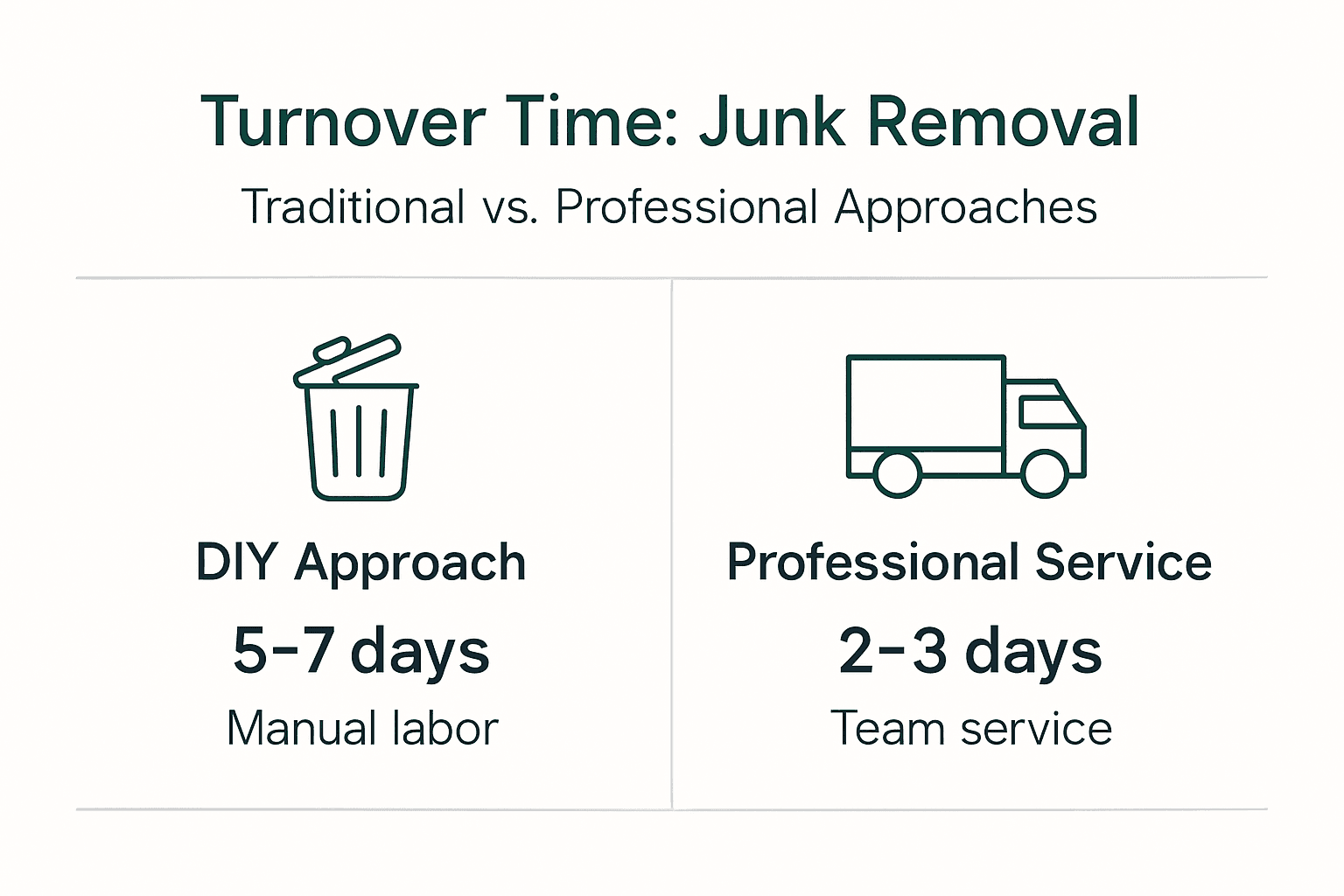
Consider the timeline comparison. Traditional DIY approaches often span five to seven days: a day for landlord assessment, two days for multiple disposal trips, another day for final clearing, plus inevitable delays. Professional services compress this into four to eight hours of actual work time. Your property moves from occupied to market-ready in a single day rather than a full week.
The impact of junk removal on property management correlates directly with revenue optimization. Shorter vacancy periods mean more occupied days generating rental income. A property vacant for 15 days versus 30 days annually represents two weeks of additional revenue, often thousands of dollars that flow directly to your bottom line.
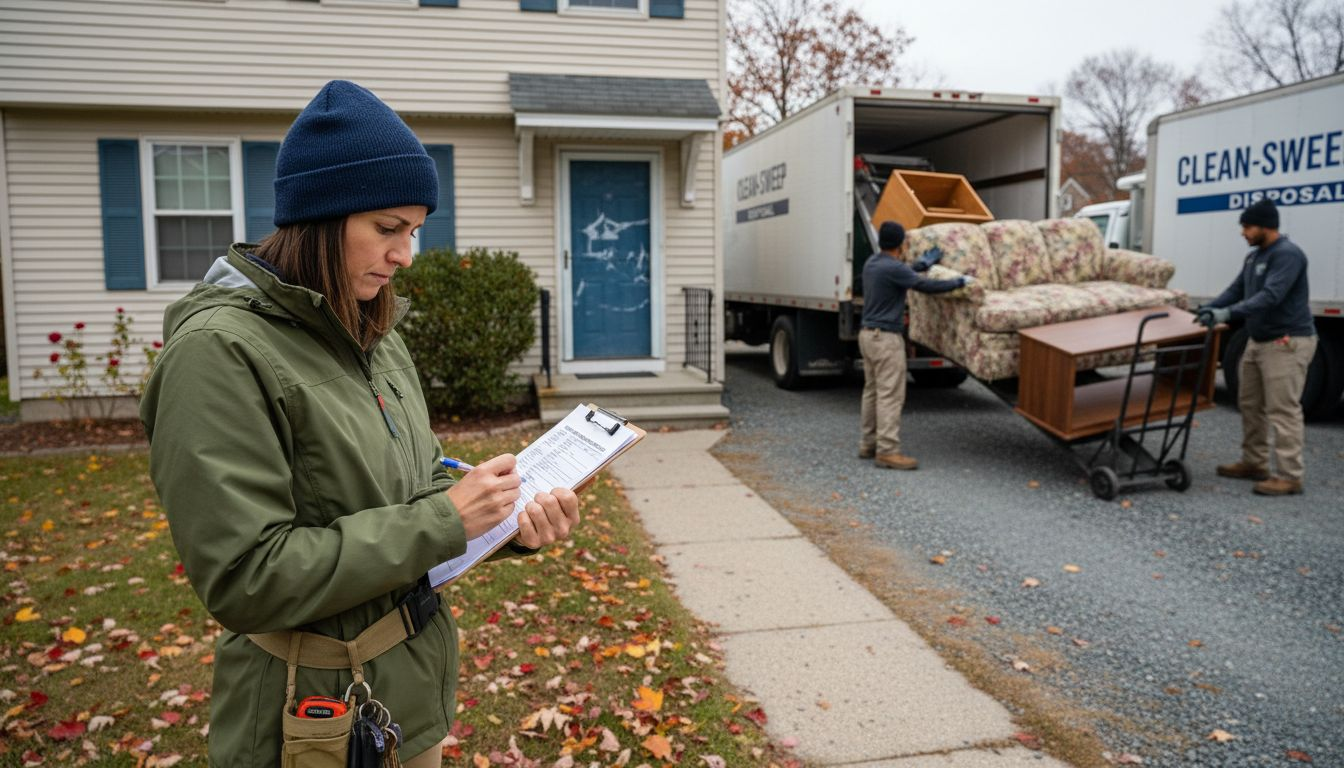
Turnover Time Reduction Impact: Professional junk removal cuts average turnover from 14 days to 7 days, saving a landlord with a $2,000/month unit approximately $933 per turnover. Across ten annual turnovers in a multi-unit portfolio, this efficiency gain adds $9,330 in preserved rental income.
Pro Tip: Coordinate junk removal scheduling with your maintenance and cleaning teams for maximum efficiency. Book all three services consecutively so crews can work in sequence without downtime, compressing your entire turnover into 24 to 48 hours from tenant departure to market-ready status.
Eco-friendly junk removal: benefits and practices
Landfill diversion represents the cornerstone of sustainable junk removal, redirecting usable materials away from waste facilities toward productive reuse. Massachusetts has set ambitious waste reduction targets as part of its environmental goals, making eco-friendly practices both environmentally responsible and increasingly important for regulatory compliance.
Eco-friendly junk removal companies increase landfill diversion rates by up to 70%, promoting recycling and donation from rental cleanouts. This substantial diversion stems from systematic sorting that identifies multiple disposition pathways for different item types.
Material Type | Landfill | Recycling | Donation | Reuse/Resale |
Furniture | 15% | 5% | 45% | 35% |
Appliances | 10% | 60% | 15% | 15% |
Electronics | 5% | 70% | 10% | isy15% |
Textiles | 20% | 15% | 50% | 15% |
Metal items | 5% | 80% | 5% | 10% |
Green junk removal leverages several proven approaches:
Partnering with local charities to donate functional furniture, appliances, and household goods
Processing metal components through certified recycling facilities that recover raw materials
Directing electronics to e-waste specialists who extract valuable components safely
Composting organic yard waste and wood products when facilities are available
Reselling quality items through secondary markets to extend product lifecycles
The benefits extend beyond environmental impact. Tenants increasingly value landlords who demonstrate environmental responsibility, improving satisfaction and retention. Community organizations appreciate donation programs that support local families. Your reputation as a socially conscious property manager attracts quality tenants willing to pay premium rents.
Selecting eco-friendly junk removal solutions requires verifying provider credentials and practices. Look for companies with documented recycling partnerships, charity relationships, and transparent reporting on diversion rates. Request disposal documentation showing where items actually go rather than accepting vague sustainability claims.
The EPA sustainable materials management hierarchy provides the framework guiding responsible disposal decisions. This hierarchy prioritizes source reduction first, then reuse, recycling, energy recovery, and finally disposal as the last resort. Professional eco-friendly services apply this framework systematically to maximize environmental benefit from every cleanout.
Comparing DIY and professional junk removal approaches
Landlords face a critical decision between handling junk removal personally or hiring professional services. The choice impacts time, cost, legal compliance, and ultimately rental income through vacancy duration effects.
Factor | DIY Approach | Professional Service |
Time required | 2-3 days multiple trips | 4-8 hours single visit |
Labor demands | Heavy physical work | No landlord labor needed |
Equipment costs | Truck rental, tools, disposal fees | Included in service price |
Legal compliance | Landlord responsibility and risk | Provider assumes compliance |
Disposal knowledge | Must research regulations | Built into service expertise |
Insurance coverage | Personal liability exposure | Provider insurance protects you |
Hidden costs | Multiple dump fees, fuel, time | Transparent upfront pricing |
Efficiency | Interrupts other management duties | Parallel to your other work |
DIY removal takes three times longer than professional junk removal and carries risks of non-compliance and hidden costs. The time multiplier stems from multiple factors: sorting uncertainty, limited vehicle capacity requiring multiple trips, unfamiliarity with disposal facilities, and physical fatigue slowing progress.
Professional services deliver immediate compliance advantages. Licensed teams know exactly which items require special handling, which facilities accept specific materials, and how to document disposal properly. They carry insurance protecting you from injury claims, property damage, and regulatory violations that could occur during removal.
The hidden cost analysis often surprises landlords:
Truck rental fees for adequate capacity to handle large items
Disposal facility fees charged per item or by weight
Fuel costs for multiple round trips between property and facilities
Your time valued at opportunity cost of other income-generating activities
Extended vacancy days losing $50 to $100+ daily in potential rental income
Potential medical costs or lost time from physical strain or injury
For small landlords managing one or two properties with minimal turnover, DIY might appear economical. However, even single-property owners must factor in the lost rental income from extended vacancy. If DIY extends turnover by even three days, the lost rent often exceeds professional service costs.
Property managers handling multiple units find professional services indispensable. The ability to schedule simultaneous cleanouts across properties, maintain consistent turnover timelines, and avoid personal physical labor creates operational leverage impossible with DIY approaches.
Pro Tip: Factor in potential rental income loss from delayed turnovers when budgeting for junk removal. A $300 professional service that saves three vacancy days on a $2,000/month rental actually generates $200 in net value ($600 preserved rent minus $300 service cost), making it a profitable investment rather than an expense.
Explore additional junk removal tips to refine your decision-making process and understand nuances specific to Massachusetts properties.
Implementation strategies for landlord junk removal
Implementing efficient junk removal requires systematic processes that integrate seamlessly into your property management workflow. Follow these steps to optimize results:
Conduct initial assessment within 24 hours of tenant departure to estimate junk volume and identify special items
Review Massachusetts disposal requirements for any hazardous materials, electronics, or regulated items present
Select eco-friendly providers with verified licensing, insurance, and compliance track records
Schedule service for earliest available date to minimize vacancy duration
Communicate clearly with the removal team about access, special requirements, and disposal preferences
Document the removal process with photos before and after for records
Verify disposal documentation and maintain files for regulatory compliance
Selecting quality junk removal companies requires evaluating several critical criteria:
Current Massachusetts licensing and business registrations verifying legal operation
Comprehensive liability and workers compensation insurance protecting your property
Same-day or next-day service availability for urgent turnover situations
Documented eco-friendly certifications and recycling partnerships
Transparent pricing without hidden fees or surprise charges
Positive reviews from other property managers and landlords
Clear communication systems for scheduling and service updates
Common implementation failures stem from predictable mistakes. Waiting too long to schedule creates bottlenecks when services are fully booked. Choosing the lowest price without verifying credentials leads to compliance issues or property damage. Failing to communicate special requirements results in incomplete jobs requiring follow-up visits.
Schedule regular junk removal as a standard component of your turnover checklist rather than treating it as an afterthought. Build relationships with preferred providers who understand your properties, standards, and scheduling needs. Priority scheduling from established vendor relationships prevents delays during peak moving seasons.
Pro Tip: Maintain strong vendor relationships for priority scheduling and reliability. Providers remember landlords who pay promptly, communicate clearly, and provide repeat business, often offering preferential scheduling and pricing to valued clients during high-demand periods.
Your implementation timeline should follow this sequence: tenant notice triggers junk removal research, move-out inspection confirms junk volume, same-day booking secures earliest service date, removal completion enables immediate cleaning and repairs, coordinated workflow compresses total turnover to under one week.
Conclusion and practical takeaways
Efficient junk removal stands as a cornerstone of successful rental property management in Massachusetts. The evidence demonstrates clear advantages across multiple dimensions: operational speed cutting turnover time in half, legal compliance protecting against fines and penalties, environmental responsibility supporting community goals, and improved tenant satisfaction enhancing your reputation.
Prioritizing licensed, eco-friendly junk removal services transforms a potential headache into a competitive advantage. Professional teams deliver the expertise, equipment, and efficiency that DIY approaches cannot match while transferring legal and operational risks away from you.
Implement these core strategies immediately:
Book junk removal within 24 hours of tenant departure to minimize vacancy days
Partner exclusively with licensed, insured providers offering eco-friendly practices
Coordinate removal with cleaning and maintenance for compressed turnover timelines
Maintain vendor relationships for priority scheduling during peak seasons
Document all disposal activities for compliance records and potential disputes
The financial impact justifies investment in quality services. Cutting turnover time from two weeks to one week preserves substantial rental income that far exceeds service costs. A $300 junk removal service that saves seven vacancy days on a $2,000 monthly rental preserves approximately $467 in income, delivering 156% return on investment from that single service.
Cost-effective junk removal balances service quality with pricing transparency. Request detailed quotes, verify what’s included, and calculate total cost including your time and lost rental income. The cheapest option rarely delivers the best value when comprehensive analysis includes vacancy costs and compliance risks.
Streamline your Massachusetts property management with professional junk removal
Managing rental properties across Massachusetts becomes dramatically easier when you partner with experienced junk removal professionals who understand landlord needs. Junk Dispatch delivers fast, compliant, and eco-friendly junk removal services tailored specifically for property managers facing tenant turnovers throughout Essex County, Middlesex County, and surrounding areas.
Our licensed and insured teams provide same-day service to keep your turnovers on schedule, with transparent pricing and guaranteed satisfaction. We handle everything from furniture and appliances to construction debris and yard waste, ensuring proper disposal that meets all Massachusetts regulations. Our eco-friendly practices maximize donation and recycling opportunities, diverting up to 70% of materials from landfills.
Explore our comprehensive junk removal services in Essex County or discover specialized junk removal services in Reading, MA for localized support. Visit the Junk Dispatch blog for additional property management tips, seasonal advice, and industry insights.
Pro Tip: Using licensed and insured local experts saves time and protects your investment by transferring compliance risks and operational burdens to qualified professionals who deliver consistent results.
Frequently asked questions
What legal responsibilities do landlords have for junk removal in Massachusetts?
Massachusetts law requires landlords to ensure proper disposal of all items remaining in rental units after tenant departure, following state solid waste regulations. Landlords must use authorized disposal facilities, separate hazardous materials appropriately, and maintain documentation proving compliant disposal. Violations can result in significant fines and legal liability.
How can professional junk removal speed up tenant turnovers?
Professional services cut turnover time by up to 50% by clearing properties in hours rather than days, enabling immediate inspection, repair, and cleaning. Licensed teams arrive with proper equipment, adequate labor, and systematic processes that eliminate the multiple trips and delays typical of DIY approaches. Faster turnovers mean fewer vacancy days and higher annual rental income.
What eco-friendly junk removal options are available for landlords?
Eco-friendly junk removal solutions include donation programs partnering with local charities, comprehensive recycling processing for metals and electronics, and material recovery that diverts up to 70% of waste from landfills. Providers sort items systematically, directing functional furniture and appliances to families in need while recycling materials through certified facilities.
Is DIY junk removal a good idea for rental property turnovers?
DIY junk removal typically requires three times longer than professional services and exposes landlords to compliance risks, physical strain, and hidden costs. The time investment interrupts other management duties while extended vacancy days lose substantial rental income. For most landlords, professional services deliver better value when factoring in preserved rent, avoided risks, and time savings.
Recommended
Comments