Junk Removal for Contractors: Streamlining Massachusetts Projects
- Joe Lusso
- Jan 28
- 7 min read

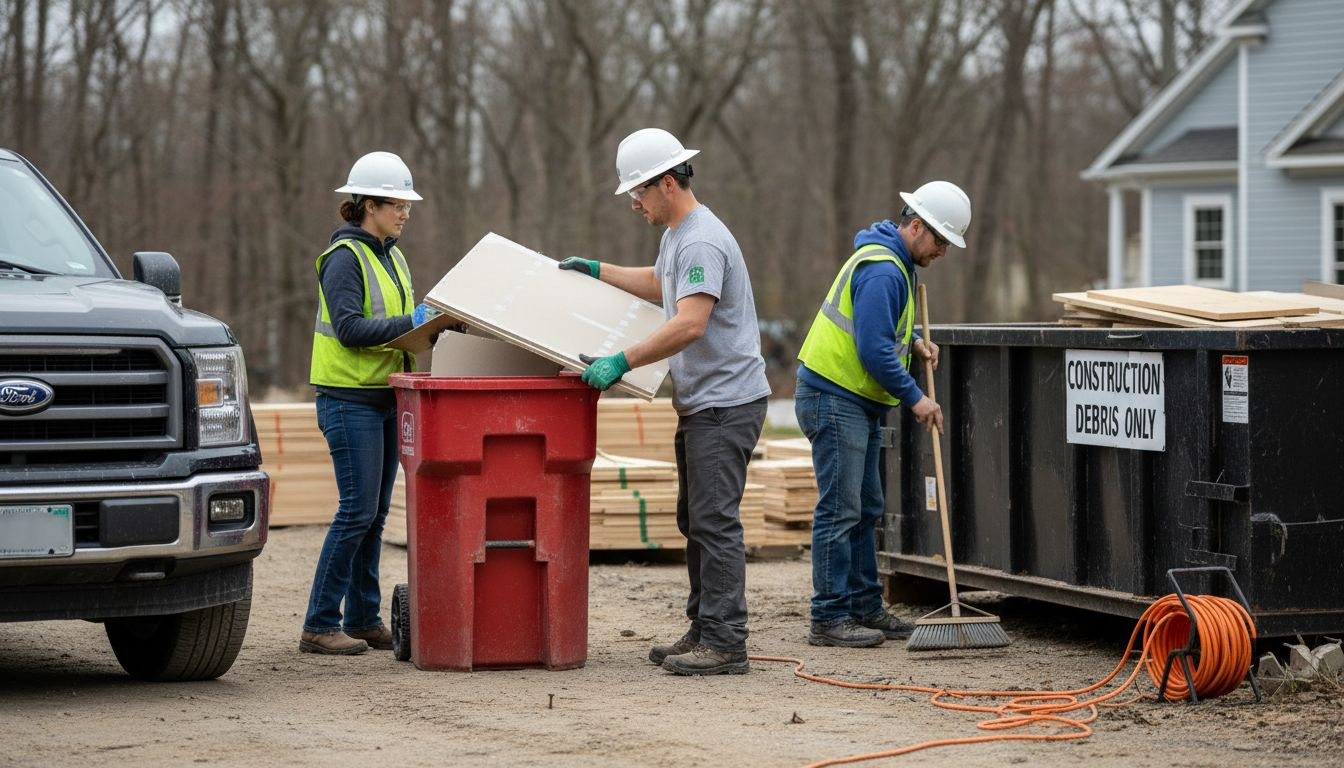
Managing construction debris on a busy Massachusetts job site can quickly turn into a logistical challenge. With strict state laws banning landfill disposal of materials like concrete, metal, wood, and gypsum, contractors face mounting pressure to adopt efficient, eco-friendly junk removal solutions that keep projects compliant and worksites safe. Choosing the right service helps minimize environmental impact, speeds up project cleanup, and reduces costly setbacks tied to improper waste handling.
Table of Contents
Key Takeaways
Point | Details |
Importance of Contractor Junk Removal | Contractor junk removal services are essential for managing construction debris efficiently, ensuring compliance with state regulations. |
Diverse Types of Construction Debris | Various materials like concrete, metal, and wood require specialized disposal methods to minimize environmental impact. |
Understanding Massachusetts Laws | Contractors must adhere to stringent waste management regulations, including mandatory separation of recyclable materials. |
Risk and Costs for Contractors | Proper waste management impacts financial stability; contractors must consider labor costs, regulatory compliance, and potential liabilities. |
Defining Contractor Junk Removal Services
Contractor junk removal services provide critical waste management solutions for construction projects across Massachusetts. These specialized services handle the complex task of collecting, sorting, and disposing of construction debris in compliance with state regulations. Construction waste management requires strategic approaches that go beyond simple trash removal.
The primary function of contractor junk removal involves efficiently removing various materials generated during building, renovation, and demolition projects. This includes concrete, wood, metal scraps, drywall, packaging materials, and other construction-related waste. Waste management regulations mandate proper handling and disposal to minimize environmental impact and ensure workplace safety.
Understanding the scope of these services is crucial for contractors seeking streamlined project management. Junk removal professionals specialize in rapid debris clearance, enabling construction teams to maintain clean, organized worksites. Their services typically include:
Rapid debris collection and transportation
Sorting materials for recycling
Proper disposal of non-recyclable waste
Compliance with local and state waste management guidelines
Minimizing project downtime through efficient cleanup
Pro tip: Schedule junk removal services in advance to prevent workflow interruptions and maintain project timelines effectively.
Types of Construction Debris and Disposal Methods
Construction projects generate a complex array of waste materials that require specialized handling and disposal strategies. Construction debris management involves understanding the diverse types of materials produced during building, renovation, and demolition work. These materials range from inert substances like concrete and brick to more challenging waste streams that demand careful environmental considerations.
The primary categories of construction debris include mineral waste, wood products, metal components, and potentially hazardous materials. Mineral waste such as concrete, bricks, and ceramic tiles typically represent the largest volume of construction waste. Metal scraps, including steel, aluminum, and copper, are often highly recyclable and can be processed back into new construction materials. Wood waste encompasses lumber, plywood, and other timber products that can be repurposed or recycled through specialized processing.
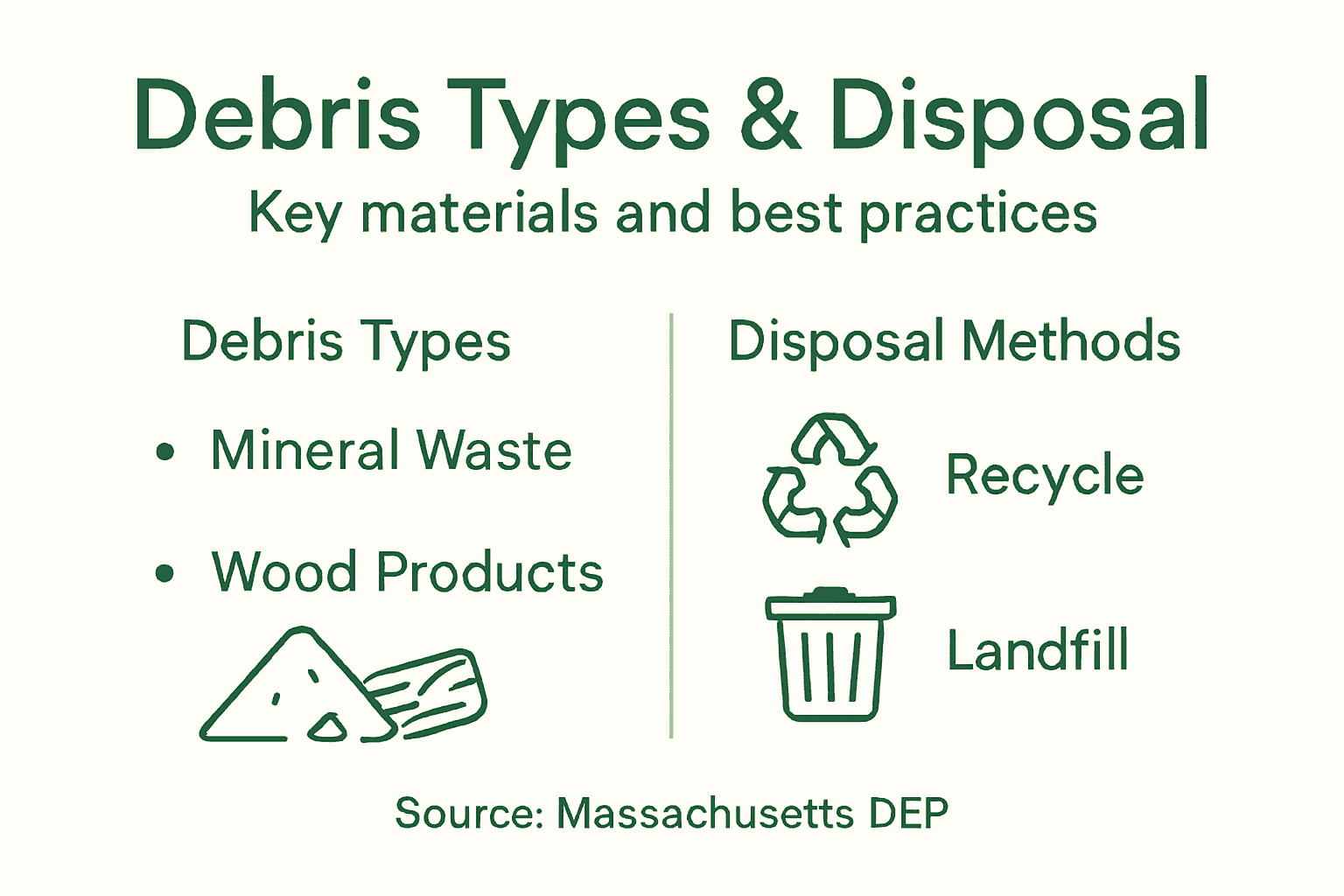
Disposal methods vary significantly depending on the material type and local regulations. Some key approaches include:
Here’s a summary of common construction debris types and their typical disposal outcomes in Massachusetts:
Debris Type | Typical Disposal Method | Environmental Impact |
Concrete & Brick | Recycled for new aggregate | Reduces landfill use |
Wood | Repurposed or chipped | Enables biomass energy |
Metal | Melted and reused | Conserves resources |
Drywall | Specialized recycling | Minimizes dust/toxins |
Hazardous Waste | Treated by certified facility | Prevents contamination |
Mixed Waste | Non-recyclable to landfill | Increases landfill volume |
Recycling mineral waste for road base or new construction materials
Metal scrap processing and melting for industrial reuse
Wood chipping and repurposing for landscaping or biomass energy
Specialized hazardous waste treatment for materials like asbestos
Landfill disposal for non-recyclable or contaminated materials
Pro tip: Implement a comprehensive waste sorting system on-site to maximize recycling potential and minimize disposal costs.
Massachusetts Laws Impacting Waste Management
Massachusetts has established a comprehensive regulatory framework to manage construction and demolition waste, setting stringent standards for contractors and waste management professionals. Waste management regulations in the state are designed to minimize environmental impact and promote sustainable disposal practices across various industries.
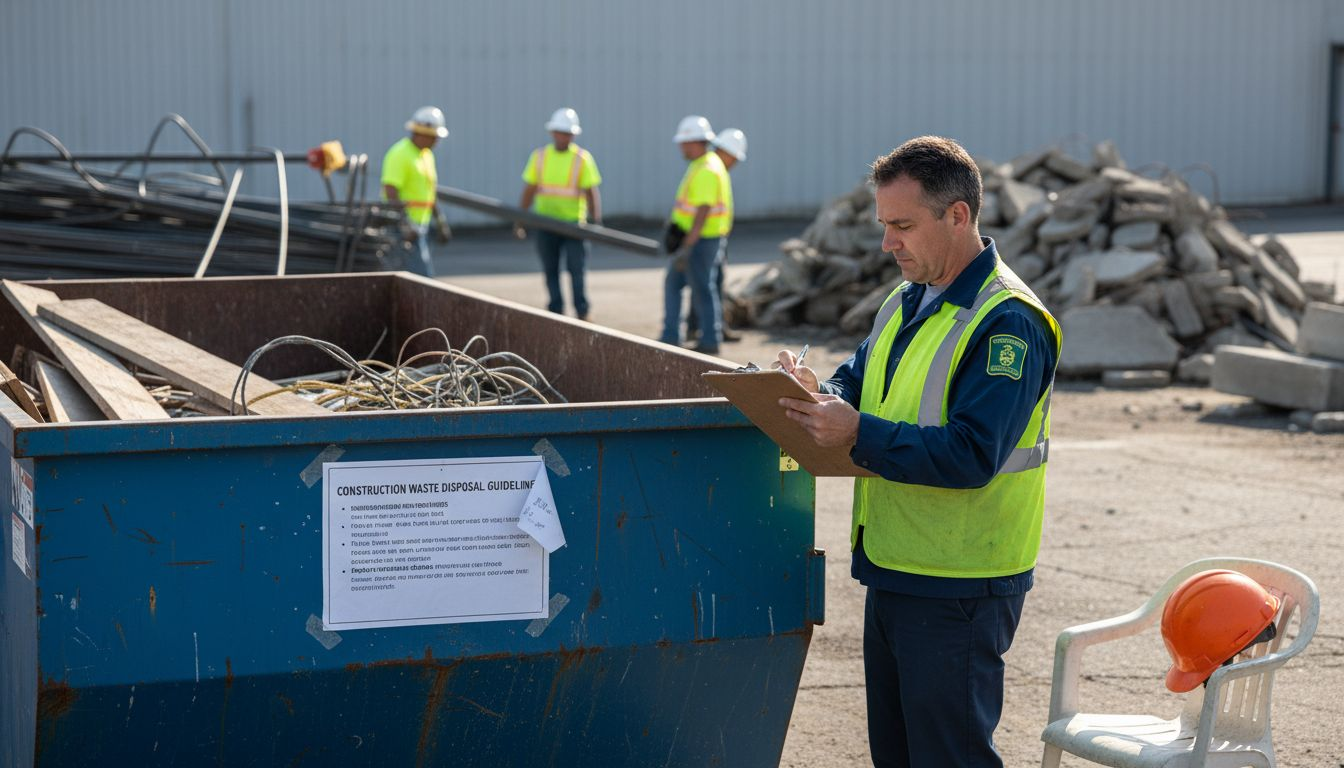
The state’s legislative approach centers on several key statutes, including the Resource Conservation & Recovery Act (RCRA) and the Massachusetts Hazardous Waste Management Act. Regulatory compliance is critical for contractors, with specific mandates that prohibit the landfilling of major construction materials. Contractors must separate recyclable materials like asphalt, brick, concrete, metal, wood, and gypsum, directing them to approved recycling facilities instead of traditional waste streams.
Key legislative requirements for contractors include:
Mandatory separation of recyclable construction materials
Documentation of waste diversion and recycling efforts
Adherence to specific disposal protocols for different material types
Compliance with state-specific solid waste facility regulations
Potential fines for non-compliance with waste management guidelines
Pro tip: Develop a comprehensive waste management plan before starting a project to ensure full compliance with Massachusetts environmental regulations.
Eco-Friendly Practices and Recycling Requirements
Sustainable construction practices have become increasingly critical for Massachusetts contractors seeking to minimize environmental impact and comply with state regulations. Sustainable construction strategies encompass a comprehensive approach to waste management, resource conservation, and ecological responsibility throughout project lifecycles.
The state’s eco-friendly framework emphasizes circular economy principles that prioritize material reuse, recycling, and waste reduction. Contractors must implement strategic approaches that go beyond traditional disposal methods, focusing on innovative recycling techniques and waste diversion. Key materials like concrete, wood, metals, and drywall require specialized handling to meet Massachusetts environmental standards, with an emphasis on minimizing landfill contributions and reducing overall carbon footprint.
Essential eco-friendly practices for contractors include:
Comprehensive waste sorting and segregation
Onsite and offsite material recycling
Utilizing recycled materials in new construction
Implementing energy-efficient design principles
Documenting and tracking waste diversion efforts
Selecting materials with lower environmental impact
Minimizing construction waste through precise planning
Pro tip: Develop a detailed waste management plan that tracks material flow and identifies opportunities for recycling before project commencement.
Contractor Liabilities, Risks, and Cost Factors
Navigating the complex landscape of contractor responsibilities requires a comprehensive understanding of potential legal and financial risks associated with construction waste management. Construction liability issues encompass a broad range of potential challenges that can significantly impact project success and financial stability.
Contractors face multiple layers of financial and legal exposure related to debris removal and waste management. These risks extend beyond simple project completion, including potential environmental fines, workplace safety violations, and legal consequences from improper waste handling. The financial implications can be substantial, with penalties ranging from minor citations to significant project shutdowns and legal actions that could threaten a contractor’s entire business reputation.
Key risk factors and cost considerations for contractors include:
The following table compares major cost and risk factors influencing contractor junk removal decisions:
Factor | Cost Impact | Liability Risk |
Labor & Transportation | High with large loads | Low if proper training |
Improper Sorting | Increased disposal fees | Regulatory penalties |
Missing Documentation | Limits recycling credits | Fines or project delays |
Lack of Insurance | Significant legal exposure | Full personal liability |
Hazardous Material Mishandling | Environmental cleanup fees | Severe legal consequences |
Workplace safety compliance and injury prevention
Environmental regulation adherence
Proper waste sorting and disposal protocols
Documentation and tracking of waste management processes
Insurance and liability coverage requirements
Potential fines for non-compliance
Equipment and transportation costs
Labor expenses related to waste management
Legal fees and potential litigation risks
Pro tip: Invest in comprehensive insurance and develop a detailed risk management strategy that includes professional junk removal services to minimize potential liability exposure.
Simplify Your Construction Waste Management with Junk Dispatch
Managing construction debris while staying compliant with Massachusetts waste regulations can be overwhelming for contractors. The challenges of proper sorting, timely removal, and eco-friendly disposal demand a trusted partner who understands the nuances of contractor junk removal services. With Junk Dispatch, you gain access to professional, insured crews that specialize in quick and reliable construction debris removal tailored to your project needs. Our eco-conscious approach supports your goals of minimizing landfill impact and meeting regulatory requirements.
Experience the ease of professional junk removal that keeps your worksite clean and your project on schedule. Our services include same-day removal, comprehensive sorting, and transparent pricing with free estimates so you can focus on what matters most. Whether handling bulky materials or hazardous waste, our team is ready to reduce your liabilities and streamline your waste management process.
Get started today and avoid costly delays or regulatory risks by partnering with Junk Dispatch.
Ready to protect your investment and improve your site safety?

Choose Junk Dispatch for your contractor junk removal in Massachusetts. Visit our website now for your free estimate and schedule your hassle-free service. Take control of your construction waste management and keep your projects moving forward.
Frequently Asked Questions
What types of materials do contractor junk removal services handle?
Contractor junk removal services handle a variety of construction debris, including concrete, wood, metal scraps, drywall, and packaging materials generated during building, renovation, and demolition projects.
How can I ensure compliance with Massachusetts waste management regulations?
To ensure compliance, contractors should develop a comprehensive waste management plan that includes the separation of recyclable materials and documentation of waste diversion efforts, adhering to local and state-specific disposal protocols.
What are the benefits of using professional junk removal services on construction sites?
Professional junk removal services provide rapid debris clearance, help maintain organized worksites, ensure proper sorting and recycling of materials, and minimize project downtime through efficient cleanup.
What are common eco-friendly practices for construction debris management?
Common eco-friendly practices include comprehensive waste sorting, utilizing recycled materials in new construction, implementing energy-efficient design principles, and documenting waste diversion efforts to minimize landfill contributions.
Recommended
Comments