Items Accepted by Junk Removal Services in Massachusetts
- Joe Lusso
- 14 hours ago
- 9 min read

TL;DR:
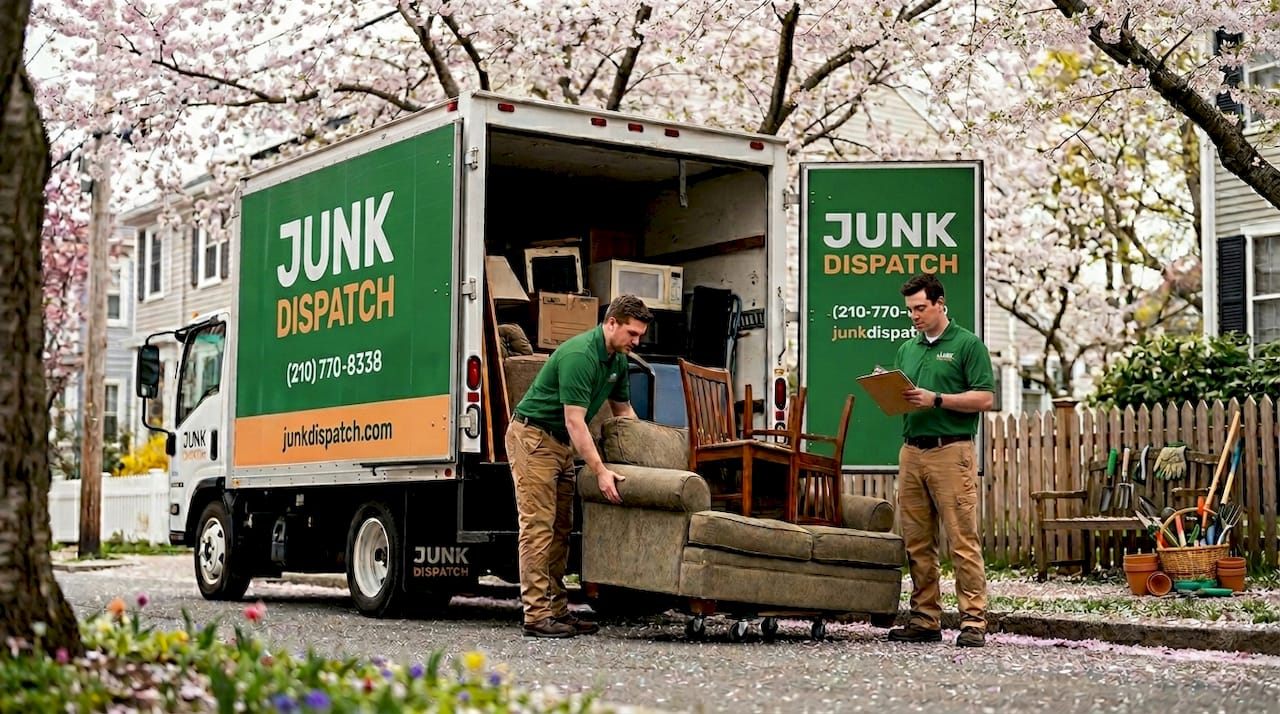
Junk removal services in Massachusetts accept household furniture, appliances, electronics, yard waste, and construction debris, with restrictions for hazardous items like Freon appliances and CRT monitors. Special handling and fees apply for Freon-containing appliances, which require certified refrigerant removal, and CRT electronics, which must be routed to certified e-waste processors. Proper preparation, such as accessible placement and door removal, helps reduce costs and ensures smooth pickups within regulatory limits.
Junk removal services accept a broad range of household and commercial materials, including furniture, appliances, electronics, yard waste, and construction debris, with specific restrictions for hazardous items like Freon-containing appliances and CRT electronics. In Massachusetts, state and municipal rules add another layer to what qualifies as acceptable junk removal items, particularly in cities like Boston where special collection appointments govern certain categories. Knowing exactly what junk removal services take before you schedule a pickup saves you time, avoids surprise fees, and keeps your project on track. This guide covers every major category, the local rules that apply, and how to prepare your items for a smooth removal.
1. Common household items accepted by junk removal services
Most junk removal providers in Massachusetts accept the bulk of what fills a typical home or office. Understanding these common junk removal categories upfront helps you plan a cleanout without second-guessing every item.
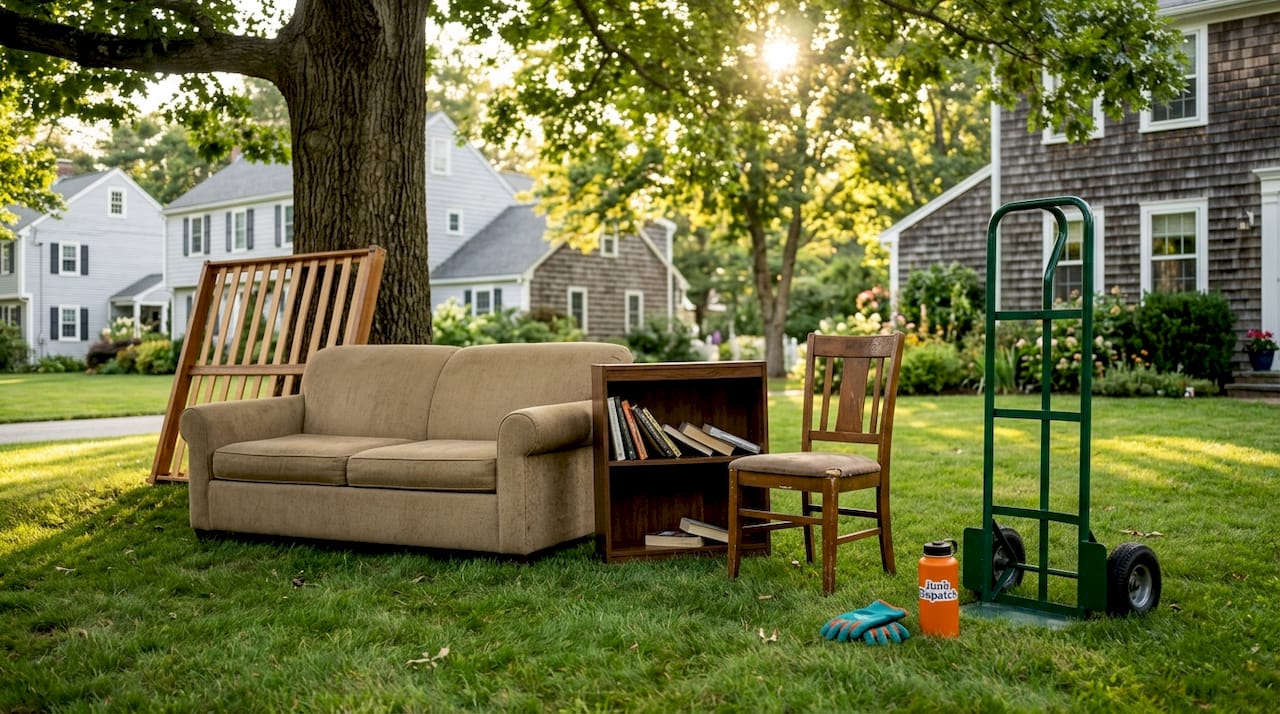
Furniture is the most frequently hauled category. Sofas, bed frames, dressers, dining sets, desks, and bookshelves are all standard acceptable junk removal items. If a piece is still in usable condition, many providers will route it to a donation partner rather than a landfill. For mattresses specifically, donation options in Massachusetts exist through several local nonprofits before disposal becomes necessary.
Appliances without hazardous components are widely accepted. Microwaves, ovens, dishwashers, washers, and dryers fall into this group. Air conditioners and refrigerators are accepted too, but they require special handling covered in the next section.
Electronics including flat-screen TVs, laptops, desktop computers, printers, and peripherals are hauled by most services. Older CRT monitors and televisions are a separate case entirely and carry their own rules.
Yard waste and bulk outdoor items round out the list. Brush, branches, bagged leaves, patio furniture, grills, and fencing are all junk pick up accepted items for most Massachusetts providers. For larger yard cleanouts, yard cleanup preparation tips can help you organize materials before the crew arrives.
Construction debris such as drywall, lumber, tile, concrete, and scrap metal is accepted by providers that handle commercial and contractor work. Junkdispatch takes construction debris as part of its Massachusetts service offerings, making it a practical option for contractors and property managers running renovation projects.
2. Special handling requirements for Freon-containing appliances
Freon is an ozone-depleting refrigerant formerly used in cooling appliances. Freon production was banned in the United States as of 2020, but millions of older units still contain it. This means refrigerators, freezers, window air conditioners, and dehumidifiers require certified professional removal of the refrigerant before disposal.
Boston’s rules are specific. The city limits Freon-containing items to special appointments, prohibiting them from regular curbside trash. Here is what you need to know before scheduling:
Remove all food and empty the appliance completely before pickup.
Remove the refrigerator or freezer door entirely. Fridges with doors attached are rejected by both municipal collectors and most private haulers.
Schedule a dedicated special collection appointment through your municipality or a private hauler like Junkdispatch.
Boston caps these appointments at 10 special items per year, with no more than 5 collected per appointment. If you exceed that limit, a private hauler is your only option.
Expect an additional fee. Junk removal companies add charges for appliances requiring refrigerant removal because certified technicians must handle that step.
Pro Tip: Call your provider before booking and ask directly whether they handle Freon removal in-house or subcontract it. In-house handling is faster and typically cheaper than a two-step process.
3. CRT electronics and why they need separate disposal
CRT stands for cathode ray tube, the technology behind older boxy televisions and computer monitors. CRTs contain toxic lead in their vacuum tubes, which means they cannot go into standard waste streams without posing a serious health and environmental risk. This is why general junk removal services often refuse them or charge a premium.
Boston and most Massachusetts municipalities require CRT items to be collected through designated channels. Like Freon appliances, CRTs fall under the special collection appointment system. The same annual limit of 10 items applies, with no more than 5 per appointment. If you are clearing out an office with a stack of old monitors, that limit matters. For detailed guidance on handling older televisions specifically, Junkdispatch has a resource on TV removal and disposal that walks through the process step by step.
Private haulers who accept CRTs must route them to certified e-waste processors. That downstream requirement is what drives the extra fee. When you ask a provider about electronics, ask specifically whether the item contains CRT technology. That single question tells you immediately whether special handling costs apply.
4. Items junk removal services do not accept
Not everything qualifies as an applicable item for junk removal. Hazardous materials are the primary category that every reputable provider refuses, and for good reason. Hazardous waste is prohibited by law from standard junk removal disposal channels.
Items that fall outside junk removal service guidelines include:
Paint and solvents. Latex and oil-based paints, stains, and thinners require municipal hazardous waste drop-off events or licensed disposal facilities.
Pesticides and herbicides. These chemicals are regulated under Massachusetts environmental law and cannot be mixed with general waste.
Medical waste. Sharps, medications, and biohazardous materials require specialized medical waste disposal services.
Pressurized containers. Propane tanks, aerosol cans, and fire extinguishers pose explosion risks and are refused across the board.
Asbestos-containing materials. Older insulation, floor tiles, and roofing materials may contain asbestos. Licensed abatement contractors handle these, not junk haulers.
Motor oil and automotive fluids. Auto parts stores and municipal recycling centers accept these separately.
For items that are still usable, donation is always worth considering before calling a hauler. Furniture banks, Habitat for Humanity ReStores, and local thrift organizations in Massachusetts accept a wide range of goods that would otherwise be landfilled.
5. How to prepare your items for junk removal
Preparation directly affects whether your pickup goes smoothly or gets delayed. Junk removal service guidelines from both municipal programs and private haulers share a consistent set of requirements that are worth following before the crew arrives.
Remove doors from refrigerators and freezers. This is not optional in Massachusetts. Both municipal collectors and private haulers reject units with doors still attached because of child entrapment safety rules that have been on the books for decades. Empty all food and defrost the unit at least 24 hours before pickup.
Place items in an accessible location. Crews charge more for long carries, stair fees, and tight-access situations. Moving items to a garage, driveway, or ground-floor hallway before the appointment reduces your bill and speeds up the job. For a full breakdown of preparation steps, junk removal tips for Massachusetts homes covers the specifics in detail.
Confirm all fees before booking. Clear upfront communication about pricing prevents surprises on the day of pickup. Ask about labor costs, disposal fees, stair charges, and any surcharges for special handling items like appliances or electronics.
Pro Tip: Ask your provider whether they have a donation or recycling program. Reputable junk removal companies recycle 60 to 80 percent of collected materials, diverting usable goods to donation centers and metals to recycling facilities. Choosing a provider with this practice reduces landfill impact at no extra cost to you.
6. Comparing junk removal service options in Massachusetts
Not every provider accepts the same items or handles them the same way. Choosing the right service depends on what you need removed and how the provider handles the downstream disposal.
Item type | Typical acceptance | Special handling required | Likely extra fee |
Furniture (sofas, beds, desks) | Accepted by most providers | None | No |
Standard appliances (ovens, washers) | Accepted by most providers | None | No |
Freon appliances (fridges, AC units) | Accepted with conditions | Door removal, refrigerant extraction | Yes |
CRT electronics (old TVs, monitors) | Accepted by select providers | Certified e-waste routing | Yes |
Flat-screen TVs and computers | Accepted by most providers | None | Rarely |
Construction debris and scrap metal | Accepted by commercial-focused providers | None | Varies by volume |
Hazardous materials (paint, chemicals) | Not accepted | N/A | N/A |
Pricing across Massachusetts providers typically reflects labor, transportation, and disposal fees. Facility processing policies ultimately govern what a hauler can accept, regardless of what they advertise. A provider willing to take your old refrigerator still needs a certified facility to process the refrigerant. Verify that the full chain is covered before you book.
Eco-friendly disposal practices and donation partnerships are differentiators worth asking about. Junkdispatch operates with a focus on responsible disposal across Massachusetts, routing items to recycling and donation channels wherever possible. For businesses running large cleanouts, the commercial junk disposal guide outlines what to expect from a provider handling office or warehouse volumes.
Key takeaways
Knowing what junk removal services accept in Massachusetts, and preparing items correctly, is the single most effective way to avoid delays, extra fees, and rejected pickups.
Point | Details |
Standard items are widely accepted | Furniture, appliances, electronics, yard waste, and construction debris are accepted by most Massachusetts providers. |
Freon appliances require preparation | Remove doors, empty contents, and expect an extra fee for refrigerant extraction before pickup. |
CRT electronics need certified disposal | Old TVs and monitors contain lead and must be routed to certified e-waste facilities, often at added cost. |
Hazardous materials are never accepted | Paint, chemicals, medical waste, and pressurized containers require separate municipal or specialty disposal. |
Preparation reduces cost and delays | Accessible placement, door removal, and upfront fee confirmation make every pickup faster and cheaper. |
What I’ve learned from watching Massachusetts residents get blindsided by junk removal rules
The most common mistake I see is assuming that “junk removal takes everything.” It does not, and the gap between expectation and reality usually shows up at the worst possible moment: moving day, a renovation deadline, or a property cleanout with a hard handover date.
The Freon and CRT rules catch people off guard more than anything else. Someone clears out a basement, lines up six old appliances and a stack of monitors at the curb, and then finds out the crew will not touch half of it without a separate appointment and extra fees. That is not the crew being difficult. Those are real regulatory requirements tied to environmental law, and Massachusetts regulations uniquely affect how bulky item removal works in this state.
My honest recommendation is to sort your items into three groups before you call anyone: standard items, special handling items, and hazardous materials. That 10-minute exercise tells you exactly what questions to ask when you get a quote. It also tells you whether you need one provider or two.
The environmental angle matters more than most people realize. Providers that recycle and donate a significant share of what they collect are not just doing good PR. They are keeping your items out of a landfill, which has real downstream value for Massachusetts communities. Ask about it. The answer tells you a lot about how a company actually operates.
— Joe
Ready to clear it out? Junkdispatch makes it simple
Junkdispatch accepts the full range of household and commercial items that Massachusetts residents and businesses need removed, including furniture, appliances, electronics, yard waste, and construction debris. The crews are insured, the scheduling is flexible, and eco-friendly disposal is built into every job. Whether you are doing a garage cleanout in Reading or a full office clearout in Essex County, Junkdispatch handles the heavy lifting with transparent pricing and no surprise fees. Book your pickup through Reading, MA junk removal or explore Essex County service options to get a free estimate today.
FAQ
What items do junk removal services typically accept?
Junk removal services accept furniture, standard appliances, electronics, yard waste, scrap metal, and construction debris. Hazardous materials like paint, chemicals, and medical waste are not accepted by any reputable provider.
Do junk removal services take refrigerators and air conditioners?
Yes, but these appliances require special handling because they contain Freon. Refrigerator doors must be removed and food emptied before pickup, and an additional fee typically applies for refrigerant extraction.
Can junk removal services take old CRT televisions?
Select providers accept CRT televisions and monitors, but they must be routed to certified e-waste facilities due to the toxic lead content inside. Expect an extra fee and confirm the provider’s e-waste certification before booking.
How many special collection items does Boston allow per year?
Boston limits special collection appointments to a maximum of 10 items per calendar year, with no more than 5 collected per appointment. Quantities above that limit require a private hauler.
How should I prepare items before a junk removal pickup?
Move items to an accessible location like a driveway or ground floor, remove doors from refrigerators and freezers, empty all appliances, and confirm all fees including stair charges and special handling costs before the crew arrives.
Recommended
Comments