Eco-Friendly Disposal Steps for Contractors in 2026
- Joe Lusso
- 2 hours ago
- 9 min read

TL;DR:
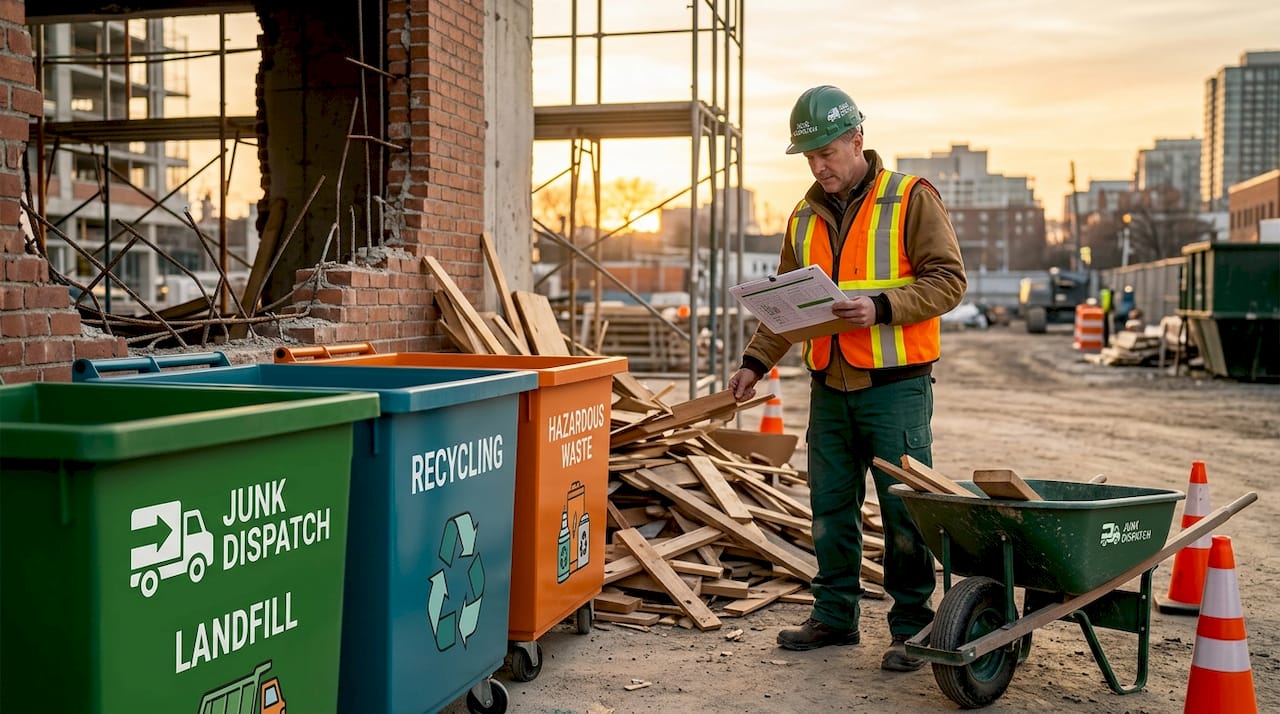
Proper management of construction and demolition waste is essential for compliance, environmental protection, and safeguarding your license as a contractor. Implementing early source reduction, precise sorting, real-time documentation, and strict subcontractor accountability ensures responsible disposal and enhances project sustainability. Consistent adherence to local permit conditions and thorough record-keeping are vital for inspection readiness and long-term success.
Construction and demolition waste is one of the largest waste streams in the United States, and it falls squarely on your shoulders as a contractor to handle it responsibly. Following the right eco-friendly disposal steps for contractors means more than just sorting a dumpster. It means understanding local permit conditions, documenting every load, keeping recyclable materials clean, and staying inspection-ready throughout a project. Do it right and you protect both the environment and your license. This guide walks you through exactly how, from pre-project planning through final compliance verification.
Key Takeaways
Point | Details |
Source reduction comes first | Preventing waste generation saves more resources than recycling after the fact. |
Know your permit conditions | Local codes require permitted haulers, approved facilities, and disposal receipts kept on site at all times. |
Sort early to protect recyclability | Mixing untreated and treated wood or other streams kills recycling potential before debris leaves the site. |
Document every load in real time | Use live folders or digital systems so you are never reconstructing paperwork before an inspection. |
Hazardous waste needs its own chain | The EPA Uniform Hazardous Waste Manifest is legally required and must be retained for at least three years. |
Eco-friendly disposal steps for contractors: the regulatory foundation
Before you set up a single dumpster, you need to understand what your jurisdiction actually requires. Sustainable waste management is not optional. It is often a permit condition, and violating it can cost you your license to build.
Most building and demolition permits include solid waste conditions that contractors routinely overlook. In many jurisdictions, these conditions require you to use only city-approved disposal services and retain dump tickets throughout the entire project, not just at closeout. That means if an inspector shows up on day three of a three-month job, you need documentation ready on the spot.
Roll-off containers add another layer of compliance. Many municipalities require that the container is owned by or authorized to the demolition permittee, carries a current inspection tag, and that solid waste permits are in place before the container hits the street. Missing any of these elements risks permit revocation, stop-work orders, and financial penalties.
Here is what you need to prepare before breaking ground:
Confirm which disposal facilities are permitted in your jurisdiction and get the list in writing
Verify that your hauler holds the appropriate solid waste or transport license
Obtain any required roll-off container permits before delivery
Understand whether your project triggers source separation requirements under local ordinances
Identify any hazardous materials on site (lead paint, asbestos, treated wood) and know which licensed transporter and treatment facility handles them
Hazardous materials deserve special attention. Any off-site shipment of hazardous waste requires the EPA Uniform Hazardous Waste Manifest, which documents the chain of custody from your site through every transporter to the final permitted treatment or disposal facility. That manifest must be retained for a minimum of three years. Treat it as a legal record, not a receipt.
Pro Tip: Call your local building department before the permit application and ask specifically about solid waste conditions. Many contractors discover these requirements only after a violation notice, which is far more expensive than a 15-minute phone call.
Planning your waste reduction and sorting strategy
The EPA prioritizes source reduction as the greenest practice above recycling, salvage, or disposal. In plain terms, the best construction debris is the debris you never generate. That shifts the strategy earlier in the project timeline than most contractors expect.
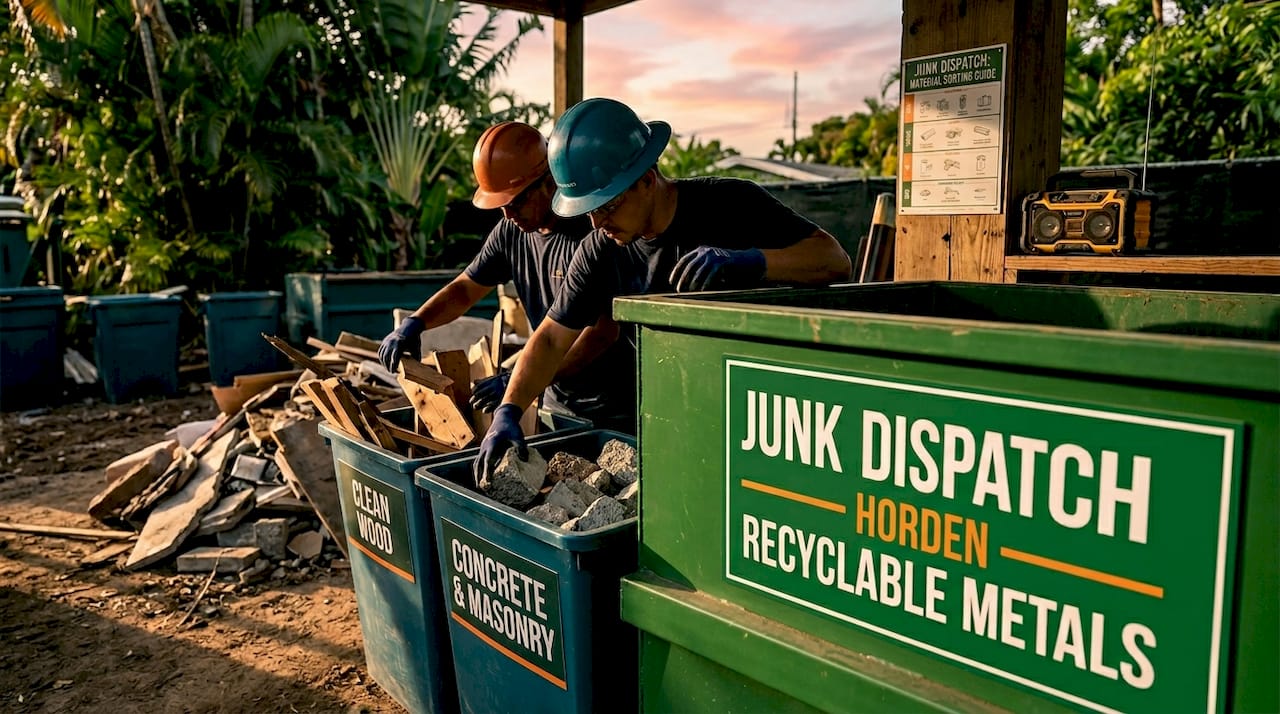
Source reduction starts with accurate material takeoffs. Over-ordering drives more waste than almost any other factor on residential and commercial projects. Buy closer to actual quantities, account for cuts and offcuts in your calculations, and specify materials that can be reused or returned if unused.
When demolition is involved, consider deconstruction over demolition. Selective deconstruction preserves materials like lumber, brick, cabinetry, and fixtures for direct reuse or resale. It takes more time than a full tear-down, but the labor cost is often offset by tipping fees you avoid and tax-deductible donations to reuse organizations. Check out sustainable construction debris solutions for material-specific pathways that work on Massachusetts projects.
Sorting: the single factor that makes or breaks recyclability
On-site sorting is where most contractors lose recyclability before debris ever leaves the site. Contamination from mixing streams is the leading cause of failed recycling attempts on C&D sites. Mixing untreated lumber with pressure-treated wood, for example, contaminates the entire load and sends wood that would otherwise be chipped into mulch or engineered products straight to the landfill.
Here is how common materials should be sorted and where they go:
Material | Recycling pathway | Common contamination risk |
Clean concrete and asphalt | Crushed into aggregate base | Mixed with soil or gypsum |
Untreated wood | Mulch, engineered products, biomass | Mixed with treated or painted wood |
Metals (steel, copper, aluminum) | Direct metal recyclers | Mixed with non-metals |
Cardboard and paper | Mixed paper recycling streams | Wet or soiled material |
Drywall (unpainted) | Gypsum recyclers | Mixed with painted or contaminated board |
Proper sorting prevents mismanagement and is the difference between materials that reach a compliant recycler and materials that end up buried. Set up clearly labeled bins before the first load moves.
Pro Tip: Post a simple laminated chart at each bin showing exactly which materials belong there. Workers making split-second decisions on a busy site will default to what is visually clear, and one contaminated bin can cost you a full recycling load.
Step-by-step: running eco-responsible disposal on the job site
With planning done and sorting systems in place, execution comes down to process and consistency. Here is how to run construction debris recycling and disposal in a way that holds up under scrutiny.
Set up labeled bins before any demolition or construction begins. Separate containers for metal, clean wood, concrete, cardboard, and general waste prevent cross-contamination from day one. Add a designated hazardous materials staging area away from general debris.
Brief every worker and subcontractor on the sorting system. A brief five-minute site orientation on waste sorting is worth more than any signage alone. If a sub-contractor does not know your protocol, they will follow their own habits, which may not match your permit conditions.
Schedule hauls before bins overflow. Overfull bins lead to cross-contamination and materials being tossed wherever there is space. Work with your hauler to set a pull schedule based on project pace, not convenience.
Collect disposal documentation at every pickup. Get a dump ticket, receipt, or weight slip from every load that leaves the site. Do not let a driver leave without one. The same discipline applies to recycling facility drop-offs and material donations.
For hazardous waste, initiate the manifest process before the transporter arrives. Fill out your section of the EPA Uniform Hazardous Waste Manifest, confirm the transporter’s credentials, and verify the receiving facility is permitted. Manifests operate as chain-of-custody tools requiring active coordination among you, the transporter, and the disposal site. A missing signature anywhere in that chain creates liability.
Audit each bin weekly. A quick visual check catches contamination before it becomes a full-container problem. If you catch untreated wood drifting into the treated wood bin, you can address it while costs are still manageable.
The most common compliance failure is not intentional. It is a contractor who genuinely recycled materials but cannot prove it because the receipts were lost, never collected, or left with a sub. Documentation is not bureaucracy. It is your proof of work.
Pro Tip: Assign one person on site, whether a site supervisor or project manager, as the waste documentation lead. This single accountability shift reduces missing receipts by a significant margin on complex projects.
Verifying compliance and improving over time
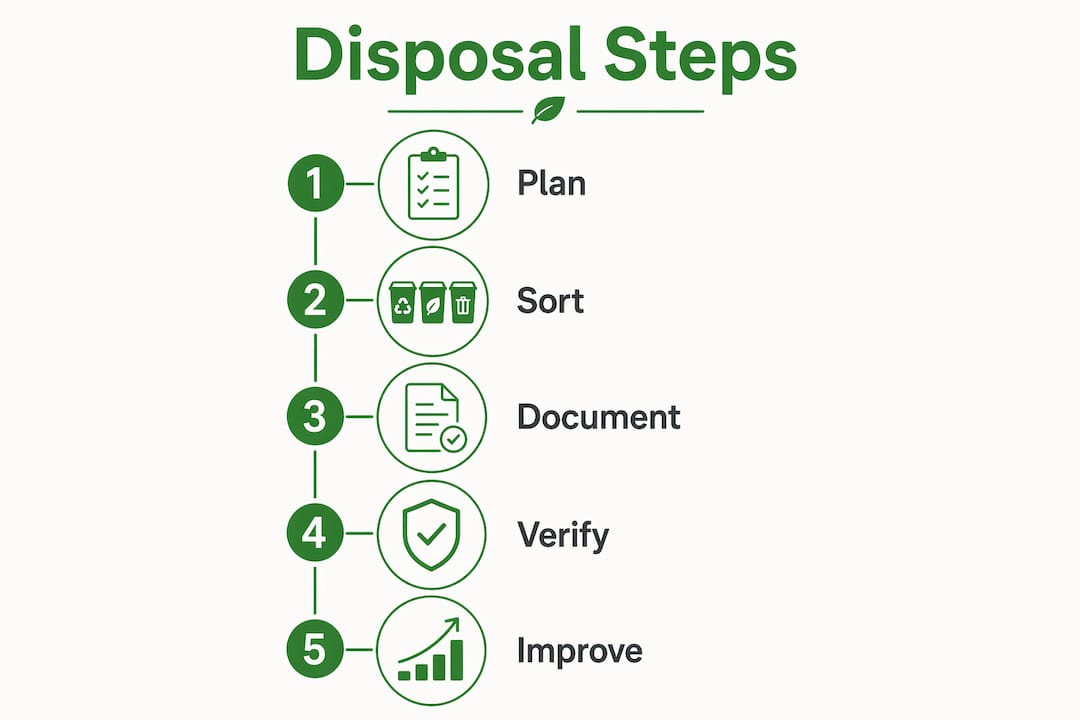
Getting through a project without a violation is the floor, not the ceiling. The contractors who build a real competitive advantage around sustainable building site management are the ones who treat each project as a data set.
Compliance verification depends on real-time documentation, not end-of-project reconstruction. Inspectors require disposal proof at all times, which means that collecting and organizing receipts retroactively is both risky and costly. A live document folder, whether physical at the site office or digital via a shared drive or project management app, keeps you inspection-ready from day one.
For documentation, focus on tracking these items continuously:
Dump tickets and weight slips for every general waste load
Recycling receipts organized by material type
Hazardous waste manifests with all required signatures
Subcontractor disposal records if they are managing their own hauls
Auditing subcontractor waste practices deserves a specific call-out. When subs control their own debris removal, their documentation gaps become your compliance problem. Require written confirmation of their waste hauler credentials and collect a copy of every receipt from every load they remove. You can find a practical framework for managing this in the costs and compliance guide from Junkdispatch.
Penalties for noncompliance vary by jurisdiction but commonly include stop-work orders, fines per day of violation, permit revocation, and in serious cases involving hazardous waste, federal enforcement under RCRA. None of these outcomes are proportionate to the cost of proper documentation.
To improve waste diversion rates project over project, track how much material leaves as landfill versus recycling versus reuse. That number, your diversion rate, is increasingly requested by clients, especially on commercial projects where sustainability credentials matter. It is also a metric that verified recycler compliance depends on. Vet your recyclers to confirm they are actually processing materials correctly, not stockpiling them.
My honest take on where contractors get this wrong
I have seen contractors spend real money on sorting bins and recycling contracts, then watch their diversion rates stay flat because contamination happens in the first hour of a project and never gets corrected. The sorting system is not the problem. The lack of early enforcement is.
The contractors who get the most out of eco waste disposal practices are the ones who treat the first day on site like the only day that matters for waste setup. Everything downstream depends on that foundation. Once a bin is contaminated, it does not get sorted out at the recycling facility. It goes to the landfill.
Documentation is the second place I see consistent failure. Not because contractors are careless, but because they treat paperwork as a project-end task. Inspections do not work on your timeline. I have watched projects get flagged because the receipt for a load from three weeks ago could not be located. That is not an environmental failure. It is an administrative one. Fix the system and the compliance follows.
The contractors who build genuine reputations around green disposal methods are not doing anything exotic. They are doing the basics with consistency. Source reduction in the planning phase, clean sorting from day one, real-time documentation, and subcontractor accountability. That is the entire playbook.
— Joe
Let Junkdispatch handle your construction debris in Massachusetts
When you need a reliable partner for construction debris removal in Massachusetts, Junkdispatch has you covered. We work directly with contractors handling everything from full demolition cleanouts to mid-project debris hauls, and we prioritize responsible disposal and recycling partnerships throughout.

Our crews are insured, our scheduling is flexible, and we handle the heavy lifting so you can stay focused on the build. Whether you are working in Reading or anywhere across Essex County, junk removal for contractors is available with same-day options and transparent pricing. Get a free estimate and book online at Junkdispatch. No sorting headaches, no hauler coordination, just clean sites and documented disposal you can stand behind.
FAQ
What are the most important eco-friendly disposal steps for contractors?
The top steps are source reduction during planning, on-site sorting by material type before any debris accumulates, using licensed haulers and permitted facilities, and collecting disposal documentation at every pickup. Compliance depends on proof, not intention.
How do I handle hazardous waste on a construction site?
Any hazardous waste leaving your site requires an EPA Uniform Hazardous Waste Manifest, which must be completed with input from you, the licensed transporter, and the permitted treatment or disposal facility. Retain the completed manifest for at least three years.
What construction materials can be recycled?
Clean concrete and asphalt can be crushed into aggregate, untreated wood goes to mulch or engineered products, metals are recycled directly, and uncontaminated drywall can go to gypsum recyclers. Keeping streams separated from the start determines what actually gets recycled versus landfilled.
How long do I need to keep disposal documentation?
General disposal receipts and dump tickets should be available on site throughout the project duration and accessible for any inspection. Hazardous waste manifests must be retained for a minimum of three years under federal requirements.
What happens if my subcontractor mismanages waste on my site?
Their documentation gaps become your compliance liability. Require proof of hauler credentials from every subcontractor managing their own debris, and collect copies of their disposal receipts. An inspector will hold the permit holder responsible regardless of who loaded the truck.
Recommended
Comments