Garage Cleanout Guide: Eco-Friendly Workflow for MA Homes
- Joe Lusso
- Apr 10
- 9 min read

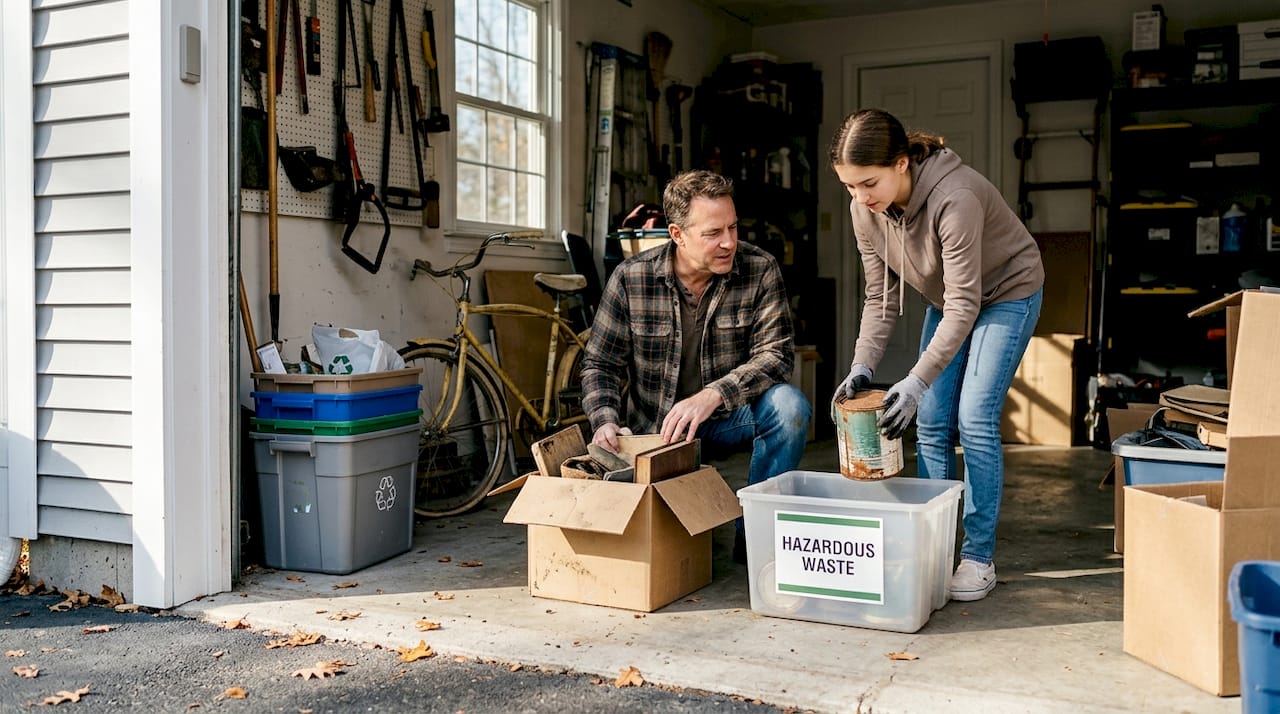
TL;DR:
Effective garage cleanouts improve safety, legality, and environmental responsibility.
Proper preparation, tools, and planning are essential for a successful, eco-friendly cleanup.
Professional help is recommended for hazardous materials and large-scale junk removal.
That pile of old paint cans, broken tools, and forgotten sports equipment in your garage is more than an inconvenience. 93% of homeowners use their garages for far more than parking, which means clutter builds fast and safety risks follow close behind. In Massachusetts, the stakes are even higher because state law strictly regulates how you dispose of hazardous materials. This guide walks you through a proven, eco-friendly workflow for a full garage cleanout, from the first trash bag to the final sweep, so you finish the job right the first time.
Table of Contents
Key Takeaways
Point | Details |
Safety and legal compliance | Following proper workflow prevents injuries and avoids Massachusetts hazardous waste fines. |
Eco-friendly is achievable | Sorting and choosing the right junk removal service diverts up to 80% from landfills. |
Organization saves time | Proper tools, planning, and pro tips streamline cleanouts and keep garages clutter-free longer. |
Professional help pays off | Junk removal pros make complex cleanouts simpler and safer, especially for hazardous waste. |
Why effective garage cleanout matters: Safety, law, and sustainability
A cluttered garage is not just an eyesore. It is a genuine hazard. Stacked boxes block emergency exits, loose chemicals create fire risks, and dark corners invite rodents and insects. Cluttered garages pose real safety risks, including tripping, pest infestations, and exposure to toxic materials that have been sitting on shelves for years.
The legal side is just as serious. Massachusetts Chapter 21C prohibits improper handling of hazardous waste and requires licensed transport and disposal to protect public health and the environment. That means you cannot simply toss old motor oil, pesticides, or batteries into your curbside bin. Violating this law can result in significant fines, and ignorance of the rule is not a valid defense.
Then there is the environmental angle. Most Massachusetts homeowners do not realize how much of their garage junk is actually recyclable or reusable. Eco-conscious junk removal impact goes well beyond convenience. Professional eco-friendly services can divert between 60 and 80 percent of collected materials away from landfills through recycling, donation, and responsible processing.
Here is what you stand to gain from a proper cleanout:
Safer space: Fewer tripping hazards, fire risks, and pest entry points
Legal compliance: Proper hazardous waste disposal keeps you on the right side of state law
Environmental responsibility: More materials recycled, less waste in landfills
Usable space: Room to actually park your car, run a workshop, or store things you need
“A garage cleanout done right is not just about clearing space. It is about protecting your family, your property, and your community.”
Understanding these stakes makes it clear why a random Saturday afternoon approach rarely works. You need a plan, the right supplies, and a clear picture of what Massachusetts junk removal solutions look like before you start.
Now that you’ve seen why cleanouts matter, discover what you need to get started.
What you need to start: Tools, supplies, and prep steps
Showing up to a garage cleanout without the right gear is like trying to cook a big meal without checking your pantry first. You will stall out halfway through. Preparation is what separates a finished job from a half-done mess that sits for another six months.
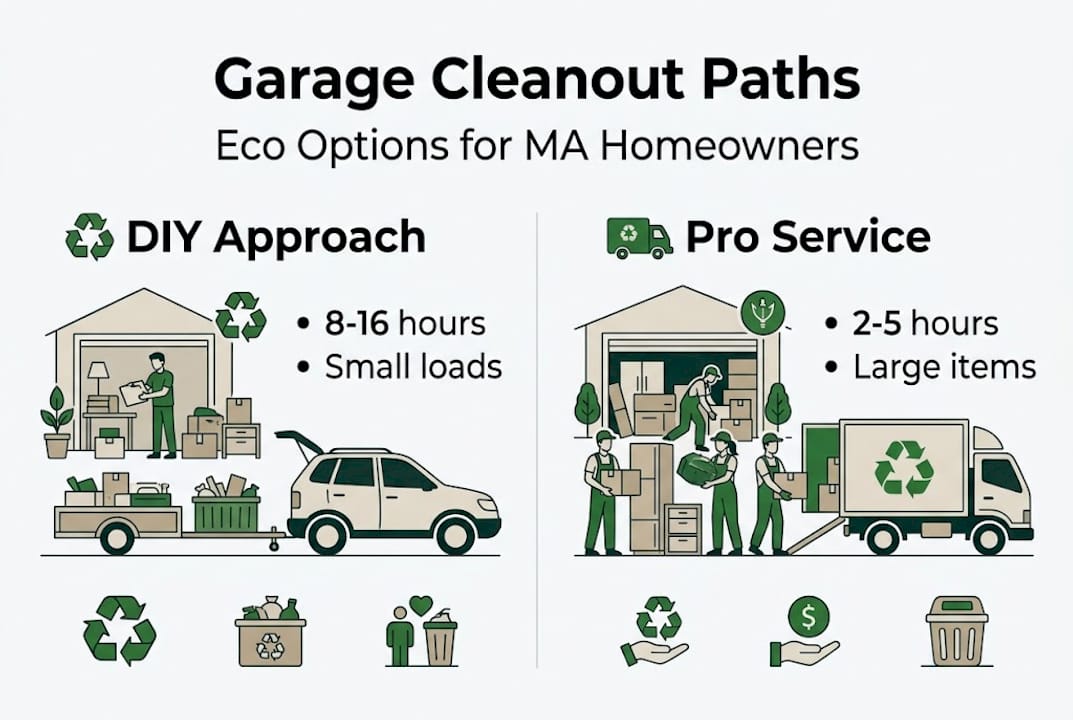
A full two-car garage DIY cleanout typically takes between 8 and 16 hours. That number surprises most people. Budget your weekend accordingly, and if you have heavy or hazardous items, plan for professional help from the start.
Here is what to gather before you pull a single item off the shelf:
Heavy-duty trash bags (contractor grade, not kitchen bags)
Work gloves rated for sharp objects and chemical contact
N95 masks for dust, mold, and chemical fumes
Safety goggles for overhead work
Sorting bins or tarps labeled: Keep, Donate, Recycle, Hazardous
Permanent markers and labels for quick identification
Cleaning supplies including a broom, mop, and all-purpose cleaner
Dolly or hand truck for heavy appliances or equipment
Item | Purpose | DIY or pro needed |
Work gloves | Hand protection | DIY |
N95 mask | Dust and fume protection | DIY |
Contractor bags | Bulk waste collection | DIY |
Sorting bins | Organized categorization | DIY |
Hand truck | Moving heavy items | DIY |
Hazmat containers | Chemical storage | Pro recommended |
Licensed hauler | Hazardous waste transport | Pro required |
Before you move anything, walk through the garage and do a quick mental map. Identify where hazardous materials are stored, note any items too heavy to move alone, and clear a staging area outside or in the driveway. This storage unit cleanout checklist approach works just as well for garages.
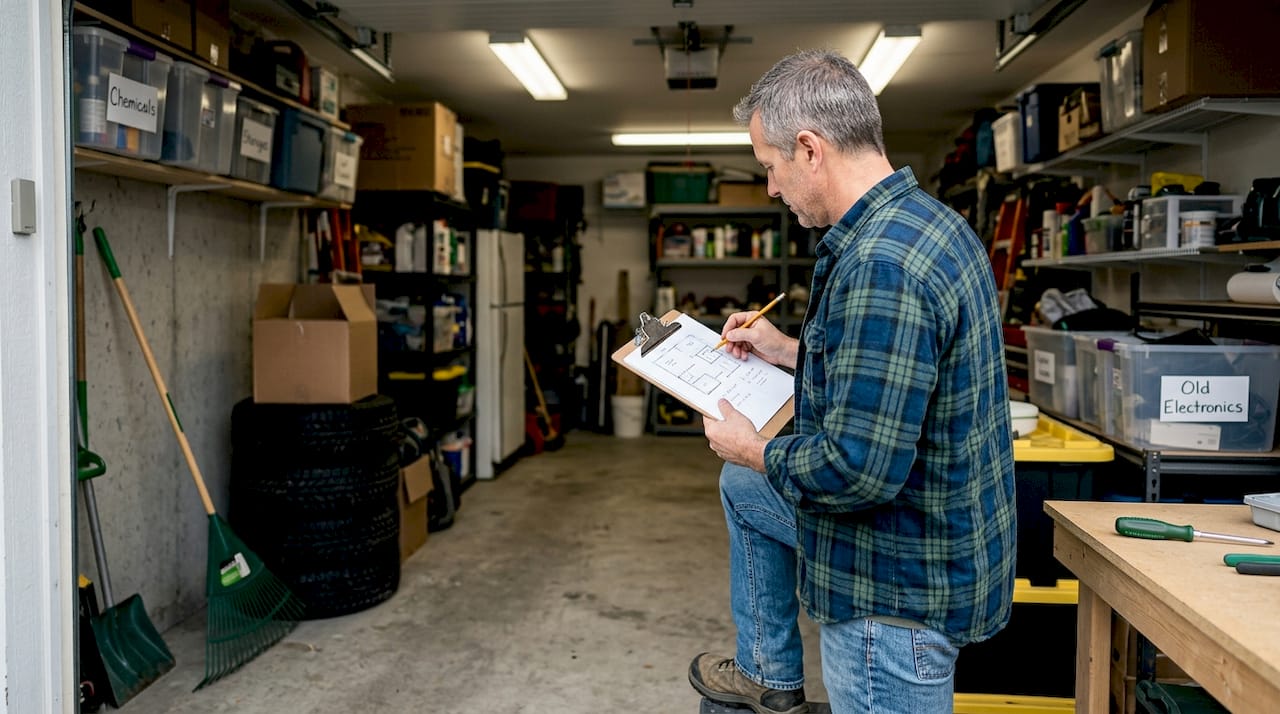
Pro Tip: Photograph your garage before you start. It helps you track progress, and if you are donating or selling items, photos make the process faster.
For anything involving chemicals, old appliances, or large furniture, review the facility cleanout guide for handling protocols that apply to Massachusetts properties.
With supplies ready, it’s time to dive into the actual cleanout process.
Step-by-step garage cleanout workflow for Massachusetts homes
A good workflow keeps you moving forward instead of shuffling the same items around. Follow these steps in order and you will avoid the most common time-wasting traps.
Empty the garage completely. Pull everything out into your driveway or yard. Yes, everything. You cannot sort what you cannot see.
Sort into four categories. Keep, Donate, Recycle, and Hazardous. Be honest. If you have not used it in two years, it probably does not need to come back inside.
Handle hazardous materials first. Separate paint, solvents, batteries, automotive fluids, and pesticides. Under Chapter 21C, these require licensed disposal. Do not mix them with regular trash.
Process donations and recyclables. Research local Massachusetts drop-off centers, donation organizations, and scrap metal facilities. Many will pick up large items for free.
Load regular junk for removal. Bag and stack items clearly. If you are using a professional service, have everything staged and accessible.
Deep clean the empty space. Sweep, mop, and inspect for pest damage, mold, or water stains before you bring anything back in.
Return only what belongs. Organize your Keep pile with purpose. Use shelving, hooks, and labeled bins so the space stays functional.
Approach | Time needed | Best for | Eco-diversion rate |
Full DIY | 8 to 16 hours | Small loads, no hazardous waste | Low to moderate |
DIY plus eco hauler | 4 to 8 hours | Mixed loads, some recycling | Moderate |
Full professional service | 2 to 4 hours | Heavy, hazardous, or large loads | 60 to 80 percent |
Pro Tip: Schedule your cleanout on a day when your local hazardous waste facility is open. Many Massachusetts towns hold seasonal collection events. Check your town’s website before you start.
For a smoother experience overall, efficient junk removal planning starts before the first bag is filled. And if you want to maximize your sustainability benefits, choosing a certified eco-friendly hauler is the single biggest lever you can pull.
After understanding the workflow, be aware of mistakes homeowners often make.
Common mistakes and how to avoid them
Even well-intentioned cleanouts go sideways. Knowing what trips people up is half the battle.
Mixing hazardous waste with regular trash. This is the most costly mistake, both legally and financially. Fines under Massachusetts law can be steep, and cleanup costs are even steeper.
Skipping PPE. Old garages often contain mold, asbestos-containing materials in older insulation, and chemical residues. Gloves and a mask are not optional.
Underestimating the time. A two-car garage DIY cleanout takes 8 to 16 hours. Starting on a Sunday afternoon and expecting to finish before dinner is a recipe for a half-done job.
Not having a disposal plan before you start. Sorting junk into piles means nothing if you do not know where each pile is going. Research recycling centers, donation sites, and licensed haulers ahead of time.
Trying to move heavy items alone. Appliances, old safes, and riding mowers cause back injuries every year. Get help or hire professionals.
Ignoring local eco-options. Many Massachusetts communities have free or low-cost recycling programs for electronics, metals, and furniture. Not using them just sends more to the landfill.
“The biggest mistake is not the one you make during the cleanout. It is the one you make before it starts, by not having a plan.”
Getting free junk removal estimates before you start gives you a clear picture of costs and helps you decide what to DIY and what to hand off. Comparing options through best junk removal services reviews also helps you find a provider that matches your budget and eco-priorities.
With the main pitfalls covered, here’s the kind of transformation you should expect when following this workflow.
What to expect after a cleanout: Results and next steps
Once the work is done, the difference is immediate and significant. Most homeowners describe the feeling as genuinely surprising. You get back a space you forgot you had.
Here is what a properly completed garage cleanout delivers:
A functional, usable space. Whether you want to park your car, set up a workshop, or create organized storage, a cleared garage makes all of it possible.
Reduced safety risks. No more tripping hazards, fire risks from stored chemicals, or dark corners that attract pests.
Lower environmental footprint. Eco-services divert up to 80% of collected materials from landfills. That is a meaningful contribution, especially when multiplied across a neighborhood.
Peace of mind. Knowing your hazardous materials were handled legally and responsibly removes a real source of stress.
To keep your garage from reverting to its old state, build a few simple habits. Do a quick 15-minute sweep every season. Commit to a one-in, one-out rule for large items. And schedule an annual review of chemicals and stored materials so nothing sits long enough to become a hazard.
For ongoing clutter management, eco-friendly junk removal services can handle annual or semi-annual pickups so the work never piles up to overwhelming levels again.
Now that you know what success looks like, let’s consider what most guides leave out.
A pro’s perspective: The overlooked keys to a smooth garage cleanout
Most cleanout guides focus on the physical steps. Sort, bag, haul. But in our experience working with Massachusetts homeowners, the real difference between a smooth cleanout and a stressful one comes down to two things: honest self-assessment and up-front planning.
Homeowners consistently underestimate how much hazardous material they have accumulated. Old paint alone is one of the most common items we see improperly discarded. The legal and environmental consequences of mishandling these materials are real, and they are avoidable with a little preparation.
The sustainability focus of a cleanout is also something most people treat as an afterthought. But choosing a vendor who actively recycles and donates is not just good for the planet. It often costs the same or less than a standard hauler, and it means your old items get a second life instead of a landfill slot.
Get a free estimate before you commit to anything. It clarifies scope, sets expectations, and often reveals options you did not know existed. That one step alone saves most homeowners both time and money.
Get help with your garage cleanout in Massachusetts
Tackling a garage cleanout on your own is doable for small loads, but when heavy appliances, hazardous materials, or years of accumulated junk are involved, professional help makes the whole process faster and far less stressful.
At Junk Dispatch, we handle everything from single-item pickups to full garage cleanouts across Massachusetts. Our insured crews sort, haul, and dispose of your junk responsibly, diverting as much as possible from landfills through recycling and donation. Whether you are in Reading or anywhere across Essex County, we offer free estimates, same-day availability, and transparent pricing. Book online in minutes and let us handle the heavy lifting.
Frequently asked questions
What items are considered hazardous waste in a Massachusetts garage cleanout?
Hazardous waste includes paint, solvents, pesticides, automotive fluids, and batteries. Massachusetts law requires licensed transport and disposal for all of these materials.
How long does a DIY garage cleanout take?
A full DIY cleanout of a two-car garage typically takes 8 to 16 hours, not counting time spent arranging hazardous waste disposal.
Are eco-friendly junk removal services available in Massachusetts?
Yes. Many Massachusetts junk removal companies prioritize recycling and donation, with eco-services diverting 60 to 80% of collected materials away from landfills.
What’s the safest way to dispose of old chemicals and paints in Massachusetts?
Contact a licensed hazardous waste facility or use a junk removal service that complies with Chapter 21C requirements. Many Massachusetts towns also hold seasonal hazardous waste collection events.
Why hire professionals for garage cleanout?
Professionals save you time, handle heavy and hazardous items safely, and ensure your junk is disposed of in a way that meets both legal and environmental standards.
Recommended
Comments