Why remove construction debris: key reasons for MA projects
- Joe Lusso
- 4 days ago
- 8 min read

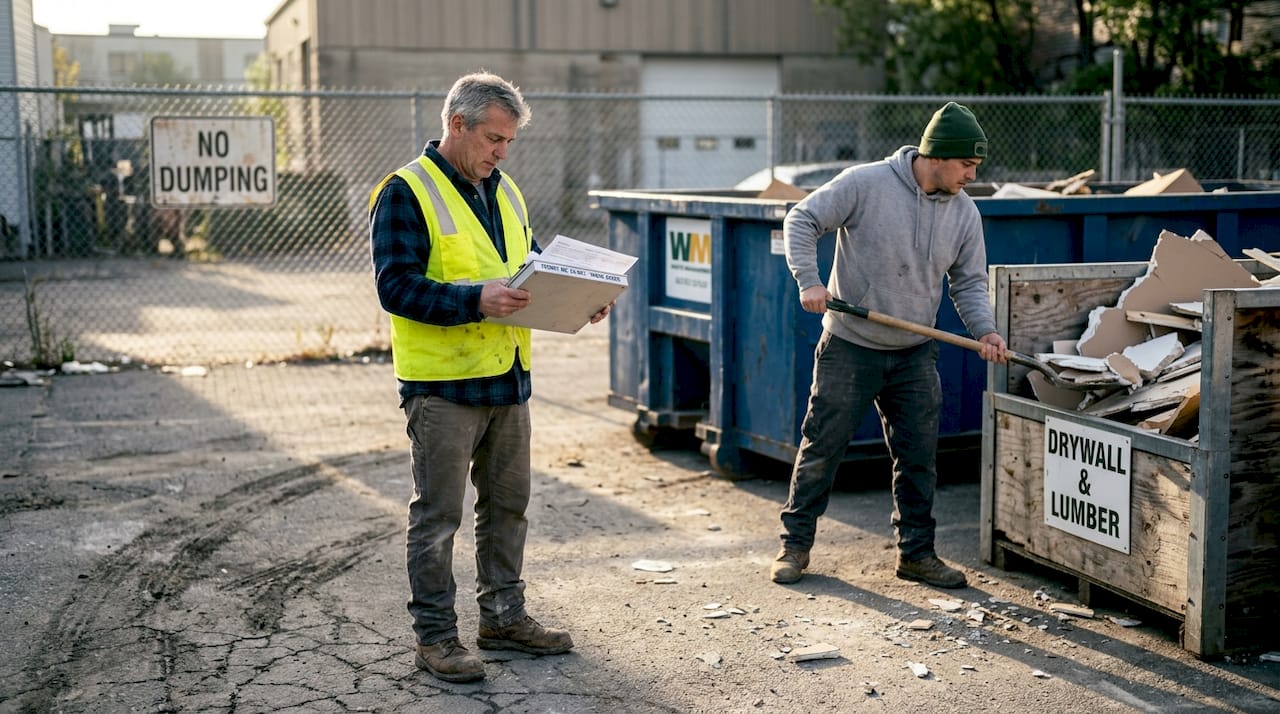
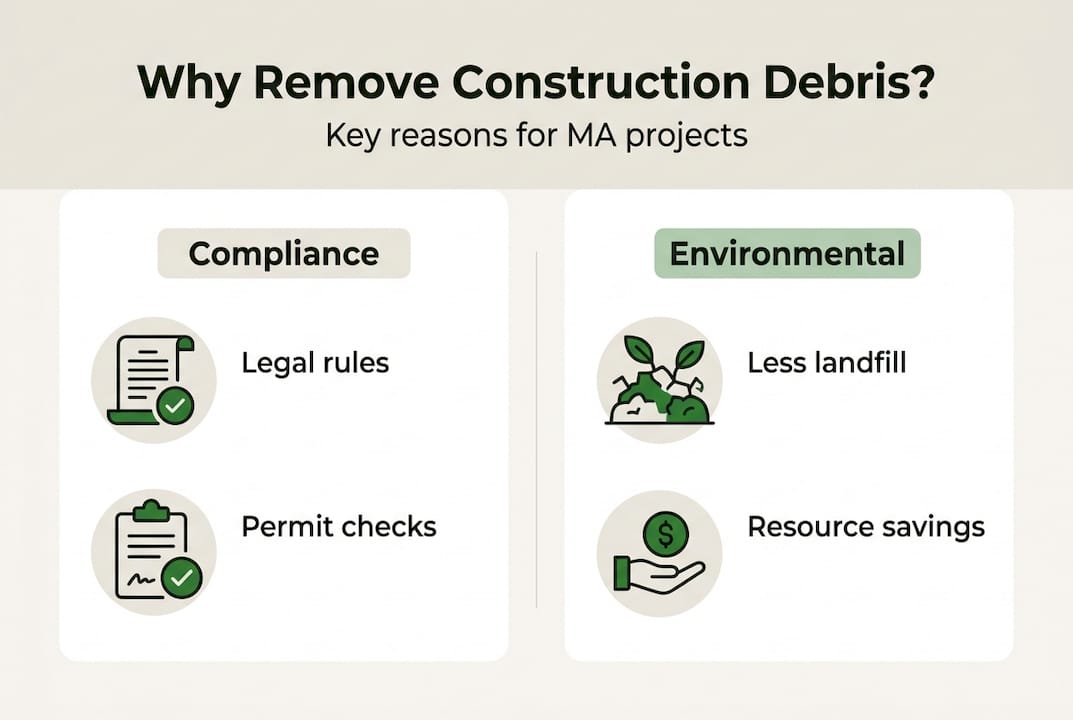
Massachusetts enforces some of the nation’s strictest construction debris regulations, with 23 materials banned from landfills since 2006. Homeowners and contractors who ignore these rules face steep fines, project delays, and potential legal action. Beyond compliance, proper debris removal protects local ecosystems, reduces pollution, and can actually lower your project costs through recycling credits and efficient waste management. This guide breaks down the legal, environmental, and practical reasons why removing construction debris correctly matters for every Massachusetts project, whether you’re renovating a single room or managing a commercial build.
Table of Contents
Massachusetts regulations and legal requirements for construction debris removal
Environmental impact and benefits of proper construction debris removal
Practical approaches: sorting, managing, and minimizing construction debris
Professional construction debris removal services in Massachusetts
Frequently asked questions about construction debris removal
Key Takeaways
Point | Details |
Legal compliance avoids fines | Following Massachusetts waste bans and permit requirements prevents fines and project delays. |
On site sorting mandated | Most projects require separating recyclables from waste at the job site to maximize material recovery and stay compliant. |
Recycling lowers costs | Sorting and recycling can lower project costs through credits and reduced tipping fees. |
Licensed haulers required | Only licensed waste transporters and disposal facilities may handle debris to avoid enforcement actions. |
Massachusetts regulations and legal requirements for construction debris removal
The Massachusetts Department of Environmental Protection enforces comprehensive waste bans that directly impact how you handle construction and demolition materials. Since 2006, MassDEP prohibits 23 construction materials from entering landfills, including asphalt pavement, brick, concrete, metal, and untreated wood. These bans apply to residential renovations and large commercial projects equally. If you’re tearing down a deck or demolishing an entire structure, you must separate banned materials and send them to approved recycling facilities.
Permit requirements add another compliance layer. Demolition projects require advance notification and approved waste management plans submitted to local building departments. Waste transporters must hold valid solid waste licenses issued by MassDEP. Using unlicensed haulers or dumping debris at unauthorized sites triggers enforcement actions that can halt your project entirely. Fines start at several hundred dollars per violation and escalate quickly for repeat offenses or large-scale illegal dumping.
Pro Tip: Request copies of hauler licenses and facility permits before signing contracts. Legitimate construction debris removal services in Massachusetts provide documentation without hesitation.
On-site sorting isn’t just recommended, it’s legally mandated for most projects. You must separate recyclable materials from true waste before transport. This requirement stems from Massachusetts’ push to divert construction debris from landfills and maximize material recovery. Facilities that accept mixed loads often charge premium tipping fees or reject deliveries outright. Sorting at the source streamlines disposal, reduces costs, and keeps you compliant with state mandates.
Submit waste management plans to local authorities before starting demolition work
Use only licensed solid waste facilities for debris disposal and recycling
Keep detailed records of material weights, facility receipts, and hauler documentation
Schedule inspections as required by local building codes and MassDEP regulations
“Massachusetts construction projects generate significant debris volumes annually. Proper handling through licensed channels protects public health and supports the state’s waste reduction goals.”
Violations carry real consequences beyond fines. Projects can face stop-work orders until compliance issues resolve. Contractors risk license suspensions or revocations for repeated violations. Property owners become liable for cleanup costs when illegal dumping occurs on their sites, even if they hired someone else to handle disposal. Understanding these legal frameworks before breaking ground saves time, money, and professional reputation. Following construction debris disposal guidelines from the start prevents problems that derail timelines and budgets.
Environmental impact and benefits of proper construction debris removal
Construction debris creates environmental hazards that extend far beyond unsightly piles of rubble. Treated lumber contains arsenic and other preservatives that leach into soil when left exposed to rain and groundwater. These chemicals migrate through soil layers, contaminating drinking water sources and damaging plant life. Old paint chips release lead particles that persist in the environment for decades. Asbestos-containing materials, still present in many older Massachusetts buildings, pose severe respiratory risks when disturbed during demolition.
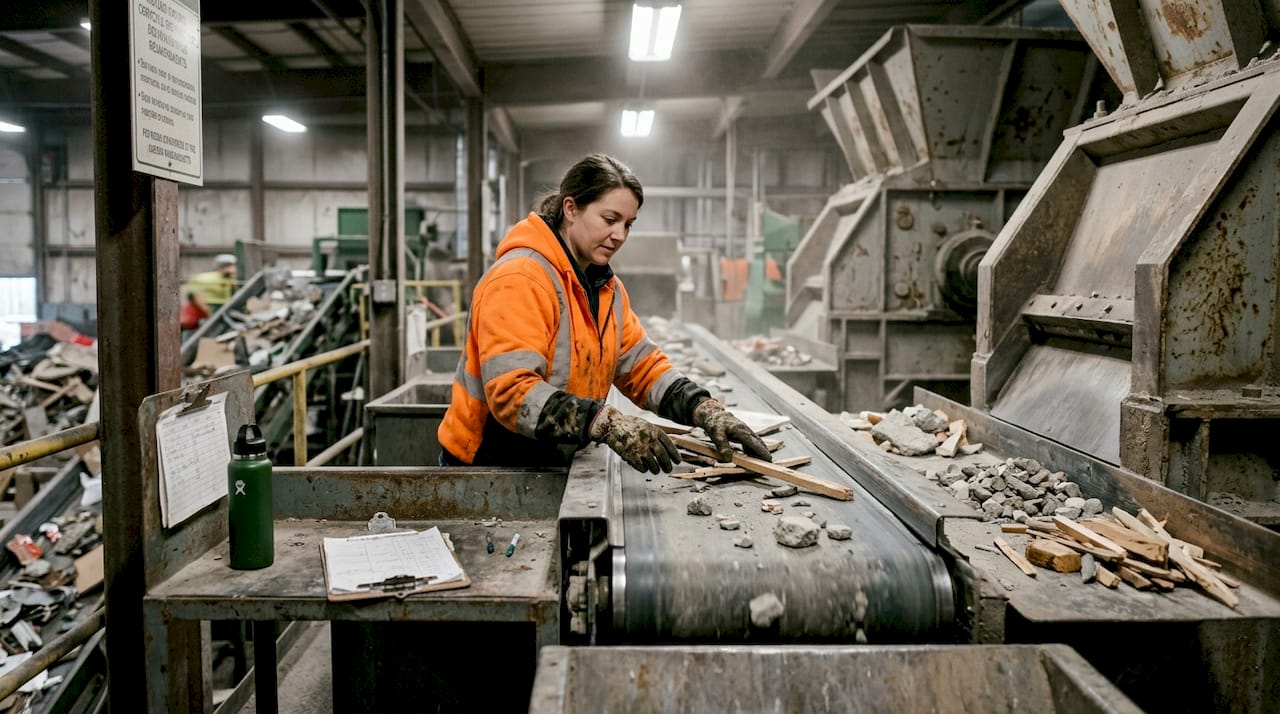
Air quality suffers when debris decomposes or burns in unauthorized locations. Wood waste generates methane as it breaks down in landfills, contributing to greenhouse gas emissions. Some contractors illegally burn debris to avoid disposal costs, releasing particulates and toxins into local air. Improper construction waste disposal contaminates soil and air, harms wildlife habitats, and contributes heavily to landfill volume. Massachusetts generates millions of tons of construction debris annually, making proper management critical for regional environmental health.
Recycling construction materials delivers measurable environmental benefits:
Reduces demand for virgin raw materials like timber, gravel, and metal ore
Decreases energy consumption in manufacturing processes for new building products
Prevents habitat destruction from mining and logging operations
Lowers transportation emissions by using locally recycled materials
Extends landfill capacity by diverting massive waste volumes
Concrete recycling alone saves significant natural resources. Crushed concrete serves as aggregate for new concrete, road base, and drainage projects. Metal recycling requires 95% less energy than producing new steel from ore. Wood can become mulch, biomass fuel, or engineered lumber products. These recycling loops reduce the environmental footprint of construction while supporting local recycling industries.
Pro Tip: Track your recycling rates throughout projects. Many eco-friendly debris management approaches offer documentation that helps with green building certifications and client reporting.
Habitat protection represents another crucial benefit. Illegal dump sites attract rodents and insects, disrupting local ecosystems. Debris piles smother vegetation and alter drainage patterns, causing erosion and flooding. Proper removal prevents these cascading environmental problems. When you recycle construction materials instead of landfilling them, you directly support Massachusetts’ sustainability goals and preserve natural areas for future generations.
“Construction debris recycling conserves ecosystems, reduces pollution, and demonstrates environmental stewardship that clients and communities increasingly expect from responsible contractors.”
The environmental case for proper debris removal aligns perfectly with regulatory requirements. Massachusetts designed its waste bans specifically to protect environmental quality while building a circular economy for construction materials. Your compliance efforts contribute to cleaner air, healthier soil, and preserved natural resources across the region.
Practical approaches: sorting, managing, and minimizing construction debris
Effective debris management starts before the first hammer swings. Develop a site-specific waste management plan that identifies expected material types, estimated volumes, and designated recycling facilities. Massachusetts requires these plans for most demolition projects, and they provide a roadmap for efficient debris handling. Your plan should specify container locations, sorting procedures, and responsible personnel. Submit it to local building departments as part of your permit application.
On-site sorting transforms debris management from chaotic to systematic. Set up clearly labeled containers or designated areas for different material streams. Separate metal, wood, concrete, asphalt, drywall, cardboard, and true waste into distinct piles or dumpsters. This organization speeds up loading, ensures materials reach appropriate facilities, and maximizes recycling rates. Workers need clear instructions about what goes where, especially for materials that look similar but require different handling.
Approach | Pros | Cons | Best For |
DIY debris removal | Lower upfront costs, complete control over timing | Requires trucks, labor, facility knowledge, permit management | Small projects, experienced contractors |
Professional services | Compliance guaranteed, efficient sorting, permit handling, recycling expertise | Higher service fees | Large projects, tight timelines, complex debris |
Hybrid approach | Flexibility, cost balance | Coordination complexity | Medium projects with mixed debris types |
Professional debris removal services bring specialized knowledge that saves time and prevents compliance mistakes. They understand which facilities accept specific materials, current tipping fees, and permit requirements. Services conduct waste audits to identify recycling opportunities you might miss. They manage all transportation logistics and documentation, freeing your crew to focus on construction tasks. The cost of professional removal often balances out when you factor in avoided fines, reduced labor hours, and recycling credits.
Pro Tip: Request itemized quotes that break down hauling, disposal, and recycling fees separately. This transparency helps you compare services accurately and understand where your money goes.
Minimizing debris generation offers the best cost and environmental outcome. Order materials precisely to reduce packaging waste and offcuts. Deconstruct rather than demolish when possible, salvaging reusable materials for resale or donation. Prefabricated components generate less on-site waste than traditional stick-built methods. These strategies require upfront planning but pay dividends in reduced disposal costs and faster site cleanup.
Schedule container deliveries to match project phases, avoiding overfilled or underutilized dumpsters
Train crews on sorting requirements and contamination prevention
Establish daily cleanup routines to maintain organized material separation
Document all disposal activities with photos, receipts, and weight tickets for compliance records
Waste management plans and audits aren’t just bureaucratic requirements. Professional eco-services help comply and reduce costs through recycling credits that offset disposal fees. Some facilities pay for clean metal loads or high-quality concrete. These credits accumulate quickly on larger projects, sometimes covering a significant portion of your total disposal costs. Working with knowledgeable junk removal contractors in Massachusetts ensures you capture these financial benefits while meeting all regulatory obligations.
Efficient debris management also impacts project timelines. Overflowing containers and disorganized material piles slow down work and create safety hazards. Clean, well-organized sites improve crew productivity and reduce accident risks. When you establish clear junk removal workflows from day one, debris handling becomes routine rather than a constant problem demanding attention and resources.
Professional construction debris removal services in Massachusetts
Navigating Massachusetts construction debris regulations while managing a project timeline creates significant operational challenges. Professional removal services eliminate this burden by handling every compliance detail, from permit applications to facility coordination. They bring current knowledge of MassDEP requirements, facility capabilities, and local regulations that change periodically. This expertise prevents the costly mistakes that occur when you’re learning compliance requirements on the fly.

Professional services provide efficient on-site sorting that maximizes recycling rates and minimizes landfill costs. Their crews identify recyclable materials others might miss and know exactly which facilities accept each material type. They manage the logistics of multiple facility trips, saving your team hours of driving and waiting at transfer stations. When you partner with experienced junk removal services in Reading MA or throughout Essex County, you gain immediate access to established facility relationships and preferential processing that individual contractors rarely achieve. Services specializing in demolition junk removal bring equipment and expertise that handles everything from small renovations to complete structure teardowns, ensuring proper handling of hazardous materials and maximizing material recovery throughout the process.
Frequently asked questions about construction debris removal
What materials are banned from Massachusetts landfills?
Massachusetts prohibits 23 construction and demolition materials from landfills, including asphalt pavement, brick, concrete, metal, wood, asphalt shingles, and gypsum wallboard. These materials must go to approved recycling facilities. The bans apply to all projects regardless of size.
Are there penalties for improper construction debris disposal?
Yes, violations result in fines starting at several hundred dollars per incident. Repeat offenses or large-scale illegal dumping trigger escalating penalties, stop-work orders, and potential license suspensions. Property owners remain liable for cleanup costs even when hiring contractors.
How can professional removal services help with compliance?
Professional services manage all permit requirements, maintain current facility relationships, provide proper documentation, and ensure materials reach approved facilities. They handle waste management plans, audits, and regulatory reporting, eliminating compliance risks from your project.
What are the benefits of recycling construction debris?
Recycling reduces disposal costs through lower tipping fees and potential recycling credits. It conserves natural resources, decreases manufacturing energy use, and supports Massachusetts sustainability goals. Recycled materials often cost less than virgin alternatives, benefiting future projects. Understanding various construction debris disposal methods helps you choose the most cost-effective and environmentally responsible approach for each material type.
How does on-site sorting impact project costs and timelines?
Proper sorting reduces disposal costs by maximizing recycling and minimizing expensive landfill fees. It speeds up facility processing, preventing delays from rejected mixed loads. Organized sites improve crew productivity and safety, keeping projects on schedule while maintaining compliance with Massachusetts regulations.
Recommended
Comments