What Is Furniture Hauling? Your Practical Guide
- Joe Lusso
- 8 hours ago
- 8 min read

TL;DR:
Furniture hauling involves professional removal, transport, disposal, and donation of bulky items, beyond just moving them. Hiring experts saves time, reduces injury risk, and ensures eco-friendly disposal through donation or recycling, making it a valuable service.
Most people assume furniture hauling is just a couple of guys loading a couch into a truck. In reality, what is furniture hauling covers a much broader picture: professional removal, transport, disposal, and sometimes donation of bulky items you can no longer move, store, or deal with yourself. Whether you’re clearing out a spare room, downsizing, or managing a property turnover, understanding what furniture hauling actually involves will save you time, money, and a pulled back muscle.
Table of Contents
Key takeaways
Point | Details |
More than just moving | Furniture hauling includes lifting, transport, disassembly, disposal, and sometimes donation coordination. |
Pricing is volume-based | Costs range from $75 for a single item to $800+ for full-room cleanouts, depending on load size. |
Pros prevent injuries | DIY hauling without proper gear often causes injury or property damage that outweighs any savings. |
Eco-friendly options exist | Reputable haulers sort items for donation, recycling, or responsible disposal before any landfill drop. |
Ask the right questions | Verify insurance, disposal practices, and upfront pricing before booking any furniture removal service. |
What furniture hauling actually involves
Furniture hauling is a professional service that handles the physical removal, transportation, and responsible disposal of bulky furniture items. That sounds simple. But furniture disposal complexity requires navigating stairs, heavy lifting, and legal disposal requirements that most homeowners seriously underestimate.
Here’s what a typical furniture hauling job actually includes:
Assessment and planning. A crew evaluates the items, the access points, and the path from pickup to truck before anyone touches a single piece.
Disassembly when needed. Large sectionals, bed frames, and wardrobe units often can’t fit through doorways intact. Professionals disassemble furniture safely and efficiently to avoid damaging the item or your walls.
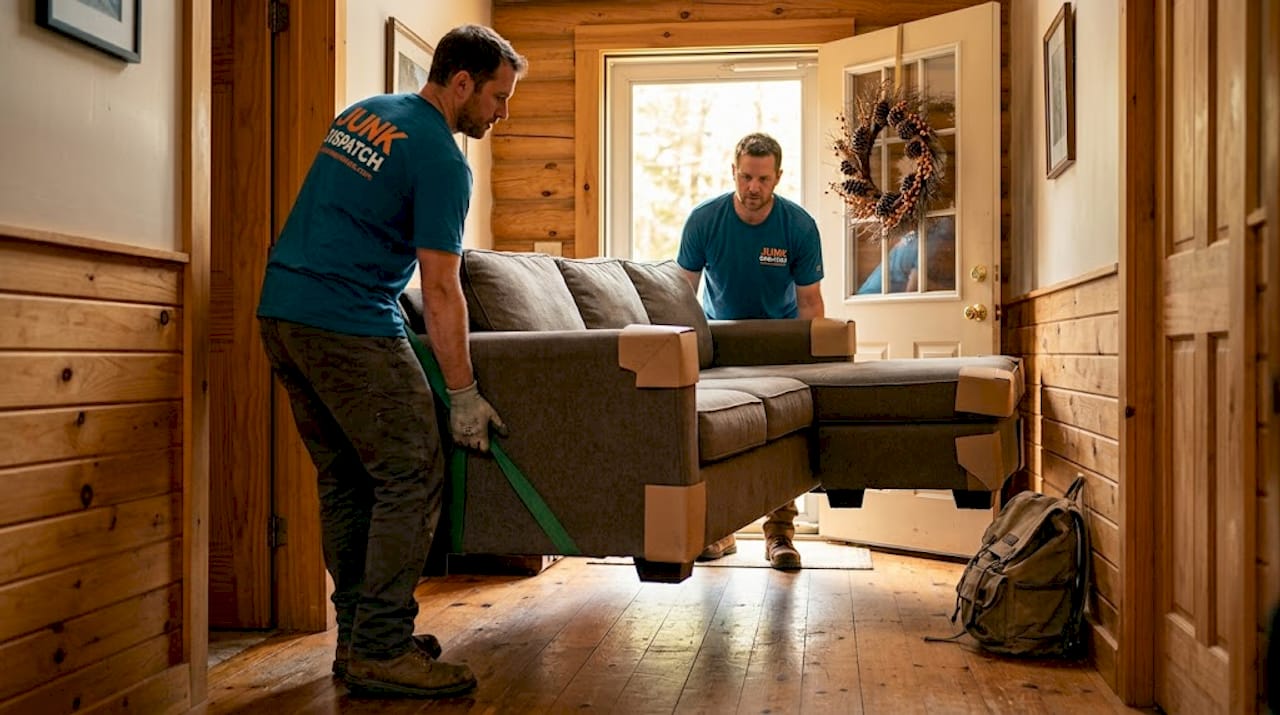
Safe lifting and maneuvering. Crews use a technique called the “Hook Around” method to tilt bulky pieces vertically and work them through tight doorframes without forcing them. This prevents scratches, dents, and injuries that happen when untrained people try to muscle furniture through narrow spaces.
Loading and transport. Everything gets secured in a vehicle sized for the job, whether that’s a single pickup or a full-sized haul truck.
Disposal or diversion. Items go to donation centers, recycling facilities, or licensed disposal sites. Not just a dumpster.
Pro Tip: Before your hauling crew arrives, clear a path from the furniture to the nearest exit. Removing rugs, fragile decor, and door stoppers saves time and reduces the chance of accidental damage.
When do people actually call a furniture hauling service?
About 80% of Americans do spring cleaning every year, and a significant number run into the same problem: municipal trash pickup won’t take a sectional sofa or a king-size mattress. Beyond spring cleaning, demand for furniture hauling has also grown sharply due to home office reconfigurations and fast turnovers in multi-family rental properties where landlords need rapid professional clearing between tenants. Understand the role of junk removal in property management and you’ll see why professional hauling has become a standard service rather than a niche one.
How furniture hauling is priced
Pricing for furniture hauling follows a volume-based model, and once you understand how it works, the numbers make sense.
Load size | Typical cost range | What it covers |
Single item | $75 – $150 | One piece: sofa, dresser, mattress |
Quarter truck | $150 – $250 | A few small items or one large set |
Half truck | $250 – $400 | Multiple pieces, small room clearance |
Full truck | $400 – $800+ | Full room or multi-room cleanout |
Standard loads cost $150 to $350 for professional services, with single items sitting at $75 to $150 and full-room cleanouts reaching $400 to $800 or more. The price you pay covers labor, truck time, fuel, and disposal fees. Some municipalities charge haulers to drop at transfer stations, and that cost gets passed to you.
DIY vs. professional: the real cost comparison
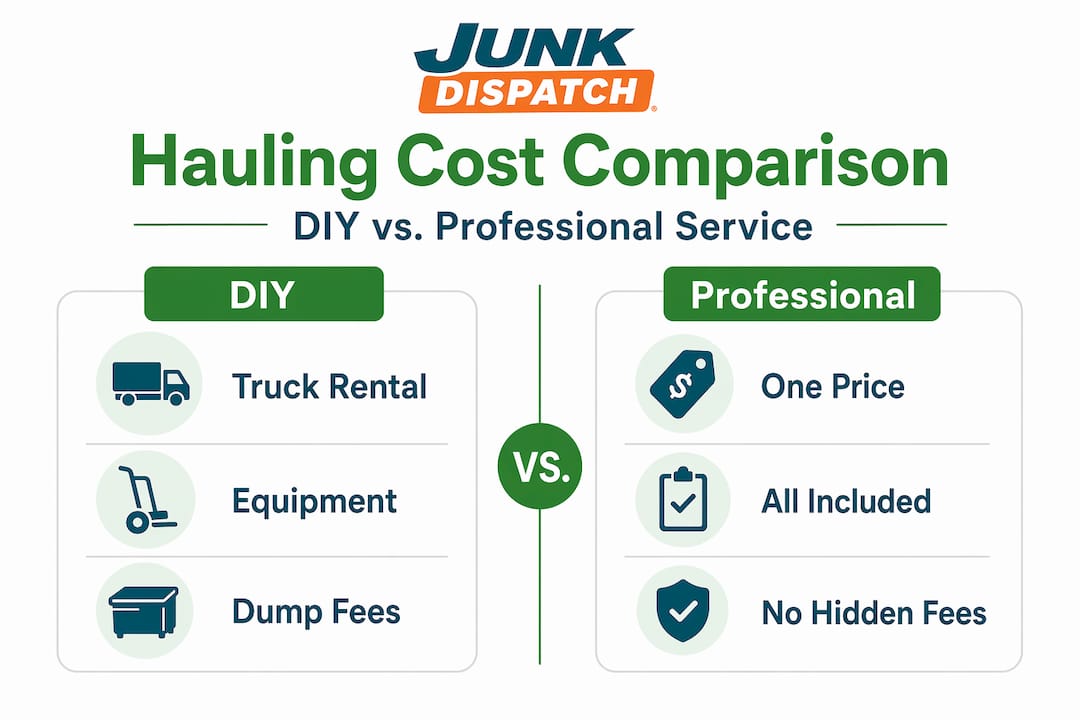
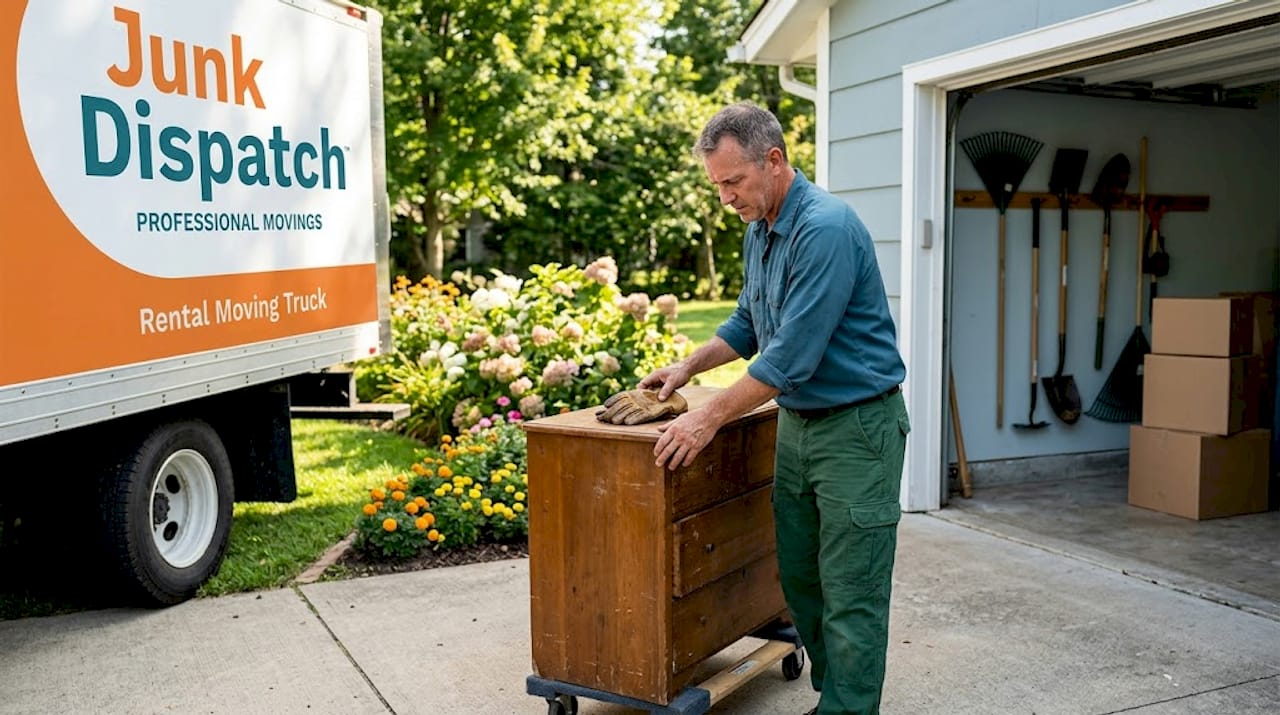
Renting a truck runs $80 to $150 for a day. Add fuel, a dolly rental, any disposal fees at your local transfer station, and a second person’s time. You’re often at $150 to $200 before accounting for your own time and physical effort. Volume-based pricing tiers used by professional services are genuinely competitive with DIY when you factor in all the real costs. And unlike DIY, professional hauling includes liability coverage for your property.
Pro Tip: Always get a quote in person or through a photo estimate. Verbal phone quotes for furniture hauling are often inaccurate because the crew hasn’t seen the access route, the weight, or the actual volume.
Choosing the right hauling company and safe moving tips
The furniture removal service market varies widely in quality. Here’s how to separate the reliable companies from the ones you’ll regret calling.
What to look for in a hauling company
Insurance and licensing. If a crew member is injured on your property during an uninsured job, you could be liable. Ask directly for proof of insurance.
Upfront, transparent pricing. Avoid any company that won’t give you a firm quote before starting. Volume-based pricing should be explained clearly, not revealed after loading.
Eco-friendly disposal practices. Ask what percentage of items get diverted from landfills through donation or recycling. Reputable companies have a clear answer.
Verified reviews. Look for patterns in Google or Yelp reviews: on-time arrival, accurate pricing, and careful handling are the three things that matter most in this business.
Same-day or flexible scheduling. Life doesn’t always give you a week to plan. Companies that offer flexible windows are significantly less disruptive.
Safe furniture moving tips if you go the DIY route
If you’re moving furniture yourself rather than having it hauled away, moving straps reduce felt weight by 50 to 66%, distributing load across your shoulders and forearms instead of your lower back. That single change makes a real difference for injury prevention.
Beyond straps, use furniture sliders under legs to reduce drag on hardwood and tile. DIY hauling without proper equipment frequently causes injury or property damage. Professionals carry dollies, ramps, and forearm forklifts that most homeowners don’t own and rarely think to rent. If your furniture needs to travel down a flight of stairs, that’s the single strongest case for calling a professional. You can explore the types of junk removal services available to homeowners to understand when full-service hauling beats a DIY approach.
Eco-friendly disposal and donation options
The most responsible furniture hauling companies don’t treat every item as trash. Here’s how the disposal process typically works when a hauler is doing it right:
Condition assessment on-site. Before anything is loaded, a trained crew member evaluates whether an item is donatable, recyclable, or needs disposal. Upholstery in good condition, wood frames, and metal hardware all have separate paths.
Donation drop-off. Items in usable condition go to local charities, Habitat for Humanity ReStores, or community organizations. This keeps perfectly good furniture out of landfills and in the hands of people who need it.
Material-specific recycling. Metal frames, foam, and wood are sorted and sent to appropriate facilities rather than combined in a general disposal load.
Responsible landfill use as a last resort. Only items that cannot be donated or recycled end up at licensed disposal facilities.
One complication worth knowing: heat and moisture damage can make furniture unsuitable for donation. Garage storage in humid climates often accelerates upholstery deterioration and pest infestation, leaving items that look salvageable actually unfit for redistribution. This affects the hauler’s disposal plan and can influence final pricing if more goes to disposal rather than donation.
“Eco-friendly hauling isn’t just good for the environment. When items are donated or recycled instead of landfilled, it reduces disposal costs for haulers, which keeps pricing more competitive for customers.”
For Massachusetts residents specifically, there are detailed guidelines and options available. The eco-friendly disposal guide for the state outlines how local hauling services can help you meet both your practical and environmental goals.
My take: why professional hauling is worth it more often than you think
I’ve seen a lot of homeowners talk themselves into a DIY furniture haul to save $100 or $150. More often than not, that decision ends with a dented doorframe, a strained lower back, or a sofa sitting in a driveway for two weeks because the truck rental fell through.
The part most people don’t account for is the hidden complexity. Moving a single heavy dresser down a staircase isn’t just a strength problem. It’s a geometry problem, a balance problem, and a safety problem that requires two coordinated people who know what they’re doing. Popular online moving hacks frequently do more harm than good. I’ve watched people use blankets as sliders and wonder why furniture tilts and scuffs walls the entire way down.
Professional crews bring specialized tools like furniture dollies, shoulder straps, and protective padding. They’ve also navigated hundreds of staircases, narrow hallways, and tricky three-point turns around landings. That experience is what you’re actually paying for. The physical labor is almost the easy part.
What I find most compelling about using a professional furniture removal service is the disposal piece. When you handle it yourself, you’re responsible for finding a legal drop-off, getting the item there, paying the transfer station fee, and hoping nothing falls off the truck. Professionals handle all of that, often diverting your old couch to a donation center in the same trip. That’s a better outcome for you, for the recipient, and for the environment.
If you’re on the fence, ask yourself one honest question: do you have the right equipment, a reliable second person, and a legal disposal plan already sorted? If the answer to any of those is no, the cost of a professional is almost certainly worth it.
— Joe
Get your furniture hauled by Junkdispatch in Massachusetts
If you’re ready to clear out that old sectional, spare bedroom set, or full garage’s worth of furniture, Junkdispatch handles it all across Massachusetts. From single-item pickups to full-room cleanouts, the crew arrives on time, works efficiently, and handles disposal responsibly with a focus on donation and recycling before any landfill drop.
Pricing is upfront and volume-based, so you know exactly what you’re paying before anyone lifts a finger. No surprise fees after the truck is loaded. Whether you need junk removal in Reading, MA or anywhere else across the region, Junkdispatch offers same-day availability, insured crews, and free estimates. Book online in minutes and get one less thing on your list.
FAQ
What is furniture hauling?
Furniture hauling is the professional removal, transport, and disposal or donation of bulky furniture items. It includes lifting, loading, disassembly when needed, and responsible disposal through recycling, donation, or licensed facilities.
How much does furniture hauling cost?
Single items typically run $75 to $150, while standard loads cost $150 to $350. Full-room cleanouts can reach $400 to $800 or more, depending on volume and disposal requirements.
Is furniture hauling worth it compared to doing it yourself?
For most homeowners, yes. DIY hauling requires renting a truck, sourcing equipment, finding a legal disposal site, and doing the physical labor. Professionals handle all of that for a price that often competes with true DIY costs when everything is factored in.
Will a furniture hauling company donate my old items?
Reputable companies assess items before disposal and divert usable pieces to local charities or resale organizations. Ask any company you hire what their landfill diversion rate is before booking.
How do I prepare for a furniture hauling pickup?
Clear a path from the furniture to the nearest exit, remove fragile items from nearby shelves, and note any tight doorways or staircases ahead of time. Letting the crew know about access challenges before arrival speeds up the job significantly.
Recommended
Comments