Streamline your office cleanout process in 2026
- Joe Lusso
- Mar 11
- 8 min read

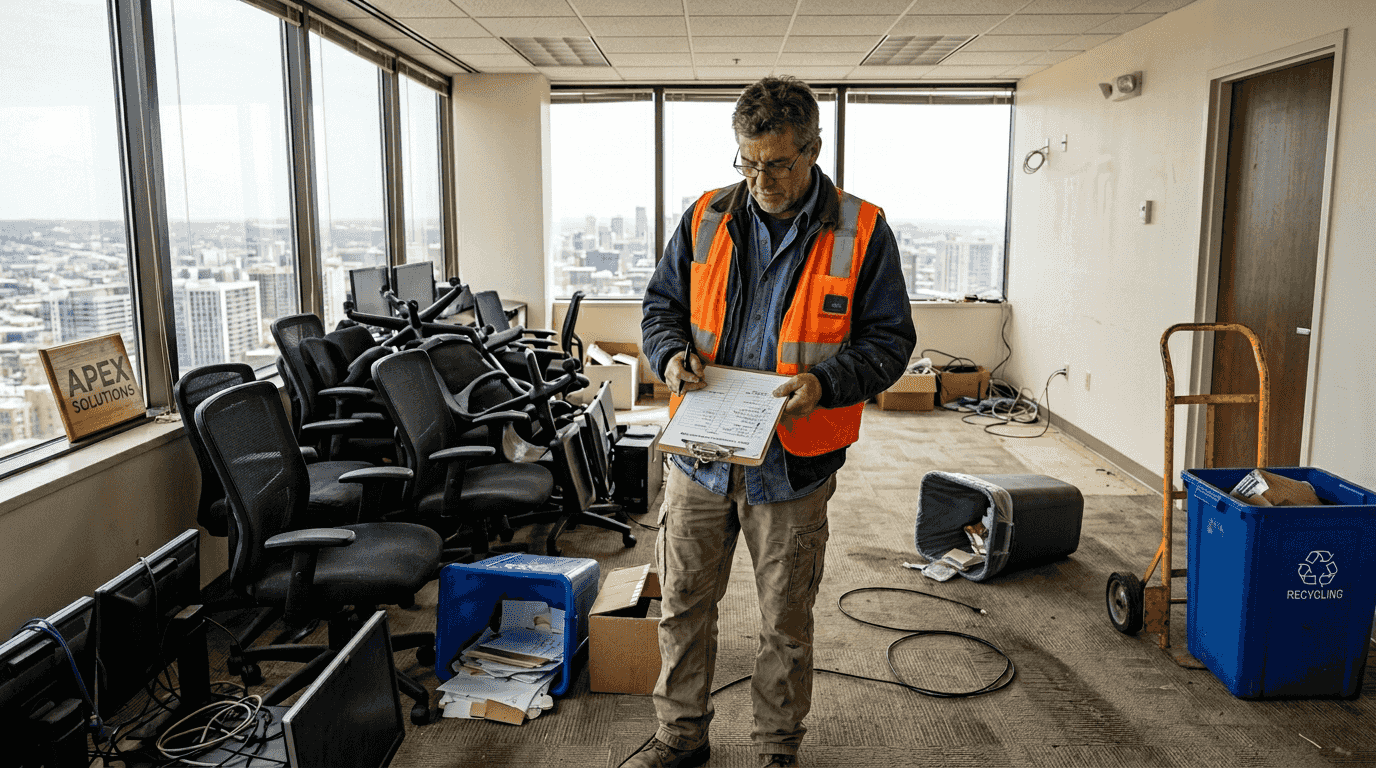
Managing office cleanouts in Massachusetts requires contractors to balance efficiency, regulatory compliance, and environmental responsibility. Between navigating MassDEP hazardous waste protocols, coordinating secure data destruction, and meeting client expectations for sustainability, the process can quickly become overwhelming. This guide provides Massachusetts contractors with a clear, actionable framework for executing compliant, eco-friendly office cleanouts that save time, reduce costs, and strengthen client relationships in 2026.
Table of Contents
Key takeaways
Point | Details |
Strategic planning cuts project time | Detailed pre-assessment and scheduling reduce completion time by 15%, minimizing downtime and optimizing resource allocation. |
Massachusetts regulations demand compliance | MassDEP protocols for asbestos and waste ban regulations require specific handling procedures contractors must follow. |
Eco-friendly removal reduces waste significantly | Recycling and donation partnerships decrease landfill waste by 40% while improving client satisfaction. |
Secure data destruction protects information | Professional data wiping and physical device destruction prevent costly breaches and support regulatory compliance. |
Understanding the challenges and requirements in Massachusetts office cleanouts
Contractors executing office cleanouts face a complex landscape of regulatory requirements, safety protocols, and diverse waste streams that demand specialized knowledge. MassDEP regulations require notification and specific procedures when handling asbestos-containing materials commonly found in older office buildings. Missing these protocols can result in substantial penalties and project delays that erode profit margins.
Massachusetts waste disposal regulations extend beyond hazardous materials. Waste ban regulations include mattresses and textiles since November 2022, affecting how contractors must sort and dispose of office furniture and fabrics. These bans require partnerships with certified recycling facilities rather than simple landfill disposal, adding complexity to logistics planning.
Office cleanouts generate diverse waste types requiring different handling approaches. Electronic waste demands secure data destruction and specialized recycling. Furniture may qualify for donation if in good condition, reducing disposal costs. Construction debris from demolition work needs separate hauling and processing. Hazardous materials like cleaning chemicals, fluorescent bulbs, and batteries require certified disposal channels to avoid environmental contamination.
Client communication becomes critical when navigating these requirements. Property managers and business owners often underestimate the complexity and costs associated with compliant waste handling. Setting clear expectations upfront about office cleanout best practices prevents scope creep and ensures adequate budgeting for proper disposal methods.
Key compliance considerations for Massachusetts contractors:
Asbestos notification requirements before disturbing materials in buildings constructed before 1980
Waste ban compliance for mattresses, textiles, cathode ray tubes, and mercury-containing devices
Lead paint protocols when removing fixtures or performing demolition in older buildings
Secure data destruction for electronic devices containing sensitive business information
Proper documentation and manifests for hazardous waste transportation and disposal
Understanding these challenges allows contractors to develop realistic project timelines and budgets that account for regulatory compliance rather than discovering issues mid-project.
Preparing for an efficient and eco-friendly office cleanout
Thorough preparation separates profitable office cleanouts from costly disasters. Start with a comprehensive site assessment that inventories all materials requiring removal, identifies potential hazards, and evaluates access constraints affecting equipment and labor needs. This walkthrough should document furniture quantities, electronic equipment counts, and any visible signs of hazardous materials like damaged ceiling tiles or peeling paint.
Strategic planning reduces project completion time by ensuring crews arrive with appropriate equipment, vehicles, and protective gear. Schedule cleanouts during off-hours or weekends to minimize disruption if the building remains partially occupied. Coordinate with property managers about elevator access, loading dock availability, and any building-specific requirements for contractor insurance or permits.
Partner with certified recycling facilities and donation centers before starting work. Eco-friendly junk removal decreases landfill waste by 40% and increases recycling rates significantly when contractors establish these relationships proactively. Massachusetts offers numerous nonprofit organizations accepting office furniture, electronics, and supplies in working condition, providing tax deduction opportunities for clients while supporting community needs.
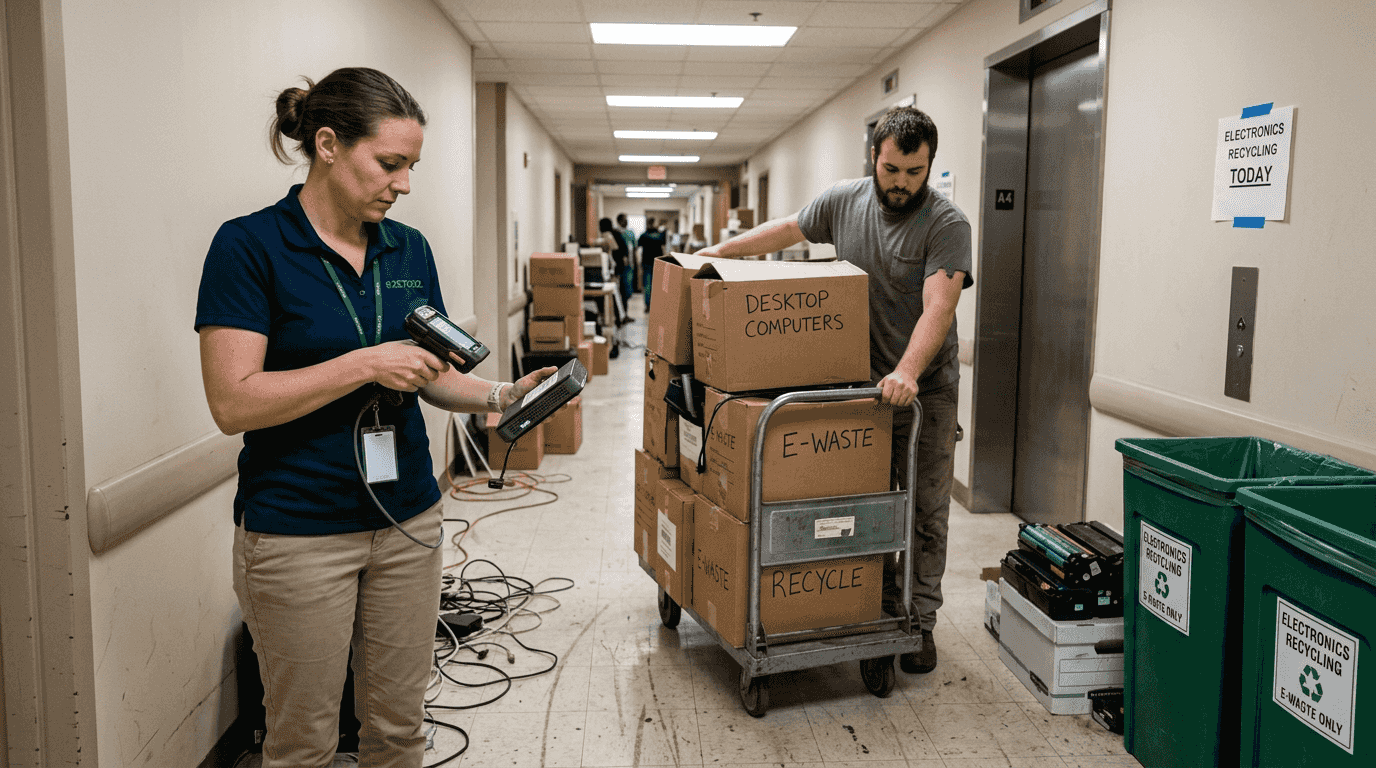
Secure data destruction requires advance planning to protect client information and avoid liability. IT assets like computers, servers, hard drives, and mobile devices contain sensitive business data, employee records, and customer information that must be properly wiped or physically destroyed. Schedule certified data destruction services as part of your cleanout timeline rather than treating it as an afterthought.
Pro Tip: Create a standardized office cleanout checklist that crews can follow for consistent quality across projects. Include sections for safety gear verification, material sorting protocols, client communication touchpoints, and final inspection criteria.
Preparation Phase | Timeline | Key Actions |
Site Assessment | 1-2 weeks before | Inventory materials, identify hazards, measure access points, document photos |
Partner Coordination | 1 week before | Confirm recycler availability, schedule donation pickups, book data destruction |
Client Communication | 3-5 days before | Review scope, confirm schedule, clarify special requests, discuss disposal methods |
Crew Preparation | 1 day before | Verify equipment, assign roles, review safety protocols, load vehicles |
This preparation phase directly impacts how smoothly the actual cleanout executes. Contractors who invest time upfront avoid the common pitfalls of discovering asbestos mid-project, running out of disposal capacity, or facing client disputes about handling valuable items. The small time investment in planning delivers substantial returns through efficient junk removal management and reduced project risks.
Executing the office cleanout: step-by-step process and safety protocols
Executing the cleanout requires methodical procedures that balance speed with safety and compliance. Standardized procedures and trained crews reduce workplace accidents by 35%, protecting both workers and your business from costly injuries and liability claims. Start each project with a crew safety briefing covering specific hazards identified during assessment, required protective equipment, and emergency procedures.
Follow this systematic removal process:
Establish containment zones and protect building surfaces with floor runners and door coverings to prevent damage claims.
Begin with accessible items like desk contents, small furniture, and decorative elements to create working space.
Sort materials into recycling, donation, hazardous waste, and landfill categories using clearly labeled containers or staging areas.
Remove large furniture items and equipment systematically, working from interior spaces toward exits to maintain clear pathways.
Address any hazardous materials using proper containment, wetting procedures for asbestos, and appropriate protective equipment.
Conduct detailed cleaning using HEPA-filtered vacuums and dust control methods to ensure air quality and surface cleanliness.
Perform final walkthrough with crew supervisor to verify complete removal and identify any missed items or damage.
Safety protocols demand strict adherence when handling potentially hazardous materials common in office cleanouts. Any materials suspected of containing asbestos require wetting before disturbance, containment of the work area, respiratory protection for workers, and disposal at permitted facilities. Lead paint protocols apply when removing fixtures, doors, or window frames from buildings constructed before 1978.
Pro Tip: Take timestamped photos at each stage of the cleanout process. Documentation protects you from false damage claims, provides evidence of proper waste handling for regulatory compliance, and creates marketing content showcasing your professionalism to future clients.
“The key to successful office cleanouts is treating every project like a mini construction site with proper planning, safety protocols, and quality control. Cutting corners saves minutes but costs thousands in potential liability.”
Dust control throughout the process protects both your crew and the building’s remaining occupants. Industrial air scrubbers with HEPA filtration remove airborne particles generated during furniture moving and debris handling. Wet mopping and vacuuming with sealed HEPA units prevent dust migration to occupied spaces, which is critical in partially occupied buildings where your work could impact ongoing business operations.
Material sorting at the source saves time and money compared to hauling everything to a single location for later separation. Train crews to recognize recyclable metals, donate-worthy furniture, electronic waste requiring special handling, and true trash destined for landfills. This streamlined office junk removal approach reduces transportation costs and maximizes value recovery from removed materials.
Post-cleanout verification and client communication for successful project closeout
Quality assurance after debris removal ensures client satisfaction and protects your reputation. Conduct thorough supervisor walkthroughs examining every room, closet, and storage area for missed items, remaining debris, or surface damage requiring attention. Check behind doors, inside cabinets, and in ceiling spaces where crews might overlook materials during the rush to complete removal.
Detailed asset inventory and categorization optimize disposal costs and client satisfaction by demonstrating exactly how materials were handled. Document recycling weights, donation receipts, and hazardous waste manifests to provide clients with comprehensive reports proving environmental responsibility and regulatory compliance. This documentation also supports LEED certification or corporate sustainability reporting if clients pursue those programs.
Client communication during closeout should cover:
Completed scope items with photo documentation showing before and after conditions
Material disposition reports detailing recycling rates, donations, and proper disposal of hazardous items
Any discovered issues like hidden damage, asbestos findings, or additional materials outside original scope
Final walkthrough scheduling to obtain client approval and address any concerns
Follow-up availability for questions or additional services as the space transitions to new occupants
Final inspections verify the space meets turnover standards for new tenants or renovations. Check that all surfaces are clean, floors are swept and mopped, and no debris remains in HVAC systems or ductwork. Coordinate with property managers about any building-specific requirements for contractor sign-off or final documentation before releasing the space.
Verification Checklist | Inspector | Status |
All furniture and equipment removed | Crew Lead | Complete |
Hazardous materials properly disposed | Safety Officer | Documented |
Surfaces cleaned and debris-free | Supervisor | Inspected |
Client walkthrough completed | Project Manager | Approved |
Documentation package delivered | Admin | Submitted |
This systematic verification process transforms a completed cleanout into a successful project that generates referrals and repeat business. Contractors who rush through closeout risk callbacks for missed items, disputes about damage, or compliance issues discovered during building inspections. Investing 30 minutes in thorough verification prevents hours of remediation work and protects the client relationships that drive junk removal business efficiency and profitability.
Streamline your Massachusetts office cleanouts with Junk Dispatch
Implementing these comprehensive office cleanout procedures delivers results, but partnering with specialists amplifies efficiency. Junk Dispatch brings years of Massachusetts-specific experience navigating MassDEP regulations, waste bans, and eco-friendly disposal networks that maximize recycling while minimizing costs. Our trained crews understand the nuances of commercial junk removal in Massachusetts, from secure data destruction protocols to proper asbestos containment procedures.
We serve contractors throughout Massachusetts with flexible scheduling that adapts to your project timelines. Whether you need same-day removal in Reading or coordinated construction debris removal across multiple phases, our insured teams deliver reliable service that protects your reputation with clients. Partner with local experts who understand Massachusetts regulations and have established relationships with certified recyclers, donation centers, and proper disposal facilities.
FAQ
What is the best way to handle asbestos materials during office cleanouts in Massachusetts?
MassDEP requires notification, wetting ACM before removal, containment of work areas, and disposal at permitted landfills. Hire certified asbestos professionals for any suspected materials rather than risking improper handling that could result in substantial fines and health hazards.
How can contractors ensure secure data destruction during office cleanouts?
Partner with certified data destruction services that provide documentation of proper wiping or physical destruction for all electronic devices. Professional data destruction services mitigate costly breaches and ensure compliance with privacy regulations affecting business records and customer information.
What are eco-friendly junk removal solutions that contractors should use?
Prioritize recycling, donation, and material repurposing to reduce landfill waste and lower carbon emissions significantly. Work with certified recycling facilities for electronics, metals, and construction materials while partnering with nonprofits accepting furniture and supplies in usable condition.
How long does a typical office cleanout take for contractors in Massachusetts?
Timeline varies based on square footage, material volume, and hazardous waste presence, but most standard office cleanouts require one to three days. Thorough planning and experienced crews can complete spaces under 5,000 square feet in a single day when materials are primarily standard furniture and equipment.
What documentation should contractors maintain for office cleanout projects?
Keep detailed records including material inventories, disposal manifests for hazardous waste, recycling receipts, donation confirmations, and timestamped photos throughout the process. This documentation proves regulatory compliance, supports client reporting requirements, and protects against liability claims related to improper disposal or property damage.
Recommended
Comments