Residential Debris Removal Workflow for Homeowners
- Joe Lusso
- 4 days ago
- 8 min read


TL;DR:
Effective debris removal begins with careful planning by understanding local pickup rules and hazardous waste regulations in Massachusetts.
Implementing a structured workflow with designated staging zones, accurate sorting, and professional assistance ensures compliance, safety, and cost savings.
You finish a bathroom renovation or clear out a deceased relative’s home, and suddenly you’re staring at a mountain of old tile, broken furniture, and mystery boxes with no idea where to start. A disorganized residential debris removal workflow costs you more than time. It costs real money in fines, repeat pickup fees, and last-minute hauler charges. This guide walks you through the exact process that property managers and homeowners in Massachusetts use to clean up fast, stay compliant with local rules, and avoid the mistakes that turn a one-day job into a week-long headache.
Table of Contents
Key takeaways
Point | Details |
Plan before you pull anything out | Research local bulk pickup rules and identify hazardous items before debris removal begins. |
Use three physical staging zones | Separate discard, donate, and undecided piles from the start to prevent clutter from compounding. |
Timing and accuracy matter for pickups | Incorrect item lists or early curbside placement causes full service refusals, not partial ones. |
Pack debris gradually, not all at once | Sorting as you go keeps the site safer and improves recycling and donation success rates. |
Professional help prevents costly errors | A licensed hauler handles compliance, heavy items, and hazardous materials you cannot legally dispose of yourself. |
Your residential debris removal workflow starts with planning
Most people skip this step. They start hauling furniture into the driveway before they know whether their town accepts bulk items that week, or whether that old can of paint counts as hazardous waste. That kind of improvisation turns a manageable cleanup into a compliance mess.
Your first move is to check your municipality’s bulk pickup schedule and restrictions. Many programs require items to be curbside by 7:00 AM on the scheduled day, with strict per-appointment limits such as three items per appointment or two extra bags. Miss that window and you wait weeks. Exceed the limit and you pay a penalty. Neither outcome is acceptable when you are trying to close out a renovation or property turnover quickly.
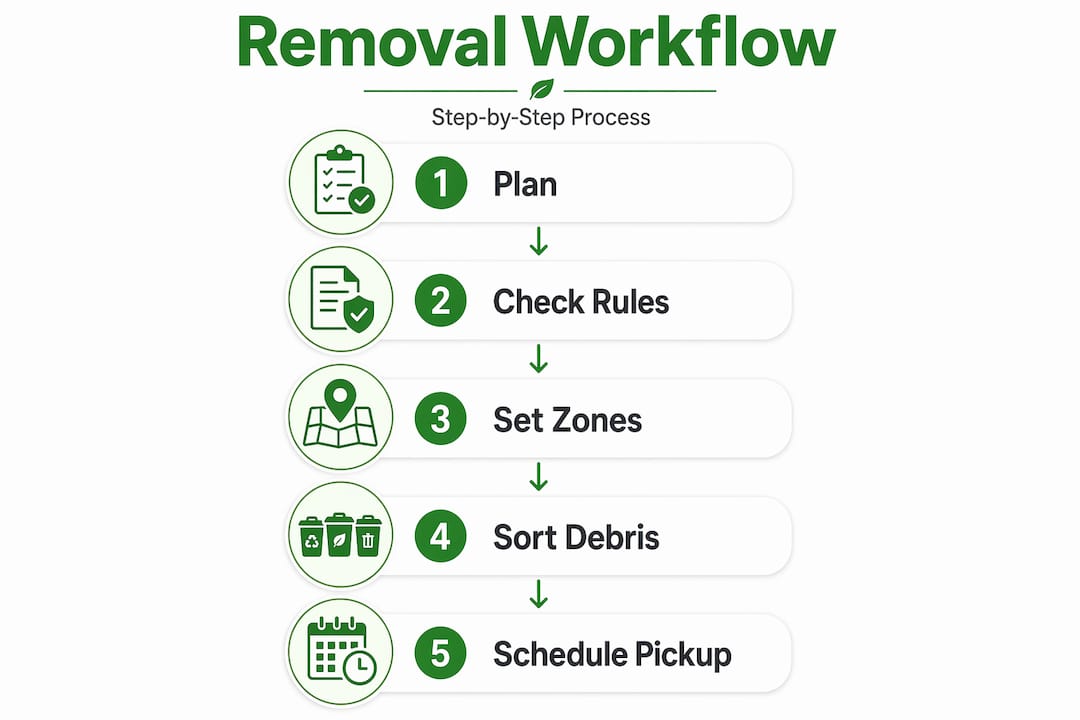
Next, identify any prohibited or hazardous materials in your debris. Paint, batteries, pesticides, fluorescent bulbs, and old appliances often require special handling. Disposing of hazardous waste in regular trash is illegal in most states, with fines reaching $5,000 depending on volume. Massachusetts has specific drop-off programs for these materials, so locate your nearest facility before you start sorting.
Once you know what you have and what rules apply, estimate your total debris volume. This determines which removal method makes the most sense:
Municipal bulk pickup: Best for small quantities of standard household items. Free or low cost, but limited by strict rules.
Private junk removal: Best for mixed loads, bulky furniture, or time-sensitive cleanouts. Haulers assess volume on-site and price accordingly. This is where reading about types of removal options available to Massachusetts homeowners pays off.
Dumpster rental: Best for multi-day renovation projects. Dumpster rentals typically cover 10 to 40 cubic yards, and a container rental guide can help you size and schedule one correctly for a remodeling job.
Finally, set up your physical workspace before debris starts moving. Designate areas in your garage, driveway, or yard for sorting. Clear pathways for carrying heavy items. Gather supplies like tarps, bins, markers, and work gloves.
Pro Tip: Take photos of every room before you start clearing it. You will thank yourself when disputes arise about item condition for donations or insurance claims.
Step-by-step debris removal execution
With your plan in place, execution becomes straightforward. The biggest trap at this stage is mixing everything together and sorting later. Later never comes. Set up your three staging zones physically and label them clearly before a single item moves.
Step 1: Establish your staging zones
Three separated staging zones prevent permanent clutter and improve sorting efficiency. Label each zone clearly:
Discard: Items destined for landfill or pickup
Donate or sell: Usable furniture, appliances, and clothing
Undecided: Items needing a final decision, but set a 48-hour deadline
Step 2: Sort debris by material type
Once zones exist, move items into them systematically by room or area. Professionals advise sorting organic from construction debris before removal to reduce landfill costs and capture recyclable materials. Keep wood separate from drywall, metal from tile, and yard waste from household goods.
Step 3: Handle bulky and hazardous items separately
Bulky items like mattresses, sofas, and refrigerators often count as multiple pieces in municipal programs. Hazardous materials go directly to a designated facility or get set aside for your private hauler to handle. Never mix them into a general pile.
Step 4: Pack debris gradually as you go
Packing debris as it accumulates rather than waiting until the project ends improves safety and maximizes what you can recycle or donate. Wet or water-damaged materials deserve special attention. Wet absorbent materials left more than 48 hours can develop mold and must be disposed of promptly.

Step 5: Schedule pickup and prepare for it correctly
Here is where most homeowners lose money.
Removal method | Best for | Key prep requirement |
Municipal bulk pickup | Small loads, standard items | Accurate item list, correct curbside time |
Private junk removal | Mixed or bulky loads | Clear access, items staged and ready |
Dumpster rental | Ongoing renovation debris | Level placement area, correct size estimate |
Pro Tip: When booking municipal pickup, list every item by description, not category. “Sofa” is better than “furniture.” Inaccurate descriptions cause full service refusals.
Common mistakes that derail the home debris cleanup process
Knowing the steps is half the battle. Knowing where people go wrong is the other half.
Placing debris too early or too late. Curbside placement rules are strict. Debris set out days before pickup invites fines and complaints from neighbors. Missed cutoff times result in full refusal until the next cycle.
Mixing hazardous materials with regular debris. This is the most expensive mistake in residential waste disposal. Even one improperly discarded battery in a bulk pile can trigger a full rejection and a compliance investigation.
Underestimating volume. Homeowners routinely guess low. What looks like half a truckload often fills an entire one. An inaccurate volume estimate leads to underpowered removal arrangements and mid-project scrambling.
Letting the undecided zone grow. The undecided pile without a deadline becomes permanent clutter. Set a hard 48-hour decision window for every item that enters this zone. After that, it moves to discard or donate automatically.
Incomplete or inaccurate item lists for municipal pickup. Inaccurate item information causes total rejection rather than partial pickup. If you list three items and leave out a fourth, the crew may reject everything and leave.
“The single most common reason homeowners call us mid-project is a municipal rejection. They put items out early, mixed in something prohibited, or listed items wrong. By that point, the debris has been sitting outside for days and they need immediate help. A little prep up front would have prevented the whole situation.”
Handling a rejected pickup is stressful but recoverable. Contact your municipality immediately, clarify what was wrong, and re-schedule. In the meantime, use a private hauler for time-sensitive removal. Property managers especially should keep a vetted hauler on speed dial for exactly these situations. The role of junk removal in property management is precisely this: a reliable backup when municipal systems fail you.
What a good workflow actually delivers
When you follow a structured process, the results go well beyond a cleaner yard. Here is what you actually gain.
Less project disruption. Debris that gets staged and removed on schedule does not pile up around your active work zones. Contractors move faster when they are not working around your overflow. A well-managed home debris cleanup process shaves days off renovation timelines.
Real cost savings. Avoiding fines, rejection fees, and emergency hauling charges adds up quickly. Beyond that, sorting debris correctly reduces landfill fees because recyclable or donated materials never reach the dump. The neglect of site assessment is the most common reason homeowners pay more than they should for disposal.
Improved safety on your property. Debris piles are tripping hazards, nesting spots for pests, and liability risks for property managers. A clean, organized site reduces accidents and keeps you compliant with property codes.
Environmental impact. Proper sorting diverts recyclables and donation-worthy items from landfills. Hazardous materials handled correctly protect groundwater and air quality. For Massachusetts homeowners who care about eco-conscious disposal, this matters.
Peace of mind. You know where everything went, what got recycled, and whether you stayed compliant. That certainty is worth more than it sounds when you are managing a property turnover or closing out a major renovation.
My take on what most guides get wrong about debris removal
I’ve watched homeowners approach debris removal the same way for years. They treat it like a weekend chore rather than a project with its own logistics. The result is always the same: a pile in the driveway that grows for three weeks while they figure out what to do with it.
What I’ve learned working around residential cleanouts in Massachusetts is that the sorting decision is made before the debris exists, not after. The homeowners who get it right have already decided that the old couch is a donation, the drywall scraps are construction debris, and the paint cans need a drop-off facility. They are not making those calls with their hands full of stuff.
The second thing most guides skip is the professional service question. People treat hiring a junk removal company as a last resort. I think it is often the first move that makes everything else easier. A good hauler knows Massachusetts disposal regulations, handles the heavy lifting, and removes the compliance risk entirely. The cost is almost always lower than people expect, and the time saved is significant.
My advice: use the workflow in this article, but do not hesitate to call in professionals for the parts where you are least confident. The debris does not care about your pride.
— Joe
Get your cleanup done right with Junkdispatch

Junkdispatch is a Massachusetts-based junk removal service built specifically for situations like yours. Whether you are clearing out after a renovation, managing a tenant turnover, or tackling a full garage cleanout, the Junkdispatch crew shows up on time, handles all debris types, and disposes of everything in compliance with local regulations. No guesswork, no fines, no rejected piles at the curb. If you are in Reading or the surrounding area, you can book same-day service with transparent pricing and a free estimate. Covering Essex County and beyond, Junkdispatch makes the final step of your debris removal workflow the easiest one.
FAQ
What is a residential debris removal workflow?
A residential debris removal workflow is a structured, step-by-step process for sorting, staging, and disposing of household debris after renovations, cleanouts, or storm damage. It covers everything from hazardous material identification to scheduling pickup or hauling.
How do I avoid fines during residential waste disposal?
Research your municipality’s bulk pickup rules before placing anything curbside, keep hazardous materials completely separate, and provide accurate item descriptions when scheduling. Fines for improper disposal range from $50 to $5,000 depending on the violation.
When should I hire a private junk removal service instead of using municipal pickup?
Hire a private service when your debris volume is large, includes bulky or mixed items, or when you need same-day or next-day removal that municipal programs cannot provide. Private haulers also handle hazardous materials and construction debris that municipal programs typically refuse.
How many staging zones do I need for an efficient cleanout?
Use three separate zones: discard, donate or sell, and undecided. Set a firm 48-hour deadline on the undecided zone to prevent it from becoming permanent clutter. Physical separation is key because mixed staging zones defeat the purpose of sorting entirely.
What are the best debris removal services for Massachusetts homeowners?
The best option depends on your debris type and volume. Municipal pickup works for small, standard loads. Dumpster rentals suit multi-day renovation projects. Licensed local haulers like Junkdispatch are the most flexible option for mixed loads, fast turnarounds, and full compliance with Massachusetts disposal regulations.
Recommended
Comments