Explaining Massachusetts Disposal Regulations Clearly
- Joe Lusso
- 3 days ago
- 9 min read

TL;DR:
Massachusetts enforces strict waste bans on various materials, including textiles, electronics, and hazardous items, to protect the environment. Both state regulations and local rules dictate proper disposal methods, with violations risking hefty fines and rejected pickups. Hiring licensed haulers and understanding specific disposal requirements are essential for compliance and avoiding costly penalties.
Most Massachusetts residents and business owners assume that if something fits in a trash bag, it belongs in the trash. That assumption gets expensive fast. Explaining Massachusetts disposal regulations matters because the rules are more layered than most people realize, covering everything from old mattresses to refrigerants to last season’s clothing. The Massachusetts Department of Environmental Protection enforces a statewide waste ban system, and violations carry real financial penalties. Whether you are clearing out a basement or managing a commercial facility, understanding what you can and cannot throw away is the first step toward staying compliant and avoiding costly surprises.
Table of Contents
Key Takeaways
Point | Details |
MassDEP sets statewide rules | The state agency enforces waste bans on dozens of materials that cannot go to landfills or incinerators. |
Textiles banned since 2022 | Clothing, bedding, and pillows have been prohibited from regular disposal since November 2022. |
Local rules add complexity | Your town may have stricter requirements than state law, including sticker systems and bulk item prep steps. |
Hiring a licensed hauler protects you | Private haulers must comply with waste bans and can reject loads or charge surcharges for banned items. |
Fines can reach $30,000 | MassDEP actively penalizes non-compliant facilities, and individuals face code enforcement consequences too. |
Explaining Massachusetts disposal regulations and MassDEP’s role
The Massachusetts Department of Environmental Protection, known as MassDEP, is the central authority behind the state’s solid waste regulations. It sets the rules, issues permits to waste facilities, enforces compliance, and updates the list of banned materials as environmental priorities evolve. If you want to understand disposal laws in Massachusetts, MassDEP is where the framework begins.
At the core of the system is the waste ban program. MassDEP prohibits certain materials from being disposed of at solid waste facilities, meaning they cannot go to landfills or resource recovery facilities. The ban list has grown significantly over the decades and now includes:
Recyclables: Paper, cardboard, glass, metal, and plastic containers
Organics: Food waste and yard waste for qualifying generators
Hazardous materials: Batteries, paints, fluorescent lamps, and refrigerants
Electronics: Televisions, computers, monitors, and related devices
Textiles: Clothing, bedding, pillows, and other fabric items, which have been banned from disposal since November 2022
One important distinction: state rules apply to all disposal facilities operating under MassDEP permits. Individual municipalities then layer their own collection rules on top of that framework. The state tells facilities what they cannot accept. Your town tells you how to prepare and present your waste for pickup.
“MassDEP’s waste ban program captures valuable resources, reduces energy use, and supports thousands of jobs and millions of dollars in the Massachusetts economy.” — MassDEP
When facilities break the rules, the consequences are serious. MassDEP fined a Brockton facility $20,000 for waste ban compliance failures and issued a separate $30,000 fine for fire and rodent hazards at a transfer station. These are not rare outliers. They reflect a consistent pattern of active enforcement that applies to haulers, facilities, and waste generators alike.
What materials are actually banned in Massachusetts
Understanding waste disposal rules starts with knowing exactly what cannot go in the bin. The list is longer than most people expect, and it trips up both homeowners and businesses on a regular basis.
The table below compares how common banned items must be handled differently depending on whether you are a residential or commercial waste generator.
Material | Residential handling | Commercial handling |
Electronics (TVs, computers) | Drop-off at municipal collection site | Must use certified e-waste recycler |
Mattresses | Schedule bulk pickup or bring to transfer station | Arrange separate hauler pickup |
Textiles (clothing, bedding) | Donation, textile recycler, or municipal collection | Certified textile recycler required |
Refrigerant appliances | Must be tagged to confirm freon removal | Certified freon removal before disposal |
Yard waste | Compost program or municipal collection | Commercial composting facility |
Batteries | Drop-off at retail or municipal location | Hazardous waste contractor |
The textile ban deserves special attention because many residents are still unaware of it. Textiles including pillows, clothing, and bedding have been banned from regular disposal since November 2022. That old duvet you stuffed in a garbage bag is now technically a violation if it ends up at a landfill.
Appliances present a different challenge. A refrigerator or air conditioner cannot simply be left at the curb. The refrigerant must be removed by a certified technician first, and many municipalities require proof of removal before the item will be collected.
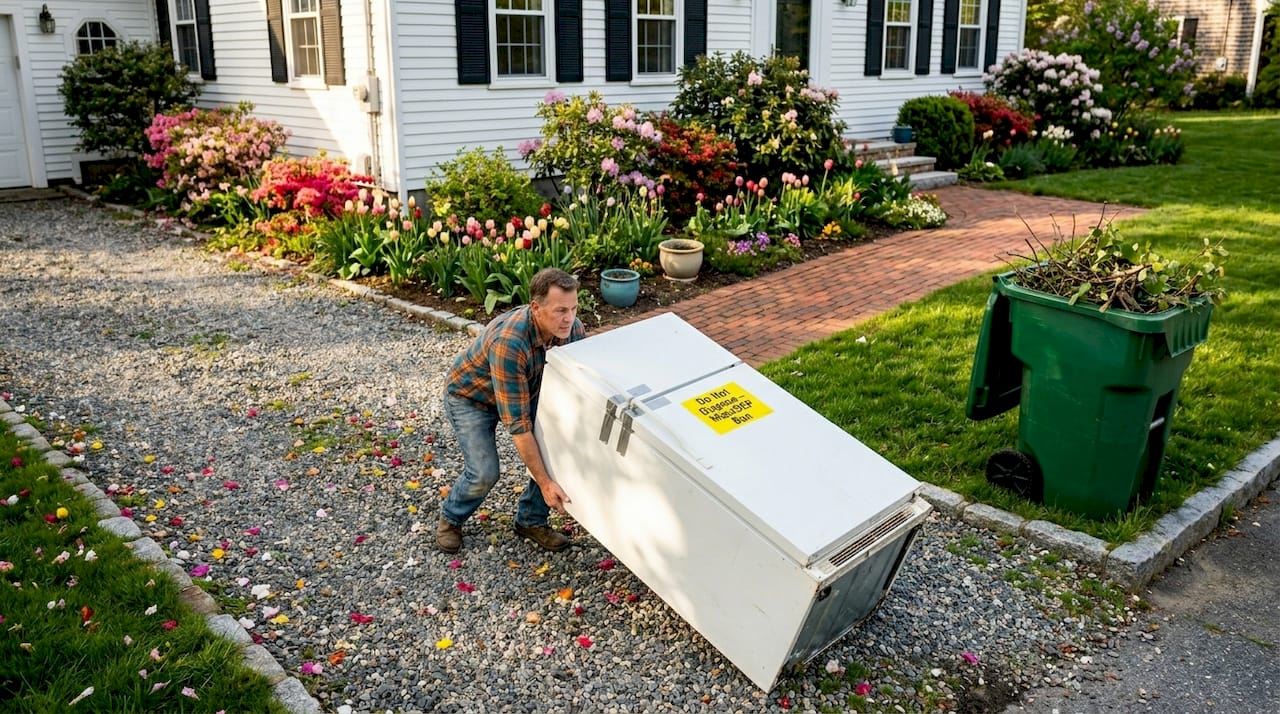
Pro Tip: Before scheduling a bulk pickup or renting a dumpster, pull up your town’s unacceptable items list online. Items that seem harmless, like a box spring or an old TV, often require separate handling that is not included in standard collection.
The consequence of ignoring these rules is not just a rejected pickup. Private haulers are legally required to reject or surcharge loads containing banned items, even when those items arrive in a private dumpster rental. You could end up paying extra fees or having banned items sent back to you.
How local rules interact with state regulations
Here is where things get genuinely confusing for most residents. The state sets the floor. Your town often sets a higher bar.
Local municipalities across Massachusetts have the authority to create their own waste collection rules, and many do. These rules can include container size limits, mandatory recycling ordinances, bulk item scheduling requirements, and user fee programs. Effective local bylaws can significantly reduce solid waste tonnage and keep municipal costs down, which is why towns embrace them.
One growing model is the “pay-as-you-throw” program, where residents pay based on how much waste they generate rather than a flat fee. In Lexington, approximately 70% of voters at a recent town meeting supported adopting a new waste disposal fee program along these lines. Expect more towns to follow.
Here is a practical process for figuring out what your local rules actually require:
Start with your town’s public works or DPW website. Most municipalities post their current collection rules, bulk item schedules, and banned materials lists online.
Check whether your town uses a sticker or tag system for bulk items. Many communities require a paid sticker attached to large items before they will be collected at curbside.
Confirm container requirements. Boston, for example, requires lids on trash containers. Improper container use can result in items being left at the curb or a code enforcement ticket.
Look for scheduled collection days for hazardous waste. Most towns offer one or two hazardous waste collection events per year. Missing these means finding an alternative disposal method yourself.
Call your DPW if anything is unclear. Websites are not always up to date. A two-minute phone call can save you from a rejected pickup or a fine.
Pro Tip: If you are managing a rental property or commercial space, check whether your municipality has specific rules for high-volume generators. Some towns apply different standards to multi-unit residential buildings and businesses than to single-family homes.
Practical compliance steps for individuals and businesses
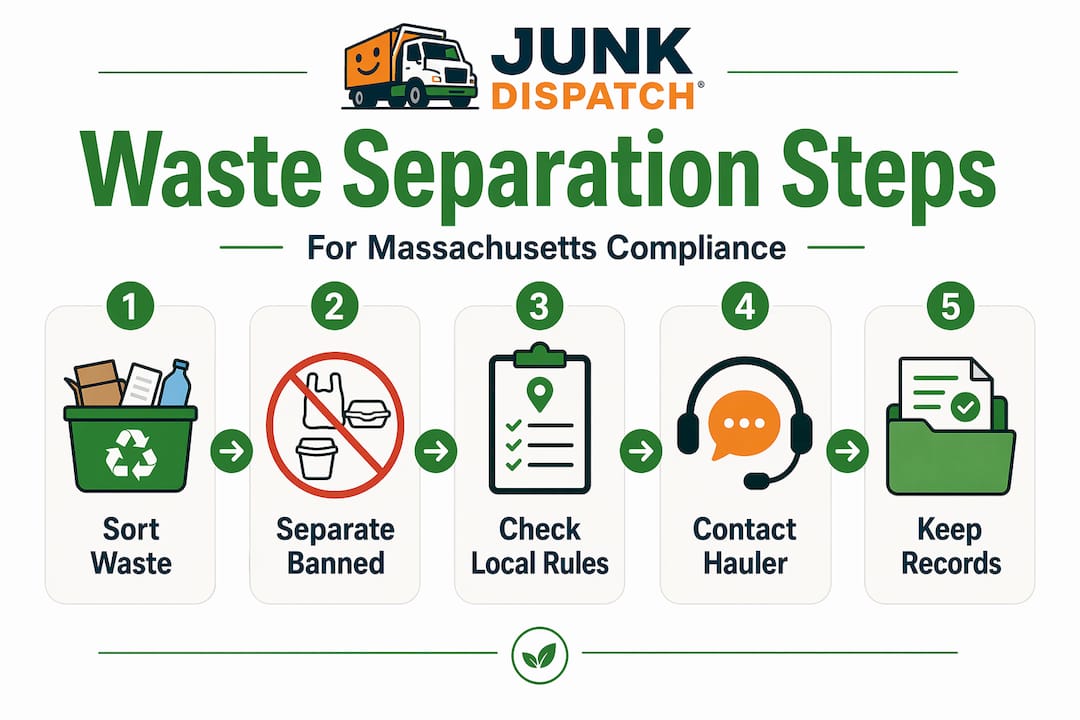
Once you understand the regulatory framework, the next step is actually following it. For most residents and small businesses, this comes down to a handful of consistent practices.
Start by separating your waste at the source. Recyclables, organics, hazardous items, and general trash should never be mixed together before collection. Once they are mixed, sorting becomes nearly impossible and the entire load may be treated as non-compliant trash.
When dealing with hazardous waste at home, think paint, motor oil, pesticides, or fluorescent bulbs. These require special handling under Massachusetts hazardous waste rules. Most towns offer scheduled drop-off events, and some permit drop-off at permanent collection facilities year-round.
For large items like appliances, furniture, or construction debris, follow these specific steps:
Appliances with refrigerants: Get a certified technician to remove the refrigerant and provide documentation before scheduling collection.
Electronics: Locate your town’s e-waste drop-off program or use a certified private recycler. Do not leave electronics on the curb unless your town explicitly permits it.
Mattresses: Schedule a bulk pickup with your town or use a licensed private hauler. Some transfer stations accept mattresses for a small fee.
Construction debris: Residential remodel debris and contractor debris are often treated differently. Verify with your hauler before renting a dumpster for renovation waste.
Businesses face additional requirements. Commercial generators above certain thresholds must source-separate food waste and ensure proper documentation for hazardous material disposal. Hiring a licensed junk hauler removes much of this burden because compliant haulers know which materials they can and cannot accept, and they handle routing to the correct facilities.
Pro Tip: Ask any hauler you hire to provide documentation that your waste was disposed of legally. A receipt or manifest from a licensed facility protects you if questions arise later.
Recent enforcement trends you need to know
Massachusetts is not relaxing its approach to disposal enforcement. If anything, the state is getting more aggressive.
The clearest signal came when Massachusetts sued a recycling firm over pollution of the Merrimack River caused by toxic runoff from its facility. That case demonstrates that failing to maintain proper environmental controls can result in facility shutdowns and significant legal liability. It is not just about paperwork violations.
“Failing to maintain proper environmental controls can lead to severe legal actions, including facility shutdowns and civil penalties that dwarf the cost of compliance.” — Massachusetts environmental enforcement record
The practical takeaway for residents and businesses is straightforward. Enforcement is real, it happens at multiple levels, and fines escalate quickly. The Brockton facility fines of $20,000 and $30,000 are mid-range examples. Larger violations tied to environmental damage or ongoing non-compliance carry far higher penalties.
What to watch going forward: MassDEP continues to expand the textile and organics waste ban requirements, and additional material categories are under review. Staying current with the MassDEP website and your town’s DPW communications is the most reliable way to avoid being caught off guard by a new ban.
My take on navigating these rules effectively
I have worked closely with Massachusetts waste regulations long enough to know that the single biggest mistake people make is assuming that state rules and local rules are the same thing. They are not. The state tells licensed facilities what they cannot accept. Your town tells you how to handle and present your waste. Both sets of rules apply to you simultaneously.
The second biggest pitfall is underestimating how quickly costs add up when you get it wrong. A rejected dumpster load, a missed bulk pickup window, or a code enforcement ticket can easily cost more than hiring a professional from the start. I have seen homeowners try to cut corners on appliance disposal only to end up paying hauler surcharges on top of separate removal fees.
What genuinely works is treating compliance as a checklist you run before any major cleanout or disposal project. Know what you have, know what category it falls into, and confirm the current rules before you act. The sustainable disposal guide for Massachusetts is a good resource if you want a full reference before starting a project.
Hiring a licensed hauler is not just convenient. It is protection. A properly licensed company knows where every material category needs to go, carries the required insurance, and assumes responsibility for compliant disposal. That shifts the liability off your plate.
— Joe
How Junkdispatch keeps your disposal fully compliant
Keeping up with Massachusetts waste management rules while managing a home cleanout, office renovation, or construction project is a significant amount of work. That is exactly where Junkdispatch steps in.
Junkdispatch operates as a licensed junk removal service across Massachusetts, with crews who know MassDEP waste bans, local municipal requirements, and proper routing for everything from appliances to construction debris. Every load is handled by insured professionals who understand how to comply with disposal regulations the right way.
Whether you are in Reading, MA clearing out a garage or a business in Essex County managing a warehouse cleanout, Junkdispatch handles the sorting, hauling, and documentation so you do not have to. Scheduling is flexible, estimates are free, and same-day service is available for projects that cannot wait. Avoid the fines, the rejected loads, and the headaches. Book online or call for a free estimate today.
FAQ
What is MassDEP and why does it matter for disposal?
MassDEP is the Massachusetts Department of Environmental Protection, the state agency that enforces solid waste regulations and waste bans. If a material is banned from landfills in Massachusetts, MassDEP is the authority behind that rule.
What items are banned from trash disposal in Massachusetts?
The list includes electronics, mattresses, textiles, yard waste, food waste (for qualifying generators), batteries, paint, refrigerants, and recyclable materials like cardboard and glass. The textile ban took effect in November 2022.
Can I put banned items in a private dumpster rental?
No. Private haulers are required under Massachusetts waste management rules to reject or surcharge loads that contain banned items, even from private dumpster rentals.
How do local rules differ from state disposal regulations?
State rules prohibit certain materials from licensed disposal facilities. Local town rules govern how you prepare and present waste for collection, and they can be stricter than state requirements, including sticker systems, container lid requirements, and bulk item scheduling.
What happens if I violate Massachusetts disposal rules?
Violations can result in rejected pickups, code enforcement tickets, and significant fines. MassDEP has issued facility fines ranging from $20,000 to $30,000, and legal action is possible for serious environmental violations.
Recommended
Comments