Eco-Friendly Disposal Guide for Massachusetts Homeowners
- Joe Lusso
- Apr 18
- 7 min read

TL;DR:
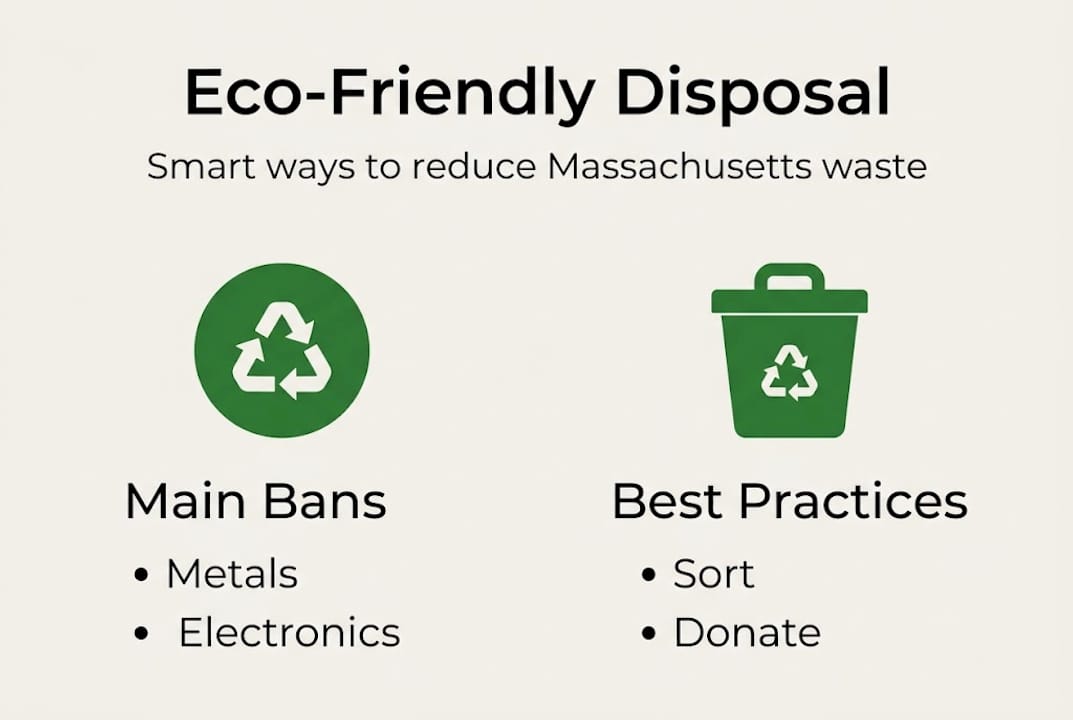
Massachusetts enforces 23 waste bans to prevent landfill disposal of specific materials.
Proper sorting and use of designated drop-off points maximize recycling and donation rates.
Professional junk removal can efficiently ensure compliance and significantly reduce landfill waste.
Massachusetts takes waste disposal seriously, and ignoring the rules can cost you. The state enforces 23 waste bans prohibiting landfill disposal of metals, electronics, yard waste, textiles, mattresses, and commercial organics over 0.5 tons per week. Violations can result in fines, environmental damage, and real headaches for property managers and homeowners alike. The good news is that following an organized, eco-friendly process actually saves time and money compared to tossing everything in a dumpster. This guide walks you through preparation, sorting, disposal method selection, and compliance verification so you can handle junk removal the right and responsible way.
Table of Contents
Key Takeaways
Point | Details |
Massachusetts waste bans | The state bans over 23 materials from regular landfill disposal, including electronics, mattresses, and food waste. |
Proper sorting is crucial | Separating junk into donate, recycle, compost, and trash piles is key for legal and eco-friendly disposal. |
Multiple disposal options | Homeowners and managers can choose curbside, drop-off, or professional services for compliant junk removal. |
Eco impact is measurable | Commercial organics recycling in Massachusetts saves energy, creates jobs, and diverts hundreds of thousands of tons from landfills annually. |
What you need for eco-friendly disposal in Massachusetts
After laying out the need for responsible disposal, let’s clarify exactly what you’ll need to get started and stay compliant. The right tools and knowledge upfront prevent costly mistakes later.
Essential tools and resources:
Heavy-duty contractor bags and clearly labeled bins (donate, recycle, compost, trash, hazardous)
Protective gloves and safety gear for handling bulky or sharp debris
Access to Recyclesmartma.org’s Beyond the Bin locator to find drop-off points for specialty items
A printed or digital copy of Massachusetts waste ban categories for quick reference
For commercial properties: disposal logs and staff training documentation
Understanding Massachusetts disposal laws is non-negotiable before you start. The 23 banned materials list covers more than most people expect. Many homeowners are surprised to learn that yard waste, textiles, and even certain appliances cannot go in the regular trash.
Category | Examples | Banned from landfill? |
Metals | Cans, pipes, appliances | Yes |
Electronics | TVs, computers, phones | Yes |
Yard waste | Leaves, grass, branches | Yes |
Textiles | Clothing, linens, rugs | Yes |
Mattresses | All sizes | Yes |
Commercial organics | Food waste over 0.5 tons/week | Yes |
General trash | Non-recyclable plastics | No |
A common mistake is skipping the sorting step and assuming curbside pickup handles everything. It does not. Sorting items beforehand and using the Beyond the Bin locator for specific drop-off locations is the single most effective preparation habit. For commercial clients, audits and staff training are equally essential.
Pro Tip: Before you move a single bag, do a quick room-by-room walkthrough. Note every item category you expect to find. This 10-minute audit prevents confusion on removal day and helps you gather the right bins and bags in advance. Reviewing furniture disposal options ahead of time is especially useful for larger cleanouts.
How to sort and prepare items for eco-friendly junk removal
With your essential tools and the rules in mind, you’re ready to start sorting and prepping your items for sustainable disposal. A clear sorting system is what separates a smooth removal day from a chaotic one.
Step-by-step sorting process:
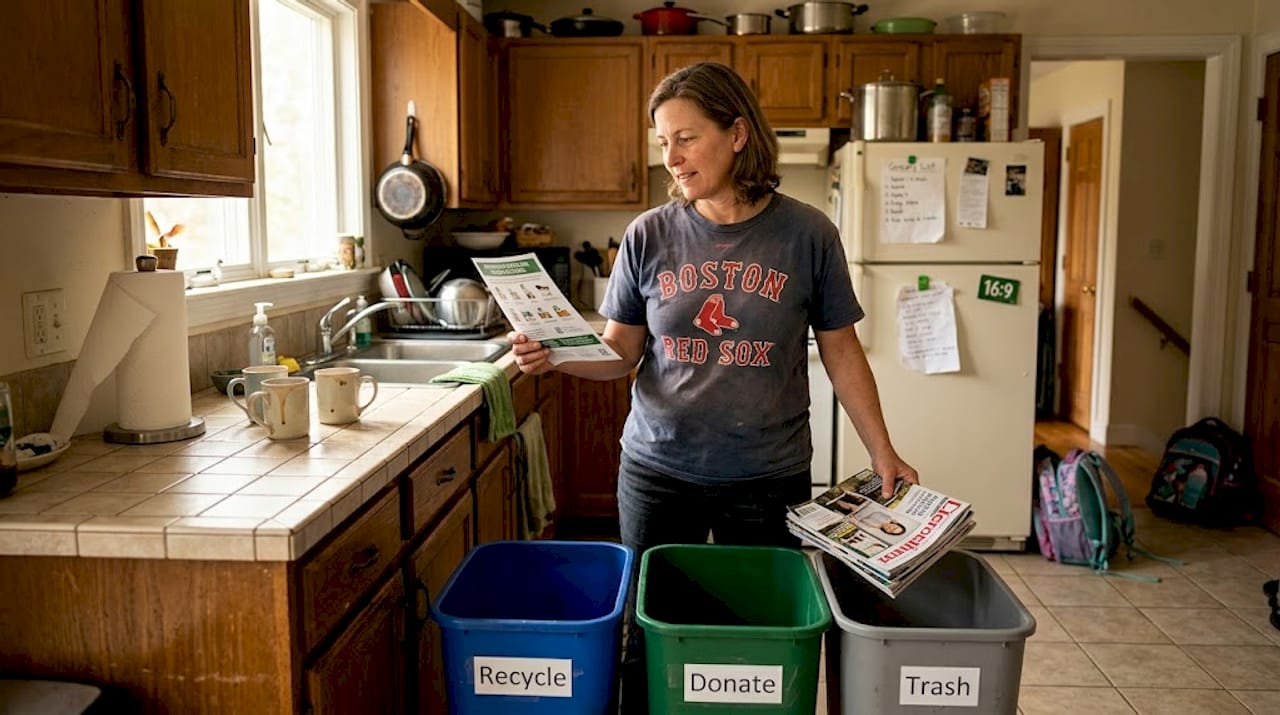
Set up five labeled containers: Donate, Recycle, Compost, Hazardous, and Trash. Physical labels eliminate confusion when multiple people are helping.
Walk each room systematically. Pick up every item and make a decision before moving to the next one. Avoid creating an unsorted “maybe” pile.
Check each item against the waste ban list. If it appears on the banned materials list, it goes into Recycle or Hazardous, never Trash.
Use the Recyclesmartma.org locator to find the nearest drop-off point for specialty items like electronics, paints, and motor oil.
Photograph donation and recycling piles before removal. Property managers especially benefit from this documentation for compliance records.
Schedule pickups or drop-offs before removal day so nothing sits on the curb longer than necessary.
“Eco-friendly junk removal prioritizes sorting into donate, recycle, compost, and trash. Professionals recycle or donate 60 to 80% of collected items, diverting the majority from landfills.”
That 60 to 80% diversion rate is achievable for homeowners too, as long as sorting happens before removal. Understanding the eco-friendly benefits of proper sorting motivates the extra effort. Once you see how little actually needs to go to landfill, the process starts to feel rewarding rather than tedious.
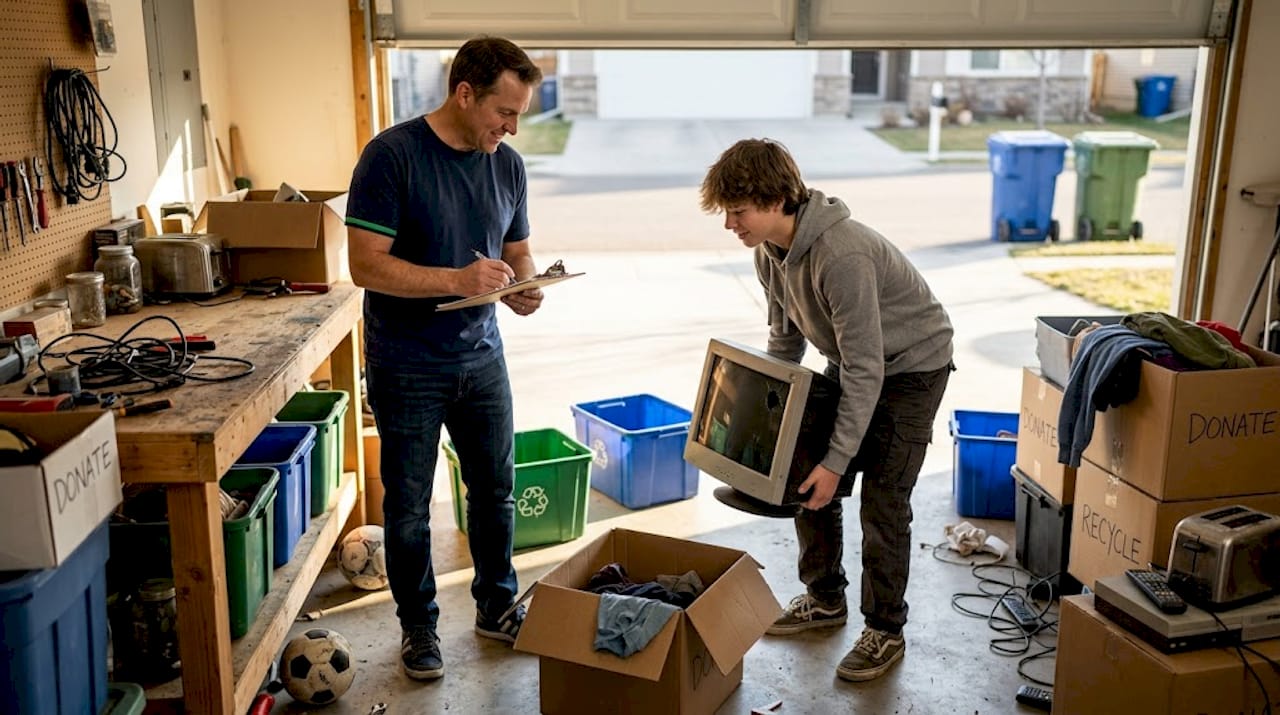
Pro Tip: Place your Donate and Recycle bins near the front door or in a high-traffic area. Visibility drives better decisions. When the recycle bin is right in front of you, tossing a can into the trash feels wrong.
Learning efficient junk removal techniques also helps you move faster without cutting corners on compliance.
Choosing the right eco-friendly disposal method
Now that you’ve sorted your items, let’s examine the best disposal strategies for every situation. The right method depends on the volume, item type, and your available time.
Method | Best for | Cost estimate | Eco-friendly? |
Curbside bulk pickup | Large furniture, appliances | Varies by municipality | Moderate |
Drop-off centers | E-waste, tires, paint, hazardous | ~$5 per item (Worcester) | High |
Professional junk removal | Mixed loads, banned items, commercial | Varies by volume | High |
Donation pickup | Furniture, clothing, working appliances | Free | Very high |
For most Massachusetts homeowners, a combination of methods works best. Curbside bulk pickup handles large furniture and appliances on scheduled collection days. Drop-off centers, which charge around $5 per item in Worcester, are the right choice for specialty waste like e-waste, tires, and hazardous materials per MassDEP standards.
When to hire professional junk removal:
You have a mix of banned and non-banned items that require sorting expertise
The volume is too large for curbside limits
You’re managing a commercial cleanout with compliance documentation needs
You need same-day or next-day removal without the logistics of multiple drop-off trips
For junk removal for homeowners in Massachusetts, professional services offer the highest diversion rates because crews are trained to sort on-site. They know which facilities accept which materials, saving you multiple trips. Reviewing best eco-friendly junk removal services in your area helps you compare options before committing.
E-waste deserves special attention. TVs, computers, and phones contain toxic materials that contaminate soil and groundwater when landfilled. Massachusetts law bans them outright, so always route electronics to certified e-waste facilities.
Verifying compliance and maximizing impact
Having disposed of your junk through the best channels, ensure you’ve completed the process responsibly and understand its wider environmental benefits. Compliance is not just about avoiding fines. It’s about confirming your actions actually made a difference.
Compliance checklist:
Receipts or confirmation emails from drop-off centers and donation organizations
Photographs of sorted piles before and after removal
Disposal logs for commercial properties (required for organics over 0.5 tons per week)
Written confirmation from professional haulers documenting where materials were taken
Review of the banned materials list to confirm nothing was missed
Calculating your landfill diversion rate is simpler than it sounds. Add up the weight or volume of items donated, recycled, or composted, then divide by the total weight or volume of all items removed. Multiply by 100 for your percentage. Aim for 60% or higher.
The environmental impact is significant. Massachusetts’ commercial food waste ban diverts between 350,000 and 713,000 tons of waste per year, creates 1,676 jobs, generates $390 million in industry activity, and produces $143 million in labor income. Recycling steel alone saves 60% of the energy required to produce new steel from raw materials.
These numbers show that responsible disposal is not just a personal choice. It’s an economic engine for Massachusetts communities. Following yard waste removal steps correctly, for example, keeps organic material out of landfills and feeds composting programs that benefit local agriculture.
For property managers handling multiple units, free estimates for eco-friendly junk removal help you budget accurately while staying compliant across all properties.
Why the hardest part is taking the first step
After reviewing the steps and impact, let’s talk candidly about what actually holds most people back. In our experience working with Massachusetts homeowners and property managers, the biggest barrier is not cost or time. It’s the belief that eco-friendly disposal is complicated.
That belief is understandable. The banned materials list is long. The drop-off locations vary by town. The rules for commercial organics feel technical. But here’s what we’ve learned: once you sort your first load and see how straightforward the process actually is, the mental barrier disappears.
The real cost of avoidance is higher than people realize. Illegal dumping fines in Massachusetts can reach thousands of dollars. Contaminated recycling loads get rejected and sent to landfill anyway, defeating the purpose. And the impact on environment from improper disposal accumulates in ways that affect your neighborhood directly.
Small actions drive outsized results. Spending 20 minutes sorting before a cleanout, using the Recyclesmartma.org locator once, or calling a local pro for a single large item are not big commitments. They are the entire process. The homeowners and property managers who get this right are not doing anything extraordinary. They’re just starting.
Take the next step with expert eco-friendly disposal help
Ready to put these tips into action? Massachusetts residents don’t have to navigate waste bans, drop-off logistics, and compliance documentation alone.
At Junk Dispatch, our insured crews handle sorting, hauling, and responsible disposal for both residential and commercial clients across Massachusetts. We achieve high diversion rates by routing items to the right recycling centers, donation partners, and composting facilities. Whether you need a same-day garage cleanout, a full demolition and removal service, or ongoing support for a multi-unit property, we make the process simple. Residents in Reading and throughout Essex County can book online and get a free estimate today. Let us handle the heavy lifting while you enjoy a clutter-free, compliant space.
Frequently asked questions
What items are banned from Massachusetts landfills?
Metals, electronics, yard waste, textiles, mattresses, and large quantities of food waste are banned from Massachusetts landfills by state law, covering 23 material categories in total.
How can I dispose of bulky items or e-waste in Massachusetts?
Use municipal curbside pickup for bulk waste, drop-off centers for specialty items, or hire licensed junk removal professionals for e-waste and hazardous materials per MassDEP standards.
How do eco-friendly junk removal services help the environment?
Professional junk removal services in Massachusetts recycle or donate 60 to 80% of collected items, significantly cutting landfill waste and conserving natural resources.
What are the benefits to businesses of following food waste bans?
Complying with Massachusetts commercial food waste bans creates 1,676 jobs and generates $390 million in industry activity, while reducing disposal costs and environmental liability for businesses.
Recommended
Comments