Office Junk Removal Steps for Efficient Workspace Cleanup
- Joe Lusso
- Feb 15
- 7 min read


Cluttered offices can slow your team down and create safety risks you cannot ignore. For property managers and business owners in Massachusetts, keeping commercial spaces free of unwanted junk goes beyond looks—it affects productivity and workplace safety. By focusing on hazard identification and efficient removal techniques, you will reduce downtime and reclaim valuable office space for what matters most.
Table of Contents
Quick Summary
Key Insight | Explanation |
1. Systematically assess office spaces | Conduct a thorough walkthrough to identify junk in workspaces, storage, and communal areas to enhance productivity and safety. |
2. Sort items into specific categories | Use categories like Keep, Recycle, Donate, Dispose, and Archive to effectively manage and eliminate clutter. |
3. Research and schedule junk removal services | Find reputable services, verifying their licensing, to streamline the removal process and avoid future headaches. |
4. Supervise the removal process actively | Engage directly with the removal team for clear communication and to ensure all designated items are removed efficiently. |
5. Verify cleanliness post-removal | After removal, check for debris and consider reorganizing the space to maintain an efficient and positive work environment. |
Step 1: Assess Office Areas and Identify Junk
Effectively identifying junk in your office workspace requires a strategic and systematic approach that prioritizes both efficiency and safety. Hazard identification is critical for maintaining a clean and productive work environment.
To begin your office junk assessment, follow these comprehensive steps:
Walk through every area of the office systematically
Check each workspace, storage room, and communal area
Look for items that are:
Broken or non-functioning
Obsolete technology or equipment
Damaged furniture
Outdated documents or files
Excess supplies or redundant items
Pay special attention to common problem areas like supply closets, file rooms, and corner storage spaces where unnecessary items tend to accumulate. Document everything you find that could be considered junk, creating a detailed inventory for future removal.
Clutter and improper storage contribute significantly to workplace safety risks and reduce overall operational efficiency.
During your assessment, consider both physical condition and current utility of each item. A piece of equipment might look functional but could be technologically outdated or inefficient compared to newer alternatives.
Pro tip: Create a digital spreadsheet during your assessment to track identified junk, making the future removal process much more organized and streamlined.
Step 2: Sort and Separate Removable Items
Sorting and separating removable items is a critical step in efficiently cleaning up your office workspace. Understanding the 5S sorting method will help you systematically organize your office items for removal.
Begin your sorting process by creating distinct categories for your items:
Keep: Functional and currently necessary items
Recycle: Eligible paper, electronics, and materials
Donate: Usable office equipment in good condition
Dispose: Broken, outdated, or unusable items
Archive: Important documents that need long-term storage
As you sort, be ruthless about eliminating unnecessary items. Assess each item’s current utility and relevance to your current business operations. Avoid keeping items simply because “they might be useful someday” - this mindset leads to unnecessary clutter.
Effective sorting reduces workspace clutter and improves overall office efficiency and productivity.
Pay special attention to electronic equipment, documents, and supplies. Technology changes quickly, and what seemed essential a few years ago might now be obsolete. Create a systematic approach to evaluate each item’s continued usefulness.

Here’s a quick comparison of sorting and removal methods used in office junk cleanouts:
Method | Best For | Key Benefit | Potential Drawback |
DIY Sorting | Small offices, limited junk | Direct control over process | Time-consuming, labor-intensive |
Professional Removal | Large volume or hazardous items | Efficient, safe, quick | Higher upfront cost |
Donation Coordination | Usable furniture, electronics | Supports community, reduces waste | May require extra planning |
Recycling Services | Paper, electronics, plastics | Environmentally responsible | Must follow recycling guidelines |
Pro tip: Use color-coded stickers or labels during sorting to quickly identify different item categories and streamline your removal process.
Step 3: Schedule a Professional Junk Removal Service
Scheduling a professional junk removal service transforms your office cleanup from a daunting task to a streamlined process. Scheduling professional removal requires strategic planning and clear communication to ensure a smooth and efficient workspace transformation.
Follow these key steps when booking your junk removal service:
Research local junk removal companies with positive reviews
Verify the company’s licensing and insurance
Prepare a comprehensive list of items to be removed
Take measurements of larger items and potential access challenges
Confirm pricing and service details in advance
Select a convenient date and time for removal
Contact multiple service providers to compare quotes and understand their specific removal processes. Some companies offer additional services like sorting, donation coordination, or recycling, which can simplify your cleanup efforts.
Professional junk removal services eliminate the physical strain and logistical challenges of office cleanouts, allowing you to focus on your core business operations.
Be prepared to provide detailed information about the items you need removed. Communicate any special handling requirements for sensitive or bulky equipment to ensure a smooth removal process.
To clarify the advantages, here’s how professional junk removal impacts office productivity:
Impact Area | Professional Service Benefits | DIY Removal Limitations |
Workflow Disruption | Minimal due to expert handling | Significant, requires scheduling |
Safety | Trained staff prevent injuries | Risk of improper handling |
Speed | Process completed efficiently | Slower, depends on staff availability |
Post-removal Organization | Often includes reorganization advice | May lack follow-up support |
Pro tip: Take digital photos of the items you want removed to help the junk removal team provide an accurate initial quote and prepare appropriate equipment.
Step 4: Supervise the Removal Process Efficiently
Supervising the junk removal process requires active engagement and strategic oversight to ensure a smooth and successful workspace cleanup. Monitoring removal workflows helps maintain efficiency and prevent potential disruptions during the junk removal operation.
Implement these key supervision strategies:
Be present during the removal process
Communicate clearly with the removal team
Verify item categorization and removal
Ensure safe handling of sensitive equipment
Monitor progress and address any challenges immediately
Confirm complete removal of designated items
Stay actively involved throughout the process, walking through the workspace with the removal team to provide context and answer any questions. This direct supervision helps prevent misunderstandings and ensures that only the intended items are removed.
Effective supervision transforms a potential logistical challenge into a streamlined, efficient workspace transformation.
Pay special attention to sensitive or complex removal scenarios. Some items may require special handling, disassembly, or specific disposal methods. Your direct oversight ensures these requirements are met precisely.
Pro tip: Prepare a detailed floor plan or map highlighting specific areas and items to be removed, which will help the removal team navigate your workspace more efficiently.
Step 5: Verify Cleanliness and Organize Remaining Space
After completing the junk removal process, meticulously verifying cleanliness and reimagining your workspace layout becomes crucial for long-term productivity. Visual inspection practices will help ensure a thorough and systematic workspace transformation.
Conduct a comprehensive post-removal assessment using these key strategies:
Inspect every surface for remaining debris
Check corners and hard-to-reach areas
Verify complete removal of designated junk items
Clean and sanitize newly exposed surfaces
Evaluate spatial layout for optimal functionality
Develop a strategic reorganization plan that maximizes your workspace efficiency. This means critically examining the remaining equipment and furniture to create a more ergonomic and productive environment.
A well-organized workspace is not just clean - it enhances employee productivity and creates a positive professional atmosphere.
Implement smart storage solutions to maintain the newly cleaned space. Consider modular shelving, digital document management, and compact furniture arrangements that prevent future clutter accumulation.
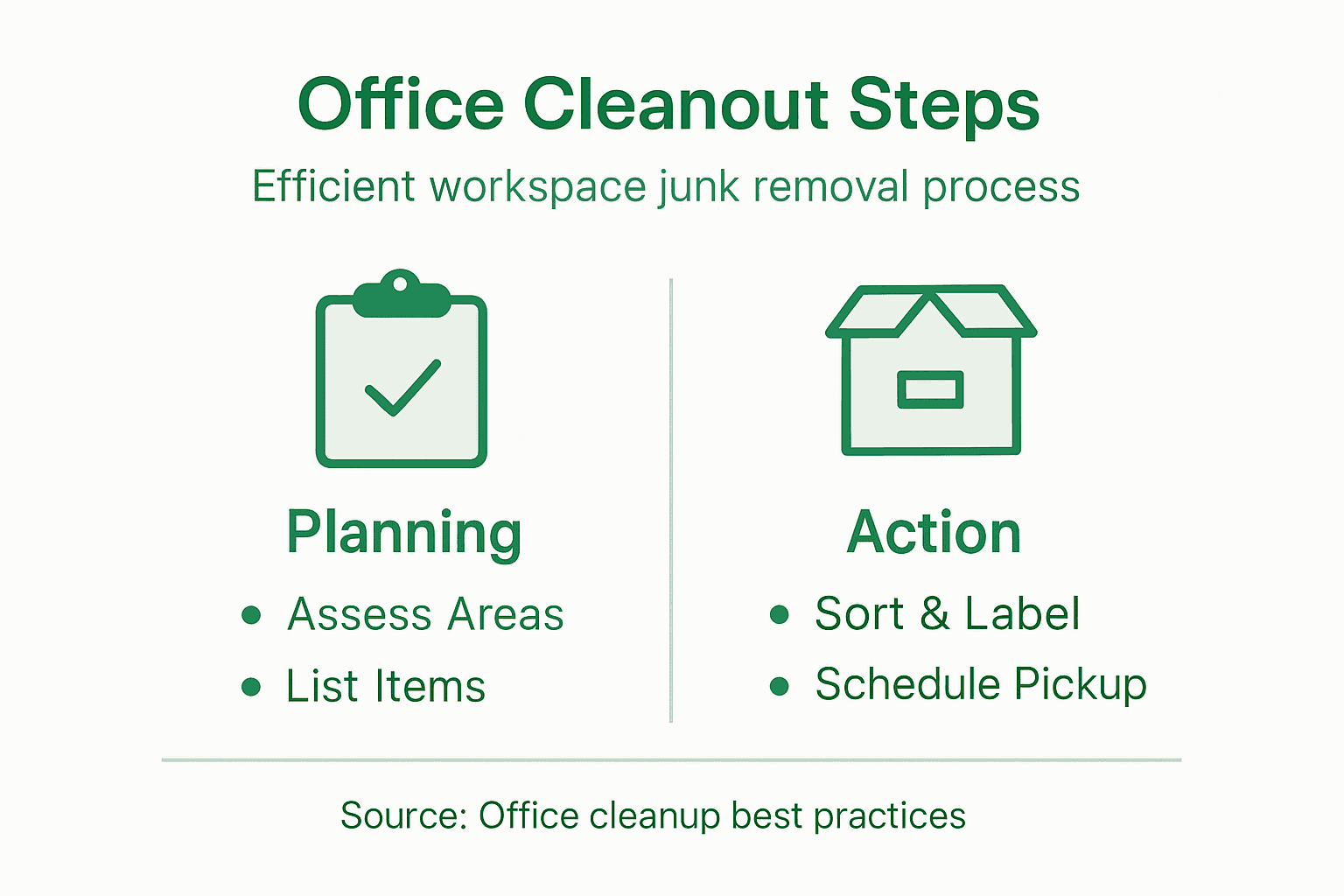
Pro tip: Take before and after photographs to document your workspace transformation and establish a visual benchmark for future organization efforts.
Transform Your Office Cleanup with Expert Junk Removal Support
Cleaning out your office requires more than just sorting and tossing. The article highlights critical challenges such as identifying outdated equipment, efficiently sorting junk by categories like recycling and donation, and supervising the removal process to ensure safety and completeness. Tackling these tasks alone can quickly become overwhelming, especially when balancing everyday business demands and the need to maintain a productive workspace.
Junk Dispatch offers a professional solution tailored to your office cleanup needs in Massachusetts. With our quick, reliable, and eco-friendly junk removal services, you can delegate the physical and logistical burdens to insured experts who work with precision and care. Whether you need help managing bulky furniture, electronics, or paper waste, our team ensures the safe removal and proper disposal that aligns with your organizational goals. Ready to reduce clutter, increase productivity, and reclaim your office space efficiently?
Take the first step toward a clutter-free, organized workspace by scheduling your cleanup with Junk Dispatch. Discover how our same-day removal and comprehensive services simplify your office transformation. For an easy start, get a free estimate or book online today and experience worry-free junk removal. Learn more about how professional junk removal can enhance your office environment here.
Frequently Asked Questions
How can I identify junk in my office workspace?
To identify junk in your office, conduct a thorough walk-through of every area, checking workspaces, storage rooms, and communal spaces. Document items that are broken, outdated, or no longer used, and compile a comprehensive inventory for removal.
What categories should I use to sort office junk?
Sort your office junk into five categories: Keep, Recycle, Donate, Dispose, and Archive. This method helps clearly distinguish between items that are useful, those that can be reused or recycled, and those that should be thrown away.
How do I schedule a professional junk removal service?
Research local junk removal companies and prepare a list of items you need cleared. Contact multiple providers to confirm pricing and availability, and schedule a convenient date for the removal.
What should I monitor during the junk removal process?
During the removal process, ensure you are present and actively supervising. Verify that the correct items are being removed and that any sensitive equipment is handled properly and safely.
How can I maintain cleanliness in my workspace after junk removal?
After removal, conduct a thorough inspection of the workspace to check for any leftover debris. Create a strategic reorganization plan to optimize layout and functionality, incorporating smart storage solutions to prevent future clutter.
What is a quick action I can take to streamline my office cleanup?
Create a digital spreadsheet to track identified junk during your assessment. This organizational tool will help you streamline future removal processes and stay focused on the necessary tasks.
Recommended
Comments