Junk Disposal Trends in 2026: A Guide for Massachusetts
- Joe Lusso
- 5 hours ago
- 8 min read


TL;DR:
Massachusetts aims for a 30% waste reduction by 2030, despite rising disposal volumes and C&D waste.
Compliance requires separate handling of banned materials and documentation of recycling efforts.
Opportunities include grants and technology solutions to improve sustainable waste management practices.
Massachusetts businesses and property managers are caught between two opposing forces: waste volumes are climbing fast while state regulators are pushing hard for dramatic reductions. Solid waste disposal hit 6.22 million tons in 2024, up 10% from the 2018 baseline, with construction and demolition waste surging 50% due to economic growth. At the same time, the state has set a firm goal of 30% less waste by 2030. For contractors, property managers, and business owners, that gap between reality and regulation is where risk lives. This guide breaks down what’s changing, what it costs to ignore it, and how to stay ahead.
Table of Contents
Key Takeaways
Point | Details |
Rising waste volumes | Junk and C&D waste levels in Massachusetts are up sharply, making compliance more urgent than ever. |
Stricter regulations | New bans and performance standards mean property managers and contractors must adapt disposal practices in 2026. |
Grant funding available | Multiple state and local grants can help businesses invest in sustainable junk removal and innovation. |
Compliance is critical | Non-compliance can bring hefty fines, so choosing the right disposal partners is essential. |
Get ahead with innovation | Leveraging new tech and proactive partners positions your business for success and sustainability. |
Understanding the Massachusetts junk disposal landscape in 2026
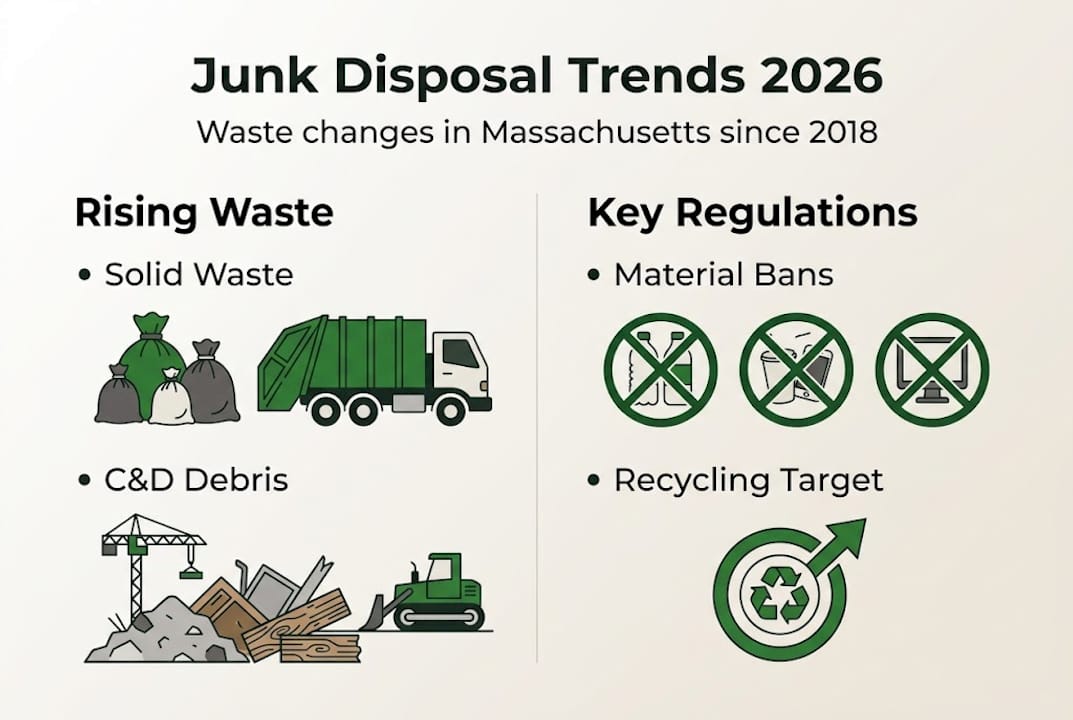
The numbers tell a clear story. Massachusetts solid waste disposal reached 6.22 million tons in 2024, a 10% jump from 2018. Construction and demolition waste alone climbed 50% over that same period, driven by a booming real estate and renovation market across the state. Yet the state’s 2030 reduction target demands a sharp reversal of that trend.
This tension creates a real compliance burden for anyone managing properties or running job sites. The state has banned 23 material types from disposal, meaning a wide range of items cannot legally go to a landfill or transfer station. That list includes materials many operators still toss without a second thought.
Key banned material categories include:
Construction and demolition debris (specific types)
Mattresses and box springs
Rechargeable batteries and certain electronics
Yard waste and clean wood
White goods (large appliances)
Cardboard and recyclable paper
Food waste above threshold volumes
Illegal dumping of any banned material exposes property managers and contractors to fines, legal liability, and reputational damage. Enforcement is not theoretical. The state actively monitors transfer stations and disposal sites, and penalties are escalating as regulators close in on the 2030 deadline.
Waste Category | 2018 Volume | 2024 Volume | Change |
Total solid waste | ~5.65M tons | 6.22M tons | +10% |
C&D waste | Baseline | +50% above baseline | +50% |
Organics diverted | Below target | 370,000 tons | Below 2030 goal |
For a detailed breakdown of how these rules affect your specific situation, the junk disposal guide for property managers is a practical starting point. Understanding the landscape is step one. Adapting your operations is step two.
Key trends in junk disposal: From C&D waste to organics
Two categories are getting the most regulatory attention right now: construction and demolition waste, and organic materials like food waste. Both have new standards, and both carry real consequences for non-compliance.
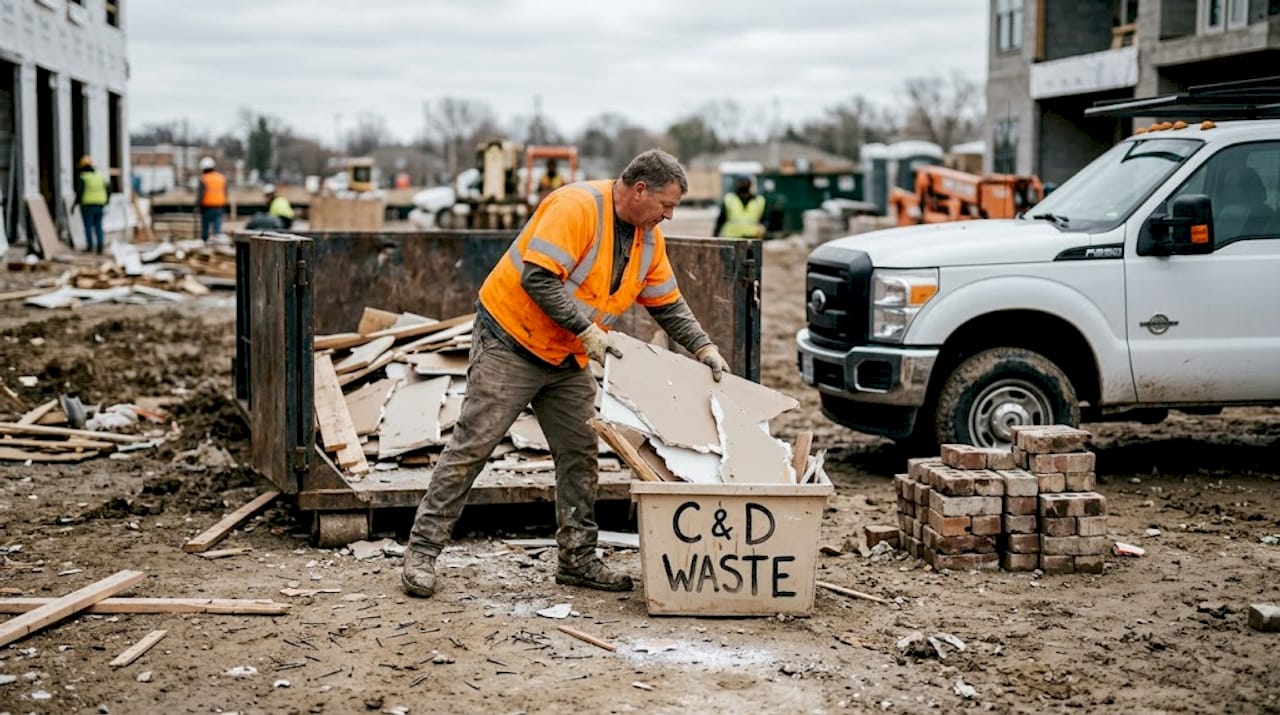
Construction and demolition waste refers to debris generated from building, renovation, or demolition projects. Think concrete, drywall, lumber, roofing materials, and metal. The state is raising the bar on how much of this material must be recycled rather than landfilled. The C&D recycling performance standard is set to rise to 25% by 2030, pushing contractors and disposal facilities to divert more material through deconstruction, reuse, and recycling.
Deconstruction, which means carefully dismantling a structure to salvage usable materials, is gaining traction as a cost-effective alternative to demolition. Salvaged lumber, fixtures, and metals can be resold or donated, reducing both disposal costs and environmental impact.
On the organics side, the state has already enacted a commercial organics ban. Food waste diversion reached 370,000 tons in 2024, which sounds significant until you realize it is less than half of the 2030 target. Businesses generating more than 0.5 tons of organic waste per week must divert it from landfills through composting, anaerobic digestion, or other approved methods.
“The gap between current organics diversion and the 2030 target is not a minor shortfall. It signals that most commercial operators still have significant work to do.”
Old vs. new disposal practices:
Practice | Old Approach | New Standard |
C&D debris | Mixed load to landfill | Sorted, 25% minimum recycled |
Food waste | General trash | Separate diversion program |
Mattresses | Dumpster disposal | Banned, must use certified handler |
Batteries | Trash bin | Banned, EPR program required |
Here is a numbered action list for contractors adapting to these trends:
Separate C&D materials on-site before removal.
Partner with a disposal service that tracks recycling rates.
Enroll in or verify compliance with the commercial organics program.
Confirm your disposal vendor handles all 23 banned materials correctly.
Document every load for potential audit purposes.
Pro Tip: Ask your disposal partner for a written recycling rate report after each C&D job. If they cannot provide one, that is a red flag. For practical guidance, review these C&D recycling tips and explore eco-friendly C&D solutions that align with current standards.
Compliance, enforcement, and the cost of getting it wrong
Non-compliance with Massachusetts disposal rules is not just an environmental issue. It is a financial and legal risk that is growing more serious every year. Enforcement is tightening as the state approaches its 2030 targets, and inspectors are increasingly focused on transfer stations, job sites, and commercial properties.
Massachusetts enforces bans on 23 material types, and the consequences for violations include fines, stop-work orders, and in serious cases, criminal liability. Mattress disposal is one of the most commonly mishandled bans. Contractors routinely include them in mixed loads, not realizing that each mattress disposed of improperly is a separate violation.
Common compliance pitfalls:
Mixing banned materials into general dumpsters
Using disposal vendors who do not sort or document loads
Failing to track organics volumes to know if the 0.5-ton threshold applies
Assuming a licensed hauler automatically means compliant disposal
Not keeping disposal records for potential inspections
“A licensed hauler and a compliant hauler are not always the same thing. Licensing covers the vehicle. Compliance covers what happens to the material.”
Smart operators are building compliance into their vendor selection process. That means asking disposal partners for documentation, checking their facility certifications, and verifying that they are current on all 23 material bans. It also means keeping your own records. If a violation is investigated, your paper trail is your defense.
Pro Tip: Request a compliance certificate or disposal manifest from every junk removal job. File these with your project records. This takes minutes and can save thousands in fines.
Grant programs exist to help businesses cover the cost of upgrading disposal practices. The state has allocated funds specifically for compliance improvements, equipment upgrades, and training. Checking with MassDEP or your regional planning agency is the fastest way to find what is available in your area. For a deeper look at the rules, business disposal compliance and junk removal compliance tips are worth reviewing before your next project.
Opportunities: Sustainable solutions and funding for modern disposal
Compliance is the floor, not the ceiling. Forward-thinking property managers and contractors are using sustainability as a competitive advantage, attracting clients who care about environmental responsibility and qualifying for state funding that offsets costs.
Local governments spend over $187.6 million annually on waste and recycling in Massachusetts, and a portion of that flows back to businesses through grants. Two programs stand out: microgrants of up to $10,000 for reuse initiatives, and innovation grants of up to $2 million for technology that improves waste management systems. These are real dollars available to businesses willing to invest in better practices.
Grant and funding opportunities at a glance:
Program Type | Max Award | Best For |
Reuse microgrant | $10,000 | Small businesses, reuse programs |
Innovation tech grant | $2,000,000 | Technology-driven waste solutions |
EPR battery program | Varies | Battery collection and recycling |
Technology is also changing what is possible. Digital waste tracking platforms let contractors log every load, verify recycling rates, and generate compliance reports automatically. Some disposal services now offer real-time documentation, which simplifies audits and builds client trust.
Step-by-step action plan for sustainable disposal in 2026:
Audit your current disposal practices against the 23 banned materials list.
Identify which waste streams (C&D, organics, electronics) need new handling.
Research grant programs through MassDEP and regional agencies.
Issue a request for proposals to disposal vendors that includes compliance documentation requirements.
Implement digital tracking for all disposal loads.
Schedule a quarterly review to stay current with regulatory updates.
Pro Tip: When evaluating disposal partners, ask specifically whether they track and report recycling rates per load. Services that offer this proactively are already operating at the standard the state is moving toward. For contractors managing debris, debris recycling for contractors outlines practical steps you can start using immediately.
What most guides miss: Choosing disposal partners who keep up with change
Most articles stop at listing the rules. What they skip is the harder question: how do you find a disposal partner who actually keeps pace with regulations that change every year?
We have seen what happens when businesses rely on vendors who are operating on outdated practices. A contractor uses a hauler they have worked with for years, trusting the relationship. Then a regulation changes, the hauler does not adapt, and the contractor ends up holding liability for a non-compliant load. The relationship did not protect them. Documented compliance would have.
Warning signs of a disposal partner falling behind include: no written recycling reports, vague answers about banned material handling, no mention of the 25% C&D standard, and no awareness of the commercial organics ban. These are not minor gaps. They are signals that the vendor is not tracking the regulatory environment.
The best partners are proactive. They tell you when rules change before you ask. They offer documentation without prompting. They have already built eco-friendly disposal partners practices into their standard workflow, not as an add-on. That is the difference between a vendor and a partner who actually protects your business.
Need a forward-thinking junk removal partner?
Staying compliant with Massachusetts disposal rules while managing properties or job sites is a real operational challenge. The regulations are strict, the material bans are specific, and the cost of getting it wrong is rising.
Junk Dispatch is built for exactly this environment. We handle C&D debris, appliances, organics, and banned materials with documented, eco-conscious disposal practices that align with current Massachusetts standards. Whether you need junk removal in Reading or full-scale Essex County junk disposal, our insured crews show up on time, sort materials correctly, and provide the documentation your records require. Get a free estimate online and see how straightforward compliant disposal can be.
Frequently asked questions
What are the key material bans property managers must follow in Massachusetts for 2026?
Massachusetts enforces bans on 23 material types, including certain construction debris, mattresses, and batteries, to meet recycling and landfill reduction goals. Violating these bans can result in fines and legal liability for property owners and managers.
How can contractors meet the new 25% C&D recycling standard?
Contractors should separate materials on-site and choose disposal services that document compliance with the 25% recycling requirement. Requesting a written recycling rate report after each job is the simplest way to verify your vendor is meeting the standard.
Are grants available for improving junk disposal practices in Massachusetts?
Yes, the state offers microgrants up to $10,000 for reuse initiatives and innovation grants up to $2 million for technology-driven waste management improvements. Businesses can apply through MassDEP and regional planning agencies.
What are the main risks of illegal dumping under new Massachusetts rules?
Illegal dumping of banned materials or C&D waste can result in fines, stop-work orders, and reputational damage for property managers and contractors. Enforcement is increasing as the state approaches its 2030 reduction targets.
How is food and organics waste handled differently for businesses in 2026?
Businesses generating more than 0.5 tons of organic waste per week must comply with the commercial organics ban and participate in approved diversion programs. A residential ban is also under consideration for implementation by 2030.
Recommended
Comments