Construction debris management: effective MA solutions
- Joe Lusso
- 8 hours ago
- 8 min read

TL;DR:
Massachusetts bans landfilling key construction materials and mandates recycling compliance.
Proper planning, sorting, and documentation are essential to meet regulations and avoid penalties.
Engaging licensed haulers and implementing source segregation can maximize diversion and reduce costs.
If you’re managing a construction or demolition project in Massachusetts, debris disposal is no longer a simple matter of calling a dumpster company. Key C&D materials including asphalt, brick, concrete, metal, wood, glass, plastic, cardboard, clean gypsum wallboard, mattresses, and textiles are banned from landfill disposal and must be recycled. That changes everything about how you plan, sort, and remove debris on site. Ignore these rules and you’re looking at fines, rejected loads, and project delays that eat into your margins fast. This guide walks you through the regulations, planning steps, sorting methods, and service options that keep Massachusetts projects compliant and cost-effective.
Table of Contents
Key Takeaways
Point | Details |
Know the rules | Massachusetts bans landfill disposal of most common C&D materials—recycling is not optional. |
Plan for compliance | Early planning and segregation help avoid fines while hitting project diversion targets. |
Use the right tools | Utilize specialized dumpsters, on-site processing, and vetted crews to maximize efficiency. |
Choose services wisely | Comparing professional junk removal, self-haul, and on-site methods ensures the best fit and cost control. |
Small changes, big results | Simple tweaks to waste plans and provider selection often deliver huge compliance and savings benefits. |
Key regulations and criteria for construction debris management
The foundation of any smart debris strategy in Massachusetts starts with understanding what you cannot throw away. The state’s banned materials list is long and specific. Here’s what landfills will not accept from C&D projects:
Asphalt pavement and shingles
Brick and concrete
Metal of all types
Wood and engineered wood products
Glass and plastic
Cardboard and paper
Clean gypsum wallboard
Mattresses and textiles
Every one of these materials must be diverted to an approved recycling or reuse facility. The Massachusetts Department of Environmental Protection, known as MassDEP, enforces these requirements under 310 CMR 19.000, the state’s solid waste management regulation. Non-compliance is not just a paperwork problem. It means fines, mandatory audits, and potential project shutdowns.
Contractors and property managers are both on the hook. If a load arrives at a transfer station with banned materials mixed in, it can be rejected on the spot or hit with steep surcharges. That means paying twice: once to haul it out and again to haul it back or sort it elsewhere. These debris disposal tips can help you avoid the most common and costly mistakes.
Pro Tip: Keep a printed copy of MassDEP’s banned materials list at every job site. Post it near the dumpster so workers know exactly what goes where before the first load gets tossed.
The compliance criteria you need to meet:
Segregate banned materials at the source before they mix with general waste
Document which approved facilities receive each material type
Track diversion rates and keep records available for audits
Use only licensed haulers who understand state requirements
Understanding the debris disposal methods approved in Massachusetts gives you a real advantage when bidding projects and setting timelines.
Developing a robust C&D waste management plan
A written waste management plan is not just a good idea. On larger projects and LEED-certified builds, it is a requirement. The good news is that MassDEP provides sample templates and resources to help you build one without starting from scratch.
Here is a step-by-step approach to building a plan that holds up:
Start planning before demolition begins. Identify every material type likely to be generated and match each to an approved disposal or recycling outlet.
Engage all stakeholders early. That means subcontractors, site supervisors, haulers, and the property owner. Everyone needs to understand their role in sorting and documentation.
Document approved facilities. List the name, address, and accepted materials for each facility you plan to use. Keep this updated throughout the project.
Set diversion targets. For LEED certification, 50-75% diversion is the benchmark. Massachusetts has a broader goal of 90% diversion by 2050, so aiming high now sets you up for the future.
Track and report. Log weights or volumes for each material type diverted. This data protects you during audits and helps you improve on the next project.
Materials that tend to drive the highest diversion rates include paper and cardboard, scrap metal, and clean soil or biomass. These are easy to separate and widely accepted at recycling facilities across the state.
Pro Tip: Use MassDEP’s online search tool to find certified C&D processing facilities near your job site. Proximity matters because transport costs can make or break your diversion budget.
This removal guide for MA breaks down facility options and logistics in more detail, which is useful when you’re finalizing your plan.
Essential methods and tools for debris sorting and removal
Once your plan is written, the real work is in execution. Sorting debris correctly on site is where most projects either save money or lose it.
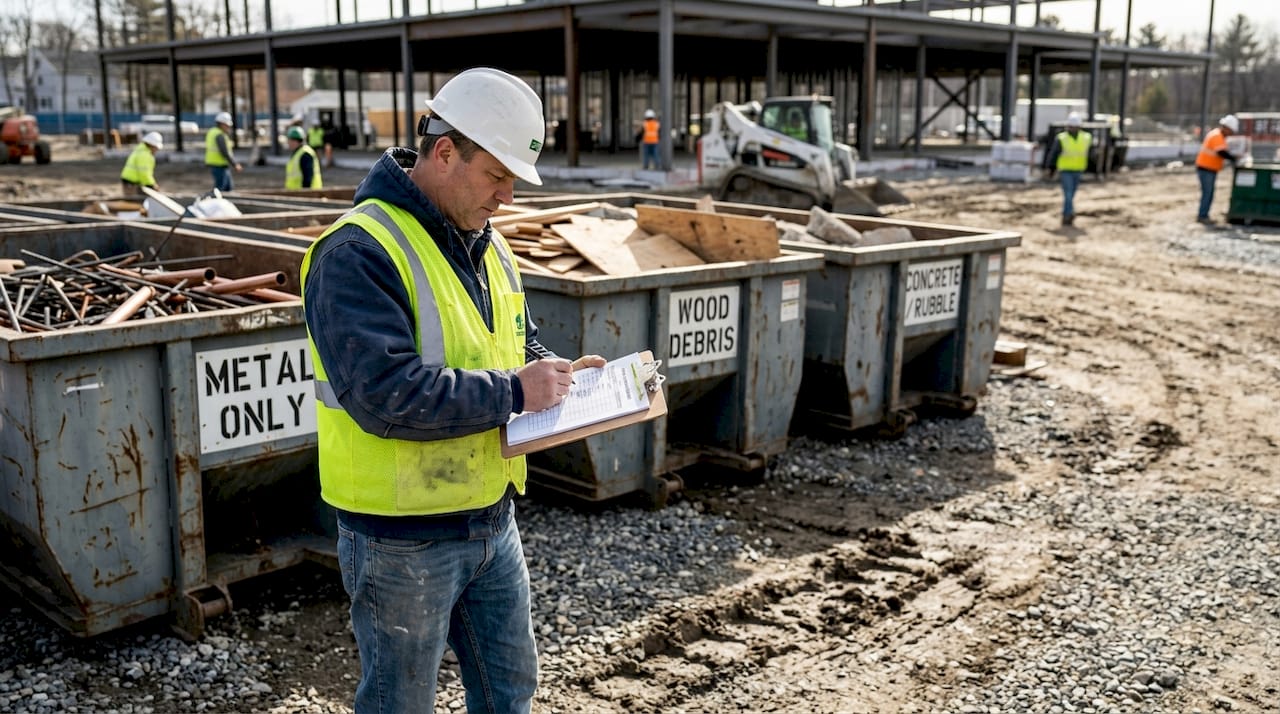
Source segregation means separating materials as they are generated, before they mix. It is the most cost-effective approach for most projects. Dedicated containers for metal, wood, concrete, and mixed materials keep loads clean and accepted at recycling facilities without surcharges.

Here is a comparison of the three main approaches:
Method | Best for | Key benefit | Key risk |
Onsite source segregation | Most project sizes | Lowest disposal cost | Requires crew discipline |
Mobile on-site crushing | Large concrete/ABC volumes | Cuts transport emissions by 75% | Equipment cost and space |
Offsite recycling (mixed load) | Small projects or fast cleanouts | Convenient and fast | Surcharge or rejection risk |
Mobile on-site crushing is worth serious consideration for projects generating large volumes of asphalt, brick, or concrete. Crushed material can often be reused as fill or base material on the same site, eliminating transport entirely.
“Source segregation yields cost savings and compliance. Recycling heavy materials like asphalt, brick, and concrete on-site with specialized dumpsters and decentralized crushing reduces both costs and emissions significantly.”
For mixed or smaller loads, cleanout crews are often more practical than managing multiple specialized dumpsters. A professional crew can sort on the fly and knows which materials go where, reducing your liability. These eco-friendly debris solutions outline how responsible haulers handle material separation to keep your project compliant.
Avoid the temptation to toss everything into one container to save time. Mixed loads that don’t meet sorting standards are subject to surcharges or outright rejection, which costs far more than sorting would have.
Comparing service options and best practices for hiring help
Choosing the right service model is as important as having the right plan. Here is how the main options stack up:
Service model | Typical cost | Compliance support | Best fit |
Professional junk removal | Moderate to high | Strong, crew handles sorting | Most contractors and PMs |
Self-haul | Low upfront | Requires your own knowledge | Small projects, experienced teams |
On-site processing | High upfront | Excellent for large volumes | Major demolition projects |
For most property managers and contractors, professional junk removal offers the best balance of compliance, speed, and accountability. The crew handles sorting, knows the facilities, and carries insurance. That last point matters more than many people realize. If a hauler dumps materials illegally, you can still be held liable if they were working on your site.
Hiring checklist for debris removal providers:
Verify they are licensed and insured in Massachusetts
Ask for documentation of where materials are taken
Check that they understand the MassDEP banned materials list
Request references from similar projects
Review the contract for language about rejected loads and surcharges
For exterior debris from landscaping or yard work connected to your project, yard clean-up examples can help you understand scope before you call for a quote. This matters because some contractors bundle exterior cleanup with demolition debris, while others treat them separately.
Understanding the reasons for debris removal beyond just compliance, including safety, site efficiency, and project timelines, helps you make a stronger case to clients for proper debris management budgets.
Why most Massachusetts projects miss out on easy savings and compliance
Here is what we see repeatedly: project teams know the rules but treat compliance as a last-minute checkbox rather than a built-in process. That mindset is expensive.
Massachusetts’ overall diversion rate hovers around 36%, far below the state’s 90% goal for 2050. That gap is not because the technology or facilities are missing. It is because most teams skip the planning step and end up with mixed loads that cost more to process or get rejected entirely.
The projects that hit high diversion targets share one habit: they sort early and communicate clearly with their haulers. A five-minute conversation at the start of a job about what goes in which container prevents hours of costly rework. Clear contracts with haulers that spell out responsibilities for rejected loads also eliminate the finger-pointing that happens when a load comes back.
These advanced debris removal tips cover the specific planning moves that separate high-performing projects from the ones that get stuck paying surcharges and scrambling for last-minute solutions.
Small adjustments, like adding one dedicated metal container or scheduling a mid-project sortout, can push your diversion rate from 40% to 70% without significant added cost. The savings from avoided surcharges and reduced disposal fees often more than cover the extra effort.
Get expert help for construction debris removal in Massachusetts
Managing construction debris in Massachusetts requires more than a dumpster and good intentions. You need a crew that knows the regulations, handles sorting correctly, and documents where every material goes.
Junk Dispatch serves contractors, property managers, and business owners across Massachusetts with insured, regulation-savvy crews ready for same-day or scheduled service. Whether you need a full demolition and junk removal package or a targeted cleanout, we handle the sorting, hauling, and compliance documentation for you. We cover areas including Reading junk removal service and Essex County junk removal. Get a free estimate online and let us take the compliance stress off your plate.
Frequently asked questions
What construction materials are banned from landfill disposal in Massachusetts?
Asphalt, brick, concrete, metal, wood, glass, plastic, cardboard, clean gypsum wallboard, mattresses, and textiles must be recycled and cannot go to landfills under Massachusetts state law.
What are the penalties for improper construction debris disposal?
Non-compliance brings fines, project delays, and potentially rejected loads if banned items are found mixed into a haul. MassDEP can also trigger mandatory audits.
How do I start a construction debris management plan?
Begin with MassDEP’s guidelines and sample templates, set your segregation and diversion targets, engage all project partners early, and document every step for compliance records.
Is source segregation always the cheapest method?
Source segregation typically saves the most money by avoiding surcharges, though costs vary by project size. Mixed loads that fail sorting standards often cost significantly more in the end.
What diversion targets should I aim for in Massachusetts?
Aim for at least 50-75% diversion to qualify for LEED points, and align your long-term practices with the state’s 90% diversion goal by 2050.
Recommended
Comments