Junk Removal Workflow for Contractors: A Step-by-Step Guide
- Joe Lusso
- Feb 5
- 7 min read

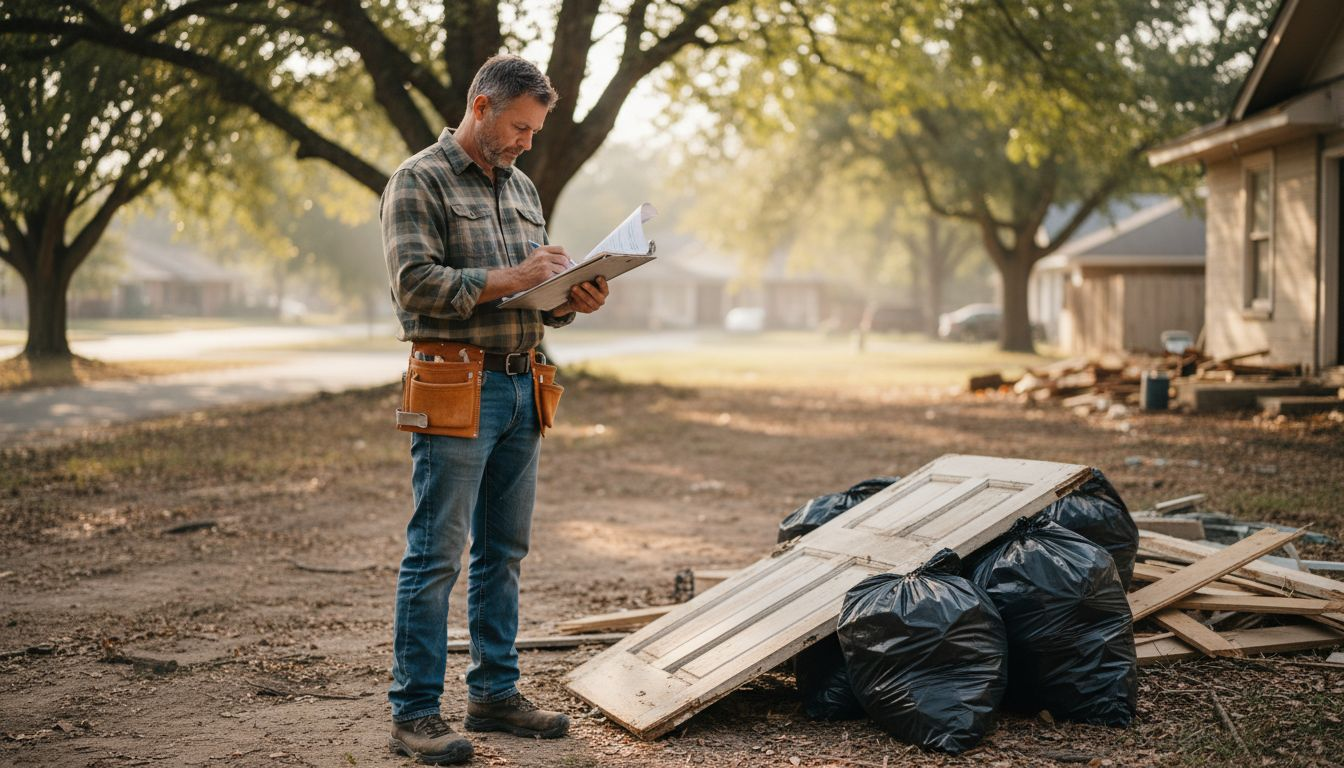
Cleanups on busy Massachusetts job sites often come down to finding the fastest way to clear construction debris while staying on budget. Contractors face constant pressure to manage diverse materials like concrete, wood, and metal, each requiring different handling and disposal methods. Getting rid of waste efficiently means coordinating schedules, sorting debris for recycling, and documenting every removal. Bold planning leads to eco-friendly disposal that not only keeps your project compliant but proves your commitment to sustainability.
Table of Contents
Quick Summary
Key Point | Explanation |
1. Conduct a Thorough Debris Assessment | Systematically categorize materials to determine appropriate disposal methods, maximizing safety and minimizing costs. |
2. Schedule Early for Accurate Estimates | Providing detailed waste generation information helps secure precise service estimates, reducing overall project costs. |
3. Implement a Structured Sorting System | Designate clear sorting zones and use color-coded systems to streamline material management and maximize recycling. |
4. Supervise Loading for Safety | Maintain supervision during loading to ensure proper handling and reduce risks of accidents and material damage. |
5. Verify Eco-Friendly Disposal Compliance | Conduct a detailed final review to confirm all materials were disposed of responsibly, supporting sustainability efforts. |
Step 1: Assess Project Needs and Debris Types
Successfully managing a junk removal project begins with a comprehensive assessment of the specific debris types and project requirements. Understanding the composition and volume of materials helps contractors plan efficient removal strategies that maximize safety and minimize environmental impact.
The first critical step involves conducting a thorough on-site debris evaluation. This means systematically categorizing materials to determine appropriate handling and disposal methods. When assessing construction debris management, contractors should focus on identifying key material types:
Concrete and masonry fragments
Wood and lumber scraps
Metal components and fixtures
Drywall and insulation materials
Mixed construction waste
Hazardous or specialized materials requiring special handling
Each debris type demands unique removal protocols. Concrete and brick materials, for instance, might be candidates for recycling, while mixed waste could require more complex sorting and disposal strategies. Contractors should document the estimated volume and weight of each material category to plan transportation and disposal logistics effectively.
Precise debris assessment reduces removal costs by 30-40% and minimizes unnecessary transportation expenses.
Professional assessment requires careful measurement and classification. Use digital tools or traditional clipboard methods to inventory materials, noting their condition, potential recyclability, and required specialized handling.
Here’s a quick reference for appropriate disposal methods by material type:
Material Type | Recommended Disposal Method | Environmental Benefit |
Concrete & Masonry | Recycling facility | Conserves raw materials |
Wood & Lumber | Mulching or reuse programs | Reduces landfill waste |
Metal Components | Scrap metal recycling | Saves energy, resources |
Drywall & Insulation | Specialized recycling center | Limits toxic emissions |
Hazardous Materials | Licensed hazardous waste site | Prevents contamination |
Mixed Construction Waste | Landfill or sorting facility | Enhances waste sorting |
Pro tip: Always photograph and document debris types before removal to maintain accurate records and support potential recycling or repurposing efforts.
Step 2: Schedule Junk Removal and Secure Estimates
Effectively scheduling junk removal requires strategic planning and proactive communication with service providers. Contractors must navigate the estimation process carefully to ensure accurate pricing and streamlined project execution.
Begin by tracking waste generation details to support precise service scheduling. Contractors should prepare the following key information before requesting an estimate:
Total estimated volume of debris
Specific material types being removed
Accessibility of removal location
Potential challenges or special handling requirements
Preferred removal date and time window
Site access details for removal team
Most junk removal services offer multiple estimation methods, including:
Online quote request forms
Phone consultations
On-site assessments for complex projects
Securing early estimates can reduce overall project removal costs by up to 25%.
Professional scheduling involves detailed communication and clear documentation. Provide service providers with comprehensive project details to receive the most accurate pricing and logistical support. Scheduling appointments early helps ensure availability and prevents potential project delays.
Pro tip: Always request written estimates from multiple service providers to compare pricing and service offerings comprehensively.
Step 3: Prepare Site and Sort Materials Efficiently
Preparing the site and sorting materials strategically is crucial for streamlining the junk removal process and maximizing recycling potential. Contractors must create a systematic approach that ensures safe, organized, and environmentally responsible material management.
Construction waste management requires careful planning and execution. Start by designating specific sorting zones on the project site with clearly marked areas for different material categories:
Recyclable metals
Wood and lumber
Concrete and masonry
Hazardous materials
General waste
Reusable materials
Implement a color-coded sorting system to help workers quickly identify and segregate different types of debris. Use sturdy containers or designated areas that prevent cross-contamination and make transportation easier.
Effective site preparation can reduce waste disposal costs by up to 40% and minimize environmental impact.
Ensure all team members understand the waste reduction protocols through brief training sessions. This includes proper handling techniques, safety considerations, and the importance of maintaining clean, organized work zones.
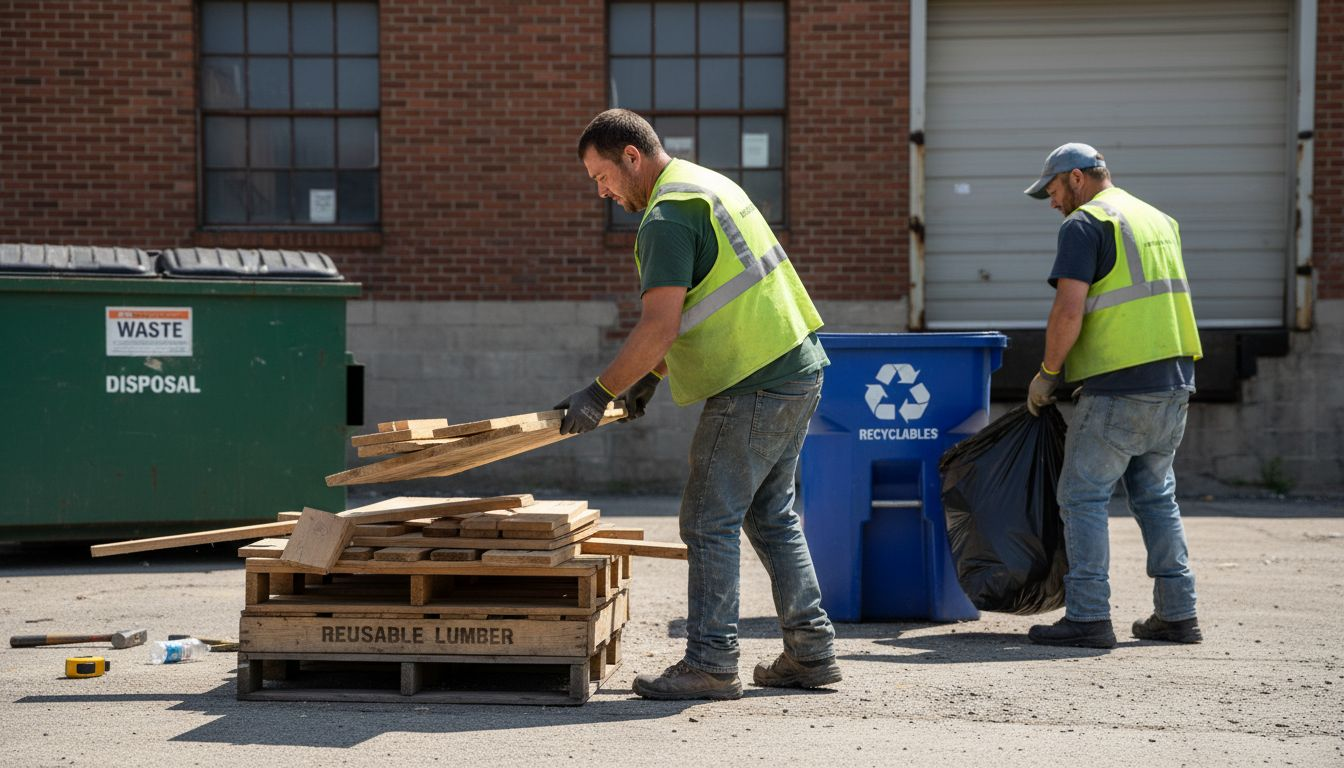
Pro tip: Take photographs of your sorted materials before removal to help track recycling efforts and maintain accurate documentation for potential tax credits or sustainability reporting.
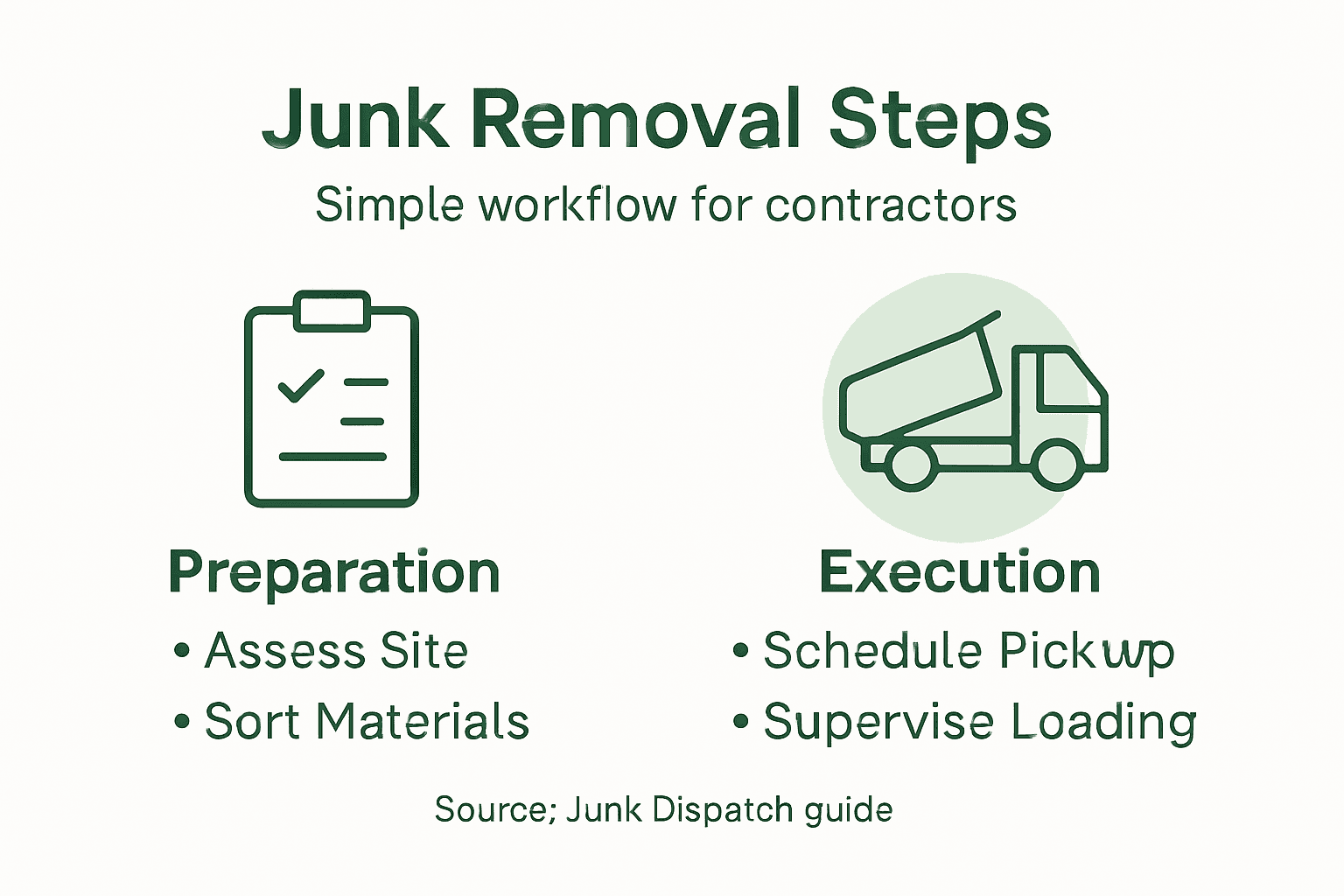
Step 4: Coordinate Pickup and Supervise Loading
Successful junk removal requires meticulous planning and expert supervision during the pickup and loading process. Contractors must ensure efficient, safe, and organized material transportation that minimizes risks and maximizes operational effectiveness.
Safe loading techniques are critical for preventing damage and ensuring workplace safety. Prepare for pickup by following these essential coordination steps:
Confirm exact pickup time with removal team
Clear access paths to loading areas
Ensure all materials are pre-sorted and staged
Have necessary equipment ready (gloves, safety gear)
Designate a primary point of contact
Prepare site access and parking instructions
During the loading process, maintain direct supervisor presence to oversee material handling. Check that workers follow proper loading protocols for weight distribution and cargo securing.
Proper loading supervision can reduce transportation risks by up to 60% and prevent potential workplace accidents.
Professional loading requires clear communication and systematic approach. Verify that heavy items are loaded first, weight is evenly distributed, and fragile materials are appropriately protected during transport.
Pro tip: Create a quick pre-loading checklist that workers can reference to ensure consistent and safe material handling during pickup.
Step 5: Verify Completion and Confirm Eco-Friendly Disposal
The final phase of junk removal involves a comprehensive verification process that ensures all materials have been properly handled, transported, and disposed of according to environmental standards. Contractors must conduct a meticulous final review to guarantee responsible waste management.
Construction waste documentation requires systematic tracking of disposal methods and environmental compliance. Implement a thorough verification process by following these critical steps:
Inspect the entire site for remaining debris
Review loading and transportation documentation
Confirm recycling and disposal receipts
Validate weight and material type records
Check compliance with local waste regulations
Verify eco-friendly disposal percentages
Ensure you obtain official waste disposal certifications that demonstrate your commitment to responsible waste management. These documents protect your business and showcase your environmental responsibility.
Proper verification can reduce environmental impact by up to 65% and minimize potential regulatory complications.
Professional verification involves more than a quick walkthrough. Collect comprehensive documentation that tracks each material from removal to final disposal, highlighting your commitment to sustainable practices.
The table below highlights how each project step can directly impact efficiency and sustainability:
Project Step | Impact on Efficiency | Impact on Sustainability |
Debris Assessment | Accurate planning, savings | Supports responsible disposal |
Estimate Scheduling | Reduces delays, cuts costs | Enables eco-friendly options |
Site Preparation & Sorting | Streamlines removal process | Maximizes recycling rates |
Loading Supervision | Prevents accidents, faster | Minimizes material damage |
Final Verification | Avoids errors, faster close | Confirms eco-compliance |
Pro tip: Create a digital folder for each project’s disposal documentation to streamline future reference and demonstrate your company’s eco-friendly approach.
Simplify Your Junk Removal Process with Trusted Local Experts
The detailed junk removal workflow outlined in the guide highlights common challenges contractors face when managing mixed debris, scheduling pickups, and ensuring eco-friendly disposal. Key pain points include accurate debris assessment, coordinating removal logistics, and maintaining sustainability standards. If these steps feel overwhelming or time-consuming, partnering with a professional service can transform your project experience.
At Junk Dispatch, we specialize in handling all types of debris from construction materials to yard waste with quick, reliable, and environmentally responsible solutions across Massachusetts. Our insured crews use efficient sorting and loading practices aligned with industry best standards, allowing you to save time and reduce project costs. From free estimates to flexible scheduling and same-day service options, we help contractors and property managers streamline their junk removal workflow effortlessly.
Experience peace of mind by choosing Junk Dispatch for your next cleanout or construction debris removal.

Ready to take the hassle out of your junk removal? Visit https://junkdispatch.com to book your service or get a free estimate today. Explore how our eco-friendly approach and professional expertise can support your project every step of the way.
Frequently Asked Questions
What are the first steps in the junk removal workflow for contractors?
To start the junk removal workflow, conduct a thorough on-site debris evaluation to assess the types and volume of materials. Categorize the debris for appropriate handling and document the estimated weight and condition of each material type to plan an efficient removal strategy.
How can I effectively schedule junk removal and secure estimates?
To ensure accurate pricing and timely service, prepare key information including the total estimated volume of debris and any specific material types for removal. Contact multiple service providers to request written estimates based on this information, helping you compare offerings and potentially save on costs.
What preparation is needed on-site before junk removal?
Prepare the site by designating sorting zones for different material categories, such as metals, wood, and hazardous materials. Use a color-coded system to streamline sorting and ensure that all team members understand the safety protocols and waste reduction techniques involved in the process.
How should I supervise the loading process during junk removal?
During loading, maintain a supervising presence to ensure proper loading techniques are followed, particularly for weight distribution and cargo securing. Confirm the access paths are clear and that all materials are pre-sorted and staged to facilitate efficient loading and transportation.
What steps should I take to verify the completion of the junk removal process?
After the removal, perform a thorough site inspection to ensure all debris has been accounted for and check all documentation for recycling and disposal methods. Validate eco-friendly disposal percentages and obtain official waste disposal certifications to demonstrate compliance with local regulations and sustainability practices.
How can I ensure responsible disposal of all debris types?
To ensure responsible disposal, categorize materials properly and utilize recommended disposal methods for each type. Keep records of all disposal documentation and confirm that recyclable materials are sent to appropriate facilities to minimize environmental impact.
Recommended
Comments