7 Construction Debris Removal Tips for 60% More Recycling in MA
- Joe Lusso
- Mar 1
- 10 min read

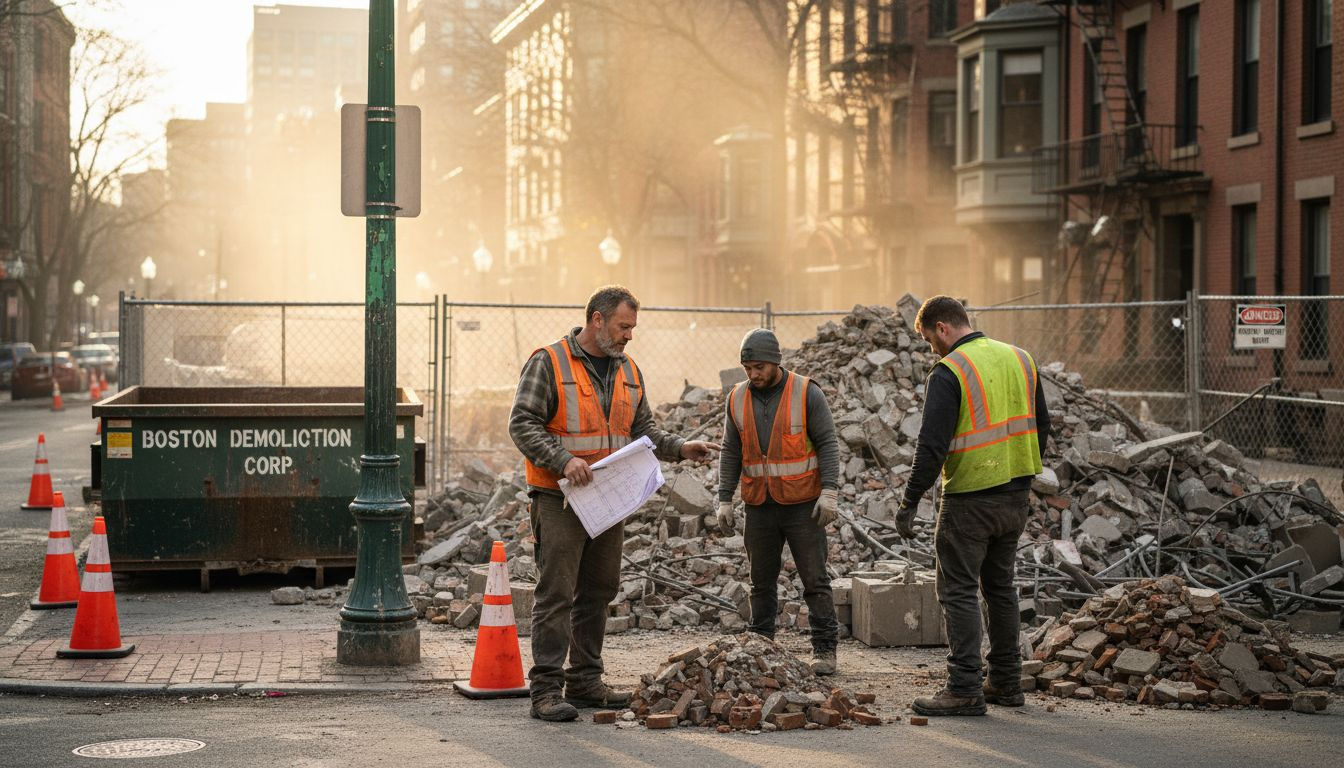
Many Massachusetts homeowners and contractors mistakenly believe they can dump construction debris anywhere, but state regulations mandate strict recycling protocols for materials like concrete, metal, and wood. Ignoring these waste bans leads to project delays, hefty fines, and missed cost savings from proper recycling. This guide delivers seven actionable tips to navigate Massachusetts construction debris removal efficiently, ensuring compliance with MassDEP rules while maximizing environmental benefits and minimizing disposal expenses.
Table of Contents
Selection Criteria For Choosing Construction Debris Removal Strategies
Massachusetts Construction Debris Regulations And Waste Bans
Sorting And Material Segregation Tips For Effective Recycling
Service Options And Cost Considerations For Debris Removal In Massachusetts
Safety And Environmental Best Practices During Debris Removal
Situational Recommendations: Choosing The Right Debris Removal Approach
Explore Efficient Construction Debris Removal Services In Massachusetts
Frequently Asked Questions About Construction Debris Removal In Massachusetts
Key Takeaways
Point | Details |
Massachusetts enforces strict waste bans | Materials like asphalt, brick, concrete, metal, wood, and gypsum cannot enter landfills and must be recycled. |
Advance notification is legally required | MassDEP mandates at least 10 working days notice for asbestos removal and large demolition projects via AQ 06 form. |
Onsite sorting boosts recycling rates | Proper material segregation before pickup can increase recycling by 60% and cut disposal costs significantly. |
Licensed services ensure compliance | Working with insured, certified haulers guarantees adherence to state regulations and safer debris removal. |
Service options vary by project scale | Same-day removal suits small renovations while scheduled pickups fit large commercial demolition work. |
Selection Criteria for Choosing Construction Debris Removal Strategies
Choosing the right debris removal strategy starts with understanding Massachusetts-specific priorities. Regulatory compliance tops the list since MassDEP waste bans prohibit common materials from entering landfills, making recycling non-negotiable.
Recycling capabilities directly impact your bottom line. Services that separate concrete, metal, and wood reduce landfill fees and qualify for lower disposal rates. Licensed junk removal teams ensure regulatory compliance and higher recycling rates, protecting you from violations.
Scheduling flexibility matters for tight renovation timelines. Same-day pickup works for small residential projects, while larger commercial demolitions benefit from advance scheduling with bulk haulers. Transparent pricing prevents budget surprises, so demand upfront estimates that detail per-volume costs and any surcharges for special materials.
Debris type and volume guide method selection. A kitchen remodel generates less waste than a full commercial teardown, requiring different service levels. Environmental impact should align with Massachusetts sustainability goals since proper recycling diverts tons of material from landfills annually.
Key selection factors:
Verify provider licensing and insurance coverage
Confirm recycling partnerships and diversion rates
Compare pricing models for your project size
Check availability for your timeline
Assess environmental commitment and certifications
Pro Tip: Request a site visit from potential haulers to get accurate volume estimates. Photos and verbal descriptions often underestimate debris quantities, leading to cost overruns and scheduling conflicts.
Massachusetts Construction Debris Regulations and Waste Bans
Massachusetts law bans six major construction materials from landfills: asphalt pavement, brick, concrete, metal, wood, and gypsum wallboard. These construction and demolition waste bans exist because these materials have high recycling value and diverting them conserves landfill capacity.
MassDEP requires at least 10 working days notification before demolition or asbestos removal projects. You must submit the AQ 06 form through the state’s online portal, providing project details, start dates, and debris estimates. Missing this deadline halts your project and triggers enforcement action.
Compliance prevents costly delays. Inspectors can stop work immediately if they discover banned materials heading to landfills or missing notifications for asbestos handling. Fines escalate quickly, often exceeding the cost of proper disposal.
Notification applies to projects removing load-bearing walls, entire structures, or any asbestos-containing materials regardless of quantity. Even small amounts of asbestos friable material trigger notification requirements due to health hazards. The AQ 06 process includes safety plan submission and waste destination documentation.
Regulatory compliance checklist:
Identify all banned materials in your debris stream
File AQ 06 form 10+ working days before demolition starts
Arrange certified asbestos contractors for suspect materials
Document recycling facility destinations for banned items
Keep disposal receipts for two years minimum
Understanding Massachusetts junk removal regulations before starting work saves headaches. State rules exist to protect public health and environment, making compliance both a legal duty and community responsibility.
Sorting and Material Segregation Tips for Effective Recycling
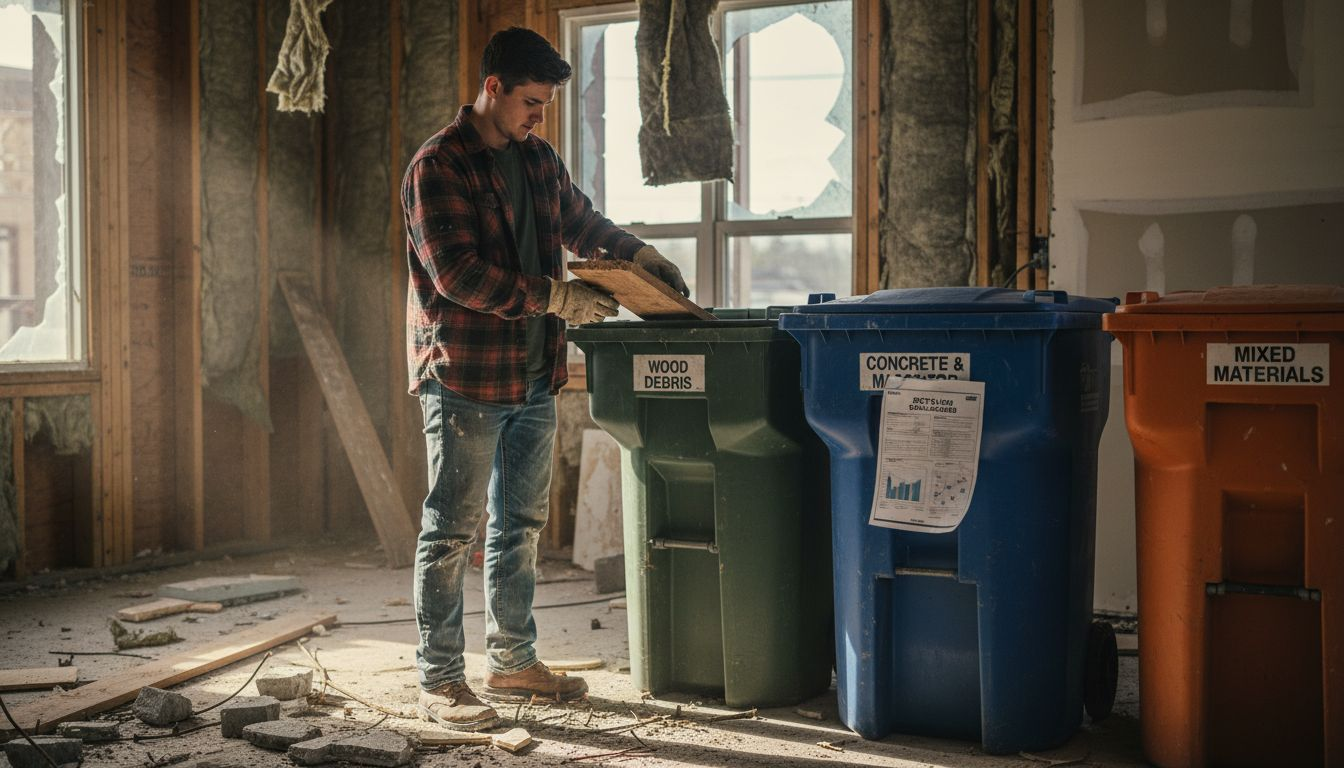
Effective recycling begins at the job site with proper sorting. Identifying banned materials early prevents contamination and ensures each stream reaches appropriate recycling facilities. Concrete, metals, clean wood, drywall, and asphalt pavement should occupy separate collection areas.
Onsite sorting dramatically increases recycling efficiency. Studies show properly segregated debris achieves 60% to 80% diversion rates compared to 30% for mixed loads. This reduction in landfill volume translates directly to lower tipping fees since recycling facilities charge less than landfills for source-separated materials.
Using recycling calculators can reduce waste planning errors by up to 20%, helping you size dumpsters correctly and budget accurately. These tools factor in material densities and project types to estimate volumes before work begins.
Segregation requires planning before demolition starts. Designate separate areas or containers for concrete/masonry, metals, dimensional lumber, drywall, and contaminated materials. Label each station clearly so all workers understand the system. Mixed loads cost more to process and may be rejected by recyclers entirely.
On-site versus off-site sorting presents trade-offs. Job site separation requires more space and worker training but maximizes recycling value. Off-site processing at transfer stations handles separation for you but reduces control over diversion rates and typically costs more per ton.
Worker education prevents mixing. Brief crews on what goes where, emphasizing that clean streams bring better recycling payments. A five-minute daily reminder maintains sorting discipline throughout long projects.
Effective sorting practices:
Create designated zones with clear signage for each material type
Remove obvious contaminants like nails from wood before binning
Keep treated lumber separate from clean dimensional wood
Crush or break concrete to maximize container space
Store metals in weather-protected areas to prevent rust contamination
Pro Tip: Place sorting stations near natural workflow paths. Positioning a metal bin next to where you’re removing fixtures encourages proper disposal instead of workers tossing everything into the nearest container.
For homeowners managing smaller renovations, sorting and recycling tips for Massachusetts homes and yard waste removal tips provide additional guidance for residential debris streams.
Service Options and Cost Considerations for Debris Removal in Massachusetts
Massachusetts offers multiple debris removal service models, each suited to different project scales and budgets. Same-day junk removal provides convenience for small residential renovations, hauling away mixed debris loads quickly without requiring advance scheduling. This flexibility comes at a premium per cubic yard compared to scheduled services.
Scheduled pickups with licensed haulers suit medium to large projects. You arrange specific dates for dumpster delivery and removal, allowing time to fill containers as work progresses. This model offers better per-volume pricing and ensures compliance since reputable haulers maintain recycling partnerships and proper disposal documentation.
Self-hauling with onsite sorting maximizes recycling revenue potential but demands significant labor and knowledge. You transport separated materials directly to recycling facilities, earning rebates for clean metal and aggregate loads. This approach works best for contractors with trucks and experience navigating facility requirements.
Same-day junk removal offers speed but can cost more per volume, while scheduled pickups suit large projects and offer better rates. Pricing varies by debris volume measured in cubic yards or tons, material type affecting disposal fees, service urgency with same-day commanding premiums, and provider licensing impacting insurance and compliance costs.
Licensing and insurance protect you from liability. Unlicensed haulers may dump illegally, leaving you responsible for cleanup costs and fines. Verify workers compensation coverage since debris removal involves injury risks.
Online booking and transparent estimates improve planning. Services providing instant quotes based on photos or descriptions eliminate scheduling delays. Clear itemization showing labor, transportation, disposal fees, and recycling credits helps you compare providers accurately.
Service comparison by project type:
Service Type | Best For | Typical Cost Range | Key Benefits |
Same-day junk removal | Small renovations under 10 cubic yards | Higher per yard | Immediate availability, no planning needed |
Scheduled dumpster rental | Medium to large projects 10-40 yards | Mid-range rates | Flexible fill time, better pricing |
Self-haul with sorting | Commercial demolition with high volumes | Lowest with rebates | Maximum recycling control, potential revenue |
Full-service licensed hauler | All project sizes needing compliance | Premium pricing | Complete regulatory compliance, insured crews |
Cost factors to evaluate:
Volume-based pricing versus weight-based fees
Distance to disposal facilities affecting fuel surcharges
Material type with hazardous requiring special handling
Access difficulty if tight spaces require hand loading
Recycling credits offsetting disposal costs
Understanding junk removal pricing models in Massachusetts helps you budget accurately and avoid providers hiding fees in fine print.
Safety and Environmental Best Practices during Debris Removal
Safety protocols protect workers and neighbors throughout debris removal. Massachusetts building codes require utilities be disconnected and capped before demolition to ensure safety. Gas lines, electrical service, and water mains must be shut off by licensed professionals before any structural work begins.
Asbestos demands specialized attention. Asbestos projects require special handling and notifications to avoid health hazards. Homes built before 1980 likely contain asbestos in insulation, floor tiles, or siding. Testing suspect materials before disturbance prevents dangerous fiber release.
Dust control protects air quality. Wetting debris before loading, using tarps during transport, and scheduling work during low-wind periods minimizes airborne particulates. Neighbors appreciate these courtesies, and local ordinances often mandate dust suppression on large projects.
Contamination prevention keeps recyclables clean. Oil-soaked wood, paint-covered metal, or debris mixed with household trash loses recycling value. Storing materials under cover prevents rain from leaching contaminants into soil.
Following Massachusetts environmental codes minimizes ecological harm. Proper stormwater management prevents sediment runoff during demolition. Protecting trees and landscaping outside the work zone maintains property value and complies with local conservation bylaws.
Working with licensed junk removal teams for safety ensures crews follow OSHA standards. Insured professionals carry proper equipment like stabilization jacks, dust masks, and cut-resistant gloves. Their training reduces accident risk significantly compared to DIY approaches.
Essential safety practices:
Complete asbestos and lead paint testing before starting
Establish exclusion zones keeping unauthorized people away
Provide personal protective equipment for all workers
Secure debris piles preventing collapse or shifting
Post emergency contact numbers visibly at the site
Situational Recommendations: Choosing the Right Debris Removal Approach
Project specifics dictate optimal removal strategies. Small renovations generating under 10 cubic yards benefit most from quick, flexible same-day junk removal services. A bathroom remodel or kitchen cabinet replacement fits this category, where speed matters more than per-yard cost optimization.
Large commercial or whole-house demolition projects demand licensed hauling with scheduled pickups and professional sorting. These jobs generate 20 to 100 cubic yards or more, making dumpster rental with extended fill periods essential. The volume justifies investing time in proper segregation for maximum recycling and minimum disposal fees.
Projects involving hazardous materials like asbestos, lead paint, or contaminated soil require specialized disposal regardless of volume. Regulatory compliance and health protection trump cost considerations. Partner only with certified hazmat contractors holding proper permits and insurance.
Eco-conscious homeowners should maximize recycling through onsite sorting and leveraging RecyclingWorks MA technical assistance. This free state program helps identify recycling facilities, optimize waste reduction, and potentially qualify for green building certifications that increase property value.
Tailored approach selection:
Assess total debris volume using online calculators or professional estimates
Identify hazardous materials requiring special handling through testing
Evaluate timeline constraints and whether same-day removal justifies premium pricing
Calculate potential recycling savings against sorting labor costs
Verify contractor licensing, insurance, and recycling partnerships
Compare detailed quotes from multiple providers including all fees
Schedule services matching your project milestones and cleanup needs
Contractors should review debris removal recommendations for contractors to understand efficiency strategies across multiple job sites. Establishing relationships with reliable haulers streamlines operations and improves client satisfaction.
Summary Comparison of Construction Debris Removal Tips
Consolidating the article’s guidance into an actionable reference helps decision-making. This comparison synthesizes sorting methods, service options, regulatory requirements, and environmental outcomes for Massachusetts construction projects.
Category | Approach | Recycling Rate | Compliance Level | Cost Efficiency | Best Project Type |
Sorting Method | Onsite segregation | 60-80% | High with proper bins | Best for volume | All sizes with space |
Sorting Method | Mixed loads to transfer station | 30-50% | Medium, depends on facility | Moderate fees | Small jobs lacking space |
Service Model | Same-day junk removal | 40-60% | High with licensed provider | Premium per yard | Residential under 10 yards |
Service Model | Scheduled dumpster rental | 50-70% | High if sorted | Good value | Medium 10-40 yards |
Service Model | Self-haul with sorting | 70-90% | Requires knowledge | Lowest with effort | Commercial with resources |
Regulatory | AQ 06 notification filed | N/A | Mandatory for qualifying projects | Avoids fines | Demolition or asbestos work |
Regulatory | Banned material recycling | 100% for those items | Legally required | Saves landfill fees | All Massachusetts projects |
Environmental | Maximized material recovery | 70-85% | Exceeds minimums | Long-term savings | Eco-focused projects |
Environmental | Basic compliance only | 40-55% | Meets minimums | Standard costs | Budget-constrained work |
This table clarifies how choices in sorting, service selection, and regulatory adherence affect both recycling outcomes and project costs. Higher upfront investment in proper segregation typically reduces total disposal expenses while ensuring compliance.
Explore Efficient Construction Debris Removal Services in Massachusetts
Implementing these seven tips becomes simpler when you partner with experienced professionals. Junk Dispatch provides licensed, insured construction debris removal services tailored for Massachusetts homeowners and contractors navigating state regulations. Our crews understand MassDEP requirements, maximize recycling through established facility partnerships, and offer transparent pricing with convenient online booking.

Whether you’re managing a small residential renovation or coordinating large commercial demolition, our same-day availability and flexible scheduling support your timeline. We serve communities throughout Massachusetts, including specialized Essex County junk removal services and Reading, MA junk removal services, ensuring local expertise for your project’s unique needs. Get a free estimate today and experience hassle-free debris removal that prioritizes compliance, efficiency, and environmental responsibility.
Frequently Asked Questions about Construction Debris Removal in Massachusetts
When do I need to notify MassDEP before starting debris removal?
Notification is required for demolition projects involving structures over certain sizes and any asbestos removal regardless of quantity. You must submit the AQ 06 form via MassDEP’s online system at least 10 working days before work starts. Missing this deadline can halt your project and result in enforcement action.
Why is sorting debris onsite important for compliance and cost?
Sorting removes banned materials from landfill streams, ensuring you meet Massachusetts regulatory requirements. Proper segregation increases recycling rates by 30% to 50%, directly reducing disposal costs since recycling facilities charge lower tipping fees than landfills for source-separated loads.
How should I handle asbestos-containing construction debris?
Hire licensed asbestos abatement professionals who follow state protocols for containment, removal, and disposal. File required notifications to MassDEP and ensure contractors provide proper documentation of legal disposal at approved facilities. Never attempt DIY asbestos removal due to serious health risks.
Where can I find Massachusetts facilities that recycle construction debris?
Use resources like RecyclingWorks MA and MassDEP facility lists to locate certified recycling centers accepting specific C&D materials. Many licensed junk removal services maintain partnerships with these facilities, simplifying the process. Contact facilities directly to confirm accepted materials and any preparation requirements.
What factors influence the cost of construction debris removal services?
Cost depends on debris volume measured in cubic yards, material type with hazardous requiring premium handling, service urgency since same-day commands higher rates, and provider licensing affecting insurance overhead. Transparent upfront pricing that itemizes these factors helps you budget accurately and compare providers fairly without hidden fees surprising you later.
Recommended
Comments