7 construction debris disposal tips for 60% more recycling in MA
- Joe Lusso
- Mar 4
- 12 min read

Managing construction debris effectively in Massachusetts means navigating complex regulations while maximizing recycling opportunities. The state’s waste bans and environmental mandates create challenges, but they also open doors to cost savings and eco-friendly practices. Whether you’re a homeowner tackling a renovation or a contractor managing multiple projects, understanding your disposal options helps you stay compliant, reduce costs, and protect the environment. This guide provides practical tips tailored specifically for Massachusetts residents and contractors.
Table of Contents
Key takeaways
Point | Details |
Massachusetts waste bans | The state prohibits landfill disposal of wood, metal, concrete, asphalt, drywall, and brick to promote recycling. |
On-site sorting benefits | Separating materials on-site can increase recycling rates by 60% and dramatically reduce landfill waste. |
Professional removal costs | Services range from $150 to $700 per cubic yard depending on material types and recycling options. |
Hazardous waste handling | Treated wood and contaminated materials require separate disposal through certified facilities. |
Pre-construction planning | Developing waste management plans before starting projects improves compliance and reduces overall waste volume. |
Selection criteria for construction debris disposal methods
Choosing the right disposal method starts with understanding five critical factors that shape your decision. These criteria serve as your framework for evaluating every option, from municipal recycling to professional removal services.
First, regulatory compliance is the most important selection factor to avoid fines and delays. Massachusetts enforces strict waste bans that directly impact how you handle construction materials. Ignoring these rules leads to penalties and project disruptions.
Environmental impact comes second. Maximizing recycling and minimizing landfill use isn’t just good ethics; it’s increasingly required by law. The state’s push toward circular economy practices means you need disposal methods that support material recovery.
Cost and availability of local services vary significantly across Massachusetts. Urban areas like Boston offer more recycling options than rural communities. Understanding what’s accessible in your specific location affects both your budget and timeline.
Project size and timeline influence feasibility. A small bathroom remodel requires different strategies than a commercial demolition. Same-day removal might be essential for tight schedules, while longer projects allow for gradual material sorting.
Finally, hazardous or treated materials demand special attention. Lead paint debris, asbestos, and pressure-treated lumber can’t mix with regular construction waste. Identifying these materials early prevents contamination and compliance issues.
Pro Tip: Create a waste inventory before starting any project. List expected debris types and volumes to identify which materials need special handling and which qualify for standard recycling.
For comprehensive guidance on handling different debris types, check out our construction debris removal tips tailored for Massachusetts projects. Understanding Massachusetts waste disposal regulations early saves time and money.
Understanding Massachusetts regulations and waste bans
Massachusetts takes construction debris seriously. The state implemented comprehensive waste bans to reduce landfill burden and promote recycling. Massachusetts bans disposal of key C&D debris materials including wood, gypsum drywall, concrete, asphalt, metal, and brick through standard trash collection or landfill delivery.
These bans didn’t appear overnight. The state phased them in based on material recyclability and environmental impact. Wood and metal bans came first, followed by concrete and asphalt. Drywall joined the list more recently as recycling infrastructure expanded.
The rationale centers on landfill space preservation and resource conservation. Construction debris historically consumed massive landfill capacity. By mandating recycling, Massachusetts extends landfill lifespans while creating markets for recovered materials. Recycled concrete becomes aggregate for new projects. Reclaimed wood finds new life in manufacturing or energy production.
Treated wood and hazardous materials face stricter rules. Pressure-treated lumber, lead paint debris, and asbestos require specialized disposal through certified facilities. You can’t simply deliver these materials to standard recycling centers. They need separate handling to prevent environmental contamination and health risks.
The state enforces these bans through inspections and penalties. Violations can result in fines ranging from hundreds to thousands of dollars depending on severity and repeat offenses.
Early compliance planning proves essential. Before demolition or renovation begins, identify which materials fall under waste bans. Map out disposal routes for each material type. This preparation prevents last-minute scrambling and potential violations.
Small renovations face the same rules as large commercial projects. A homeowner replacing kitchen cabinets must properly dispose of wood waste just like a contractor demolishing an entire building. The scale differs, but compliance requirements remain consistent.
Learn more about navigating the Massachusetts C&D waste ban and access the official Massachusetts construction debris waste ban FAQ for detailed guidance.
Eco-friendly construction debris disposal and recycling options
Massachusetts offers robust recycling infrastructure for construction materials. Taking advantage of these options helps you comply with regulations while supporting environmental sustainability.
RecyclingWorks provides over 100 local recycling and hauling vendors specializing in construction materials such as wood, metal, gypsum, and concrete. This state-supported program maintains a searchable directory connecting you with certified recyclers in your area. Whether you’re in Worcester or Cape Cod, you’ll find service providers equipped to handle banned materials.
Commonly recycled materials include clean wood framing and trim, which processors convert into mulch, animal bedding, or biomass fuel. Metal components like copper piping, steel beams, and aluminum siding head to scrap yards for reprocessing. Concrete and asphalt rubble becomes crushed aggregate for road base or new concrete mixes. Even drywall finds new purpose as agricultural soil amendment after processing removes paper backing.
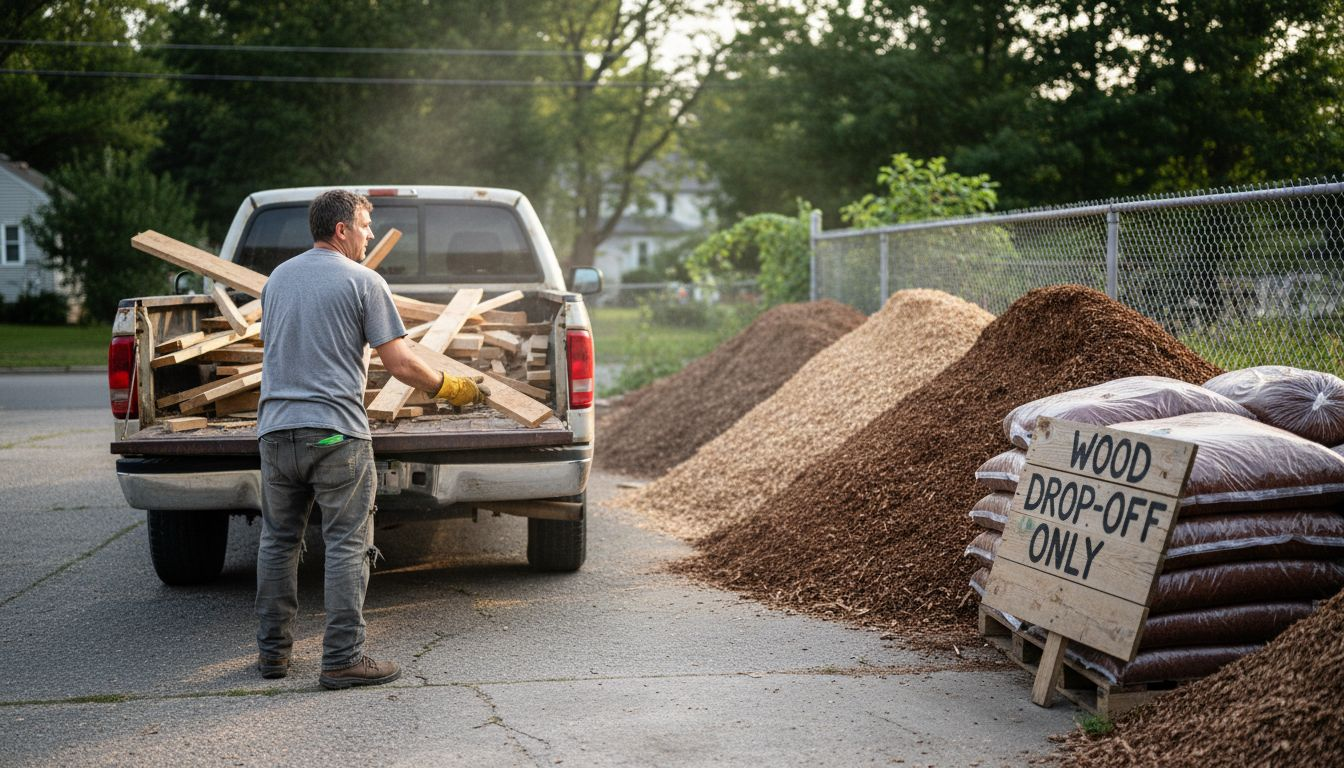
Environmental benefits extend beyond landfill diversion. Recycling construction debris conserves natural resources by reducing demand for virgin materials. It cuts greenhouse gas emissions associated with manufacturing new products. Energy consumption drops when recycled content replaces raw material extraction and processing.
Projects that implement effective sorting and recycling typically divert 60 to 80 percent of debris from landfills. This dramatic reduction demonstrates how proper planning transforms waste streams into resource recovery opportunities.
The economic impact matters too. Massachusetts recycling facilities employ hundreds of workers and contribute millions to the local economy. Using these services keeps money circulating within communities while building sustainable business models.
State programs actively support recycling adoption. RecyclingWorks offers free technical assistance to help you develop waste management plans. They provide waste assessments and connect you with appropriate service providers. This guidance proves especially valuable for first-time renovators or contractors expanding into new material types.
For professional assistance with eco-conscious disposal, explore eco-friendly junk removal solutions available across Massachusetts. The RecyclingWorks vendor directory helps you locate certified recyclers near your project site.
Effective sorting and preparation of debris on-site
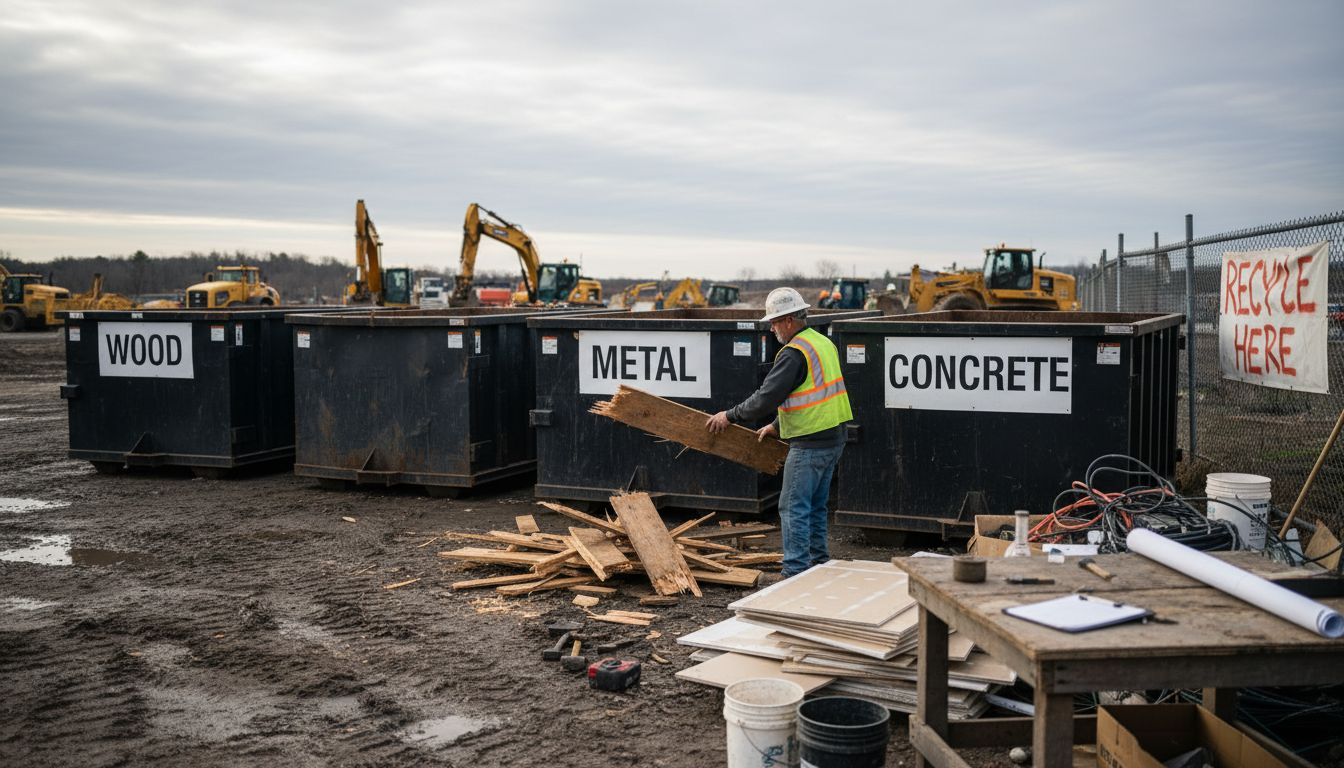
Proper on-site sorting forms the foundation of successful debris recycling. Massachusetts DEP recommends separating wood, metal, concrete, drywall, and asphalt rubble on-site to maximize recycling and minimize landfill disposal. This practice dramatically increases recycling rates while reducing contamination that renders materials unrecyclable.
Follow these steps for effective debris sorting:
Designate separate zones or containers for each major material category before demolition begins.
Train all crew members on sorting protocols and material identification to ensure consistent separation.
Remove obvious contaminants like nails from wood or drywall paper from gypsum as materials accumulate.
Keep hazardous materials completely isolated in clearly marked containers away from recyclable debris.
Monitor containers throughout the project to catch and correct sorting errors before contamination spreads.
Schedule pickups or deliveries based on container fill rates to maintain organized work areas.
Pre-construction waste management plans reduce total debris volume by 20 to 30 percent. Planning material purchases carefully minimizes offcuts and excess. Deconstructing instead of demolishing preserves more materials in reusable condition. These strategies shrink disposal costs while supporting sustainability goals.
Separate containers prove worth the investment. Using distinct dumpsters or clearly marked zones for wood, metal, and concrete prevents mixing that disqualifies materials from recycling. The small added rental cost pays off through lower disposal fees and higher recycling rates.
Contamination kills recycling opportunities. A single bucket of paint-contaminated wood can render an entire load unrecyclable. Similarly, drywall mixed with wood creates processing problems for recyclers. Vigilant sorting from the start prevents these costly mistakes.
Pro Tip: Take photos of properly sorted containers and share them with your crew as visual references. This simple step improves consistency and reduces sorting errors throughout long projects.
Volume reduction through good sorting saves money directly. Recycling facilities charge less than landfills for accepted materials. Some even pay for clean metal loads. Maximizing recyclable content minimizes expensive landfill disposal.
Find additional strategies in our junk removal tips for Massachusetts homes and review official on-site debris sorting guidelines from Massachusetts DEP.
Comparison of disposal costs and service options
Understanding cost structures helps you budget effectively while choosing disposal methods that balance price, convenience, and environmental responsibility. Cost for professional debris removal in Massachusetts ranges between $150 and $700 per cubic yard depending on services and recycling inclusion.
Disposal Method | Typical Cost | Convenience | Environmental Impact | Best For |
Landfill disposal | $50-$150/cubic yard | Low (banned materials rejected) | High negative impact | Very limited use due to bans |
Recycling facility drop-off | $30-$100/cubic yard | Medium (requires transport) | Positive impact | Small projects with vehicle access |
Professional removal service | $150-$700/cubic yard | High (full service pickup) | Positive with eco-focused providers | All project sizes, especially large jobs |
Municipal recycling programs | Free to $50/cubic yard | Medium (limited hours/materials) | Positive impact | Small residential projects |
Several factors influence final costs. Material type matters significantly because metals command recycling value while mixed debris costs more to process. Volume affects pricing since larger loads qualify for volume discounts. Geographic location within Massachusetts creates price variations based on facility proximity and local market rates.
Service features justify price differences. Same-day pickup adds convenience for tight project schedules. Insured crews protect you from liability during removal. Eco-conscious providers invest in maximizing recycling rates, which may cost slightly more upfront but delivers environmental benefits.
Landfill disposal faces severe restrictions beyond just banned materials. Many facilities now refuse construction debris entirely or charge premium rates to discourage its disposal. These limitations make landfill options increasingly impractical regardless of price.
Recycling benefits extend beyond compliance. Lower environmental impact aligns with green building certifications and corporate sustainability goals. Supporting local recycling infrastructure strengthens Massachusetts’s circular economy. These factors add value beyond simple cost comparisons.
Small projects often benefit from municipal programs or self-haul to recycling facilities. A bathroom renovation generating two cubic yards of debris might cost $100 for facility drop-off versus $300 for professional removal. DIY transport saves money when you have vehicle access and time flexibility.
Large projects justify professional services. A whole-house renovation generating 20 cubic yards makes self-hauling impractical. Professional removal at $400 per cubic yard totals $8,000 but includes labor, transport, proper sorting, and compliance documentation. This comprehensive service prevents headaches and ensures regulatory adherence.
Explore junk removal service options for contractors and compare detailed construction debris removal costs and options to inform your decision.
Handling hazardous and special construction waste
Hazardous construction debris demands careful identification and specialized disposal. Treated wood and hazardous waste require separate handling and disposal through certified facilities to comply with Massachusetts regulations.
Hazardous construction materials include pressure-treated lumber containing arsenic or copper compounds, lead-based paint debris, asbestos insulation or siding, contaminated soil, and chemical residues from solvents or adhesives. These materials pose health risks during handling and environmental threats if improperly disposed.
Massachusetts mandates separate disposal pathways for hazardous waste. You cannot mix treated wood with clean lumber destined for recycling. Asbestos requires licensed abatement contractors and special containment. Lead paint debris needs handling under EPA renovation rules.
Improper disposal carries serious consequences. Fines start at several thousand dollars and escalate for repeat violations. Environmental contamination triggers cleanup liability that can reach tens of thousands. Health exposure creates worker compensation claims and potential legal action.
Identifying hazardous materials before work begins prevents accidental mixing. Homes built before 1978 likely contain lead paint. Decks and fences often use pressure-treated wood. Older buildings may have asbestos in various locations. Professional testing confirms presence when visual inspection leaves doubt.
Key practices for hazardous waste management:
Conduct hazardous material surveys before demolition using certified inspectors for suspect materials
Isolate hazardous debris in sealed containers marked with clear warning labels
Never attempt DIY removal of asbestos or extensive lead paint without proper training and equipment
Use certified hazardous waste haulers with proper licensing and insurance coverage
Maintain detailed disposal records including manifests and facility receipts for compliance documentation
Train crews on identification and safe handling protocols specific to your project materials
Certified hazardous waste removal services cost more than standard debris disposal but provide essential protections. These specialists have proper equipment, training, and insurance. They follow strict protocols that protect workers and the environment while ensuring regulatory compliance.
Documentation proves crucial for hazardous waste disposal. Keep copies of disposal manifests, facility receipts, and contractor licenses. This paperwork demonstrates compliance if questions arise during inspections or project closeout.
For guidance on safe handling practices, review our construction debris hazardous waste handling resources and consult official hazardous construction waste guidelines.
Summary comparison and situational recommendations
Consolidating disposal options into clear comparisons helps you make informed decisions based on your specific project needs.
Factor | DIY Recycling Drop-Off | Municipal Programs | Professional Removal |
Compliance with bans | High if materials properly sorted | High for accepted materials | Highest with reputable providers |
Environmental impact | Positive with proper facility selection | Positive for participating materials | Most positive with eco-focused services |
Cost for small projects | $30-$100/cubic yard plus transport | Free to $50/cubic yard | $150-$300/cubic yard |
Cost for large projects | Time-intensive, limited by vehicle capacity | Not practical for volume | $400-$700/cubic yard, full service |
Convenience | Low to medium | Low to medium | Highest |
Hazardous waste capability | No | No | Yes with certified providers |
Homeowner recommendations for small projects:
Use municipal recycling programs for clean, separated materials under two cubic yards
Self-haul to recycling facilities when you have appropriate vehicle access and flexible timing
Budget $100 to $300 total for typical bathroom or kitchen cabinet disposal
Hire certified specialists for any hazardous materials regardless of project size
Combine debris removal with other errands to maximize transport efficiency
Contractor strategies for large projects:
Develop pre-construction waste management plans that identify disposal routes for all material types
Invest in multiple on-site containers to maintain separation throughout demolition and construction phases
Establish relationships with reliable removal services offering volume discounts and consistent scheduling
Train crews thoroughly on sorting protocols to maximize recycling rates and minimize disposal costs
Factor disposal costs into project bids at $400 to $600 per cubic yard for accurate pricing
Hazardous material handling applies equally to all project sizes. Never compromise on proper disposal of treated wood, lead paint debris, or asbestos. The risks far outweigh any potential cost savings from improper handling.
Quick decision checklist:
Project under three cubic yards with clean materials? Consider self-haul or municipal programs
Project over five cubic yards or mixed materials? Professional removal makes sense
Any hazardous materials present? Hire certified specialists immediately
Tight timeline or limited labor? Professional service provides fastest solution
Maximum recycling priority? Choose providers with documented eco-friendly practices
For detailed guidance tailored to your situation, explore our construction debris removal tips summary, contractor disposal recommendations, and homeowner disposal recommendations.
Streamline your construction debris disposal with Junk Dispatch
Navigating Massachusetts construction debris regulations and recycling options takes time and expertise. Junk Dispatch eliminates the complexity with professional removal services designed specifically for compliance and sustainability.
Our specialized construction debris removal service in Massachusetts handles everything from small renovation cleanouts to large demolition projects. We sort materials on-site, maximize recycling rates, and ensure proper disposal of all debris types according to state waste bans.

Our insured crews provide same-day service across key Massachusetts regions. Whether you’re managing a project in Reading or anywhere in Essex County, we deliver reliable debris removal that keeps your timeline on track. We handle the logistics while you focus on construction.
Transparent pricing and free estimates remove budget uncertainty. Our eco-friendly approach diverts maximum debris from landfills while maintaining full regulatory compliance. Local homeowners and contractors trust us to handle construction waste efficiently and responsibly.
Ready to simplify your debris disposal? Contact junk removal services in Reading, MA or explore junk removal services in Essex County to schedule your construction debris removal today.
Frequently asked questions about construction debris disposal in Massachusetts
What construction materials are banned from Massachusetts landfills?
Massachusetts prohibits landfill disposal of wood, metal, concrete, asphalt pavement, brick, and gypsum drywall. These materials must go to recycling facilities instead. The bans apply to all construction and demolition projects regardless of size.
How do I find recycling facilities that accept construction debris near me?
RecyclingWorks Massachusetts maintains a comprehensive online directory of certified recycling and hauling vendors organized by material type and location. You can search by your city or zip code to find facilities accepting specific debris types. Most urban areas offer multiple options while rural communities may require longer transport distances.
What’s the safest way to handle pressure-treated wood and lead paint debris?
Pressure-treated lumber and lead paint debris require disposal through licensed hazardous waste facilities. Never burn treated wood or mix it with clean lumber for recycling. For significant quantities or asbestos concerns, hire certified abatement contractors who have proper equipment and training. Document all hazardous waste disposal with manifests and receipts.
Can I reduce construction debris disposal costs without breaking regulations?
Yes, by implementing on-site sorting to maximize recycling rates and minimize contaminated loads. Pre-construction planning reduces overall debris volume through careful material ordering and deconstruction instead of demolition. Self-hauling sorted materials to recycling facilities saves money on small projects. Professional services offer volume discounts for larger jobs that justify their convenience.
How quickly can professional debris removal services respond to my project?
Many Massachusetts junk removal companies offer same-day or next-day service depending on your location and debris volume. Scheduling flexibility varies by season, with spring and summer seeing higher demand. Booking in advance ensures preferred timing, but emergency removal often remains available. Professional services typically provide on-site estimates and can begin work immediately after approval.
Recommended
Comments